

Ahmed Kamel – Egypt Daily News
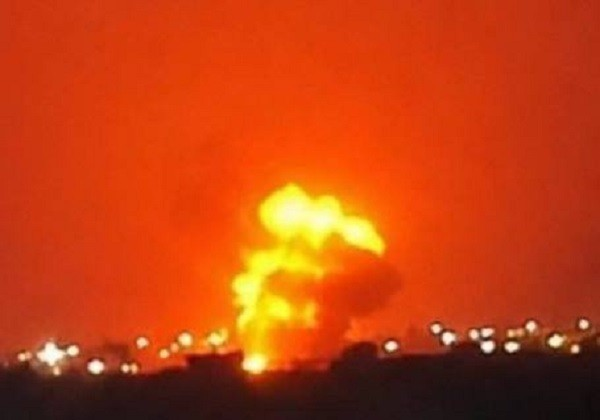
Yemen’s Iran-backed Houthi rebels executed a coordinated military assault utilizing ballistic missiles and explosive drone squadrons against strategic energy installations in southwestern and western Saudi Arabia early Saturday morning. Houthi military spokesperson Brigadier General Yahya Saree confirmed that the cross-border strikes directly targeted coastal infrastructure belonging to Saudi Aramco, the world’s largest oil company, in the Red Sea cities of Yanbu and Jizan.
Saudi Arabia’s civil defense network acknowledged that automated air defense sirens sounded multiple times across both metropolitan industrial zones as defensive batteries engaged the inbound aerial threats. The high-stakes bombardment marks a significant escalation over vital Middle Eastern shipping lanes, materializing precisely as the United States and Iran continue a volatile campaign for structural control over the nearby Strait of Hormuz.
Houthi Leadership Threatens Total Blockade of Crucial Bab el-Mandeb Maritime Trade Chokepoint
The targeted strikes on Aramco facilities were launched in immediate retaliation for heavy Saudi-led coalition airstrikes that hit the rebel-held port city of Hodeida late Friday night. Houthi health officials reported that the coalition munitions struck the local harbor and the state-run telecommunications corporation, inflicting civilian injuries and disrupting regional communications.
Following the counter-attack, the head of the Houthi Supreme Political Council, Mahdi al-Mashat, issued an explicit ultimatum threatening to completely shut down the strategic Bab el-Mandeb Strait to Saudi-linked commercial shipping. The critical maritime bottleneck connects the Red Sea to the Gulf of Aden, handling approximately twelve percent of total global trade and a quarter of worldwide container ship traffic.
Temporary Operational Lull inside Iran After Consecutive Weeks of Intense American Bombardments
The escalation along the Yemeni coastline coincided with a rare operational pause inside sovereign Iranian territory, which experienced its first peaceful night after nearly two consecutive weeks of relentless U.S. airstrikes. United States Central Command did not issue any new combat declarations on Saturday morning, offering a brief intermission in the heavy air campaign that has already killed over thirty-four hundred people inside Iran.
The sudden drop in direct Washington-Tehran engagements follows an intense month where the U.S. military fully reinstated a naval blockade on all Iranian ports to suppress recurring attacks against commercial oil tankers. The fluid security landscape has forced international marine underwriters to elevate risk premiums, while the Islamic Revolutionary Guard Corps continues warning Gulf civilians to stay entirely away from active American military bases.
Diplomatic Maneuvers Intreface with Rising Casualties Across Multiple Middle Eastern Fronts
The unravelling of the regional ceasefire framework has prompted a flurry of high-level diplomatic schedules, including an upcoming White House summit between U.S. President Donald Trump and Israeli Prime Minister Benjamin Netanyahu. The two leaders are scheduled to conduct comprehensive security coordination talks in Washington on Tuesday to align their respective defensive strategies against the expanding Axis of Resistance.
Simultaneously, the broader regional war continues to exact a heavy humanitarian toll across neighboring territories, with cross-border friction between Israel and Iran-backed Hezbollah militants claiming over four thousand lives in Lebanon. Iranian Foreign Minister Abbas Araghchi publicly called for a return to diplomacy and dialogue to resolve the Yemen conflict, warning that further military confrontations will permanently destabilize global energy corridors.
