
Ahmed Kamel – Egypt Daily News
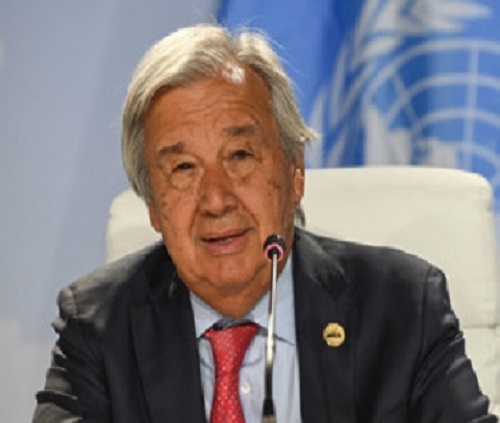
United Nations Secretary-General António Guterres arrived in Egypt on Saturday with a warning that conflicts are spreading, worsening humanitarian suffering and deepening inequality. He called for civilians to be protected and for political space to be created for diplomacy and peace.
“Amid escalating conflicts, I carry a message: we need to stop the widening of war, protect civilians and create the political space for diplomacy and peace,” Guterres said in a post on X after his arrival. He also urged action to address inequalities that divide societies and conflicts that are pushing an already unequal world further apart.
His appeal comes as wars and regional tensions continue to impose heavy costs on civilians. Guterres has warned that conflicts are not only intensifying but spreading, with violence and its consequences reaching beyond battle zones. Homes, hospitals, schools and other civilian infrastructure have been damaged or threatened, while people have been forced to flee in search of safety.
The secretary-general has stressed that civilians and civilian infrastructure must not be targeted. He has called on all parties to respect international law and reduce the risk of further escalation, warning that a widening cycle of violence would bring greater suffering and make a negotiated settlement harder to achieve.
The consequences of conflict extend well beyond the immediate fighting. Disruptions to energy markets, shipping routes and supply chains can raise costs for governments, businesses and households around the world. Higher prices for fuel and food can hit lower-income families especially hard, while countries already facing debt and economic pressures have less room to respond.
Guterres has argued that these shocks compound existing inequalities. When resources are limited, governments may face difficult choices between servicing debt and funding essential services such as healthcare, education and development. The secretary-general’s call to address inequality, alongside his appeal to stop wars, reflects concern that conflict can deepen economic divisions even in places far from the battlefield.
He has also urged restraint amid wider tensions in the Middle East. Rather than allowing separate crises to merge into a broader confrontation, Guterres has called for renewed political engagement and efforts to contain violence. He has warned that escalating attacks and reprisals can make civilians less safe and undermine attempts to secure lasting agreements.
The UN chief has repeatedly highlighted the humanitarian situation in the occupied Palestinian territory. He has called for increased access to aid in Gaza and warned that people face severe hardship as the winter approaches. He has also voiced concern about violence in the occupied West Bank, including attacks on Palestinians, journalists and diplomats.
Guterres has appealed to international donors to support humanitarian operations serving people in Gaza and the West Bank. He has emphasized that emergency assistance is essential, but cannot replace a political solution. He continues to support a two-state settlement in which Israelis and Palestinians can live side by side in peace and security.
Egypt is an important destination for the UN secretary-general’s efforts to discuss regional crises. His visit comes as the United Nations seeks diplomatic approaches to the conflicts affecting the Middle East and neighbouring countries, including Sudan and Libya. Both have experienced prolonged instability, with consequences for civilians and regional security.
On Sudan, Guterres has called on countries to stop supplying weapons to those responsible for killing civilians. His broader message is that outside support for armed groups can intensify conflict, prolong suffering and make peace more difficult. He has urged international actors to use their influence to support de-escalation and political solutions.
The secretary-general’s appeal from Egypt brings together urgent humanitarian demands and a wider warning about the risks of continued conflict. His message is that civilians must be protected now, while diplomacy must be given room to prevent wars from spreading. Addressing inequality and supporting those affected by violence, he argues, are also essential to reducing the divisions that conflict leaves behind.
