

Ahmed Kamel – Egypt Daily News
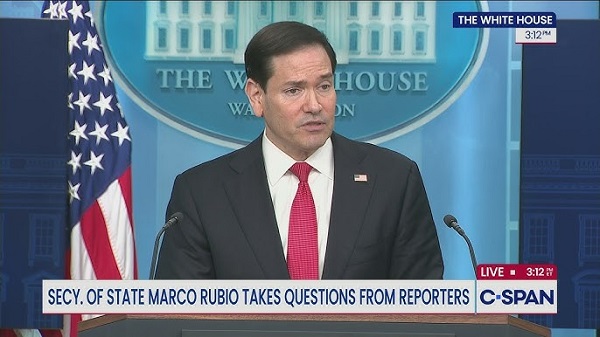
A warning from the U.S. intelligence chief that Iran has stepped up efforts to target Americans abroad is prompting new security measures at diplomatic missions across the Middle East. The unclassified memo, sent to Secretary of State Marco Rubio on Friday, says alleged plots to kill U.S. citizens have reached “advanced stages” in the region and in other countries.
Director of National Intelligence Jay Clayton said Iran had “substantially increased efforts to target U.S. personnel.” The memo does not identify specific targets or countries where the alleged plots are unfolding, and it does not say that an attack is imminent. It also does not describe the intelligence behind the assessment.
Clayton said the intelligence community was working to lower the classification of sensitive information so it could be shared with more State Department personnel who may need to know about the threat. CIA Director John Ratcliffe was copied on the memo.
The warning comes as U.S. agencies reduce staffing at diplomatic posts and the military scales back its presence at some locations in the region. The State Department ordered non-emergency personnel and eligible family members to leave Saudi Arabia. Several other U.S. embassies, including posts in the United Arab Emirates, Lebanon, Qatar and Jordan, have moved to restricted operations, allowing them to reduce staffing and services while remaining open.
A U.S. official said the staffing decisions reflect concerns about both alleged Iranian plots and attacks by Yemen’s Houthi movement. The military drawdown has also been linked by officials to the heightened security situation. The measures do not, on their own, establish that an attack is about to occur or that the United States is preparing to launch military action.
The immediate backdrop includes a rise in Houthi missile and drone attacks on Saudi Arabia. The group has struck airports and other infrastructure, with a deadly attack on King Khalid International Airport in Riyadh earlier this month killing 12 people and injuring more than 300. One of those killed was an American citizen. Saudi authorities and international officials condemned the strike, which disrupted airport operations and heightened concern about further attacks.
U.S. embassies in Saudi Arabia, Bahrain, Qatar, the United Arab Emirates and other countries have urged Americans in the region to exercise caution. The warnings reflect concerns about possible attacks and travel disruption, as well as the risk that violence could spread beyond the locations already affected.
The Houthi movement controls large areas of Yemen and has fought the internationally recognized government for years. Its recent attacks on Saudi territory have renewed fears of a wider regional conflict. Iran supports the Houthis, but the group’s actions and the intelligence memo’s claims about Iranian plotting are distinct issues. The memo warns of alleged Iranian efforts against U.S. personnel; it does not state that Iran directed the Houthi attacks.
Washington and Tehran have not exchanged direct strikes in recent weeks, but the possibility of renewed U.S. military action remains part of the tense regional climate. President Donald Trump said at a rally in Florida that the United States could conduct another operation against Iran if Tehran did not reach an agreement. His remarks came as the administration considered its options and the November midterm elections approached.
The memo does not provide enough information to independently assess the alleged plots, their intended targets or their timing. Its central message is that U.S. intelligence officials believe the threat has increased and that more personnel should receive relevant warnings. The staffing changes are a precautionary response to a volatile security environment, not confirmation that a specific attack is underway.
For Americans in the region, the immediate practical consequences include reduced services at some diplomatic missions, possible delays in consular assistance and heightened caution around travel. The U.S. government has not publicly identified specific locations or individuals facing a direct threat. Officials are seeking to share more information with personnel while balancing the need to protect sensitive intelligence.
The warning adds another layer of uncertainty to a region already affected by conflict, attacks on civilian infrastructure and disruption to travel and shipping. Whether the alleged Iranian plots lead to any further security measures remains unclear. For now, U.S. agencies are reducing their exposure at some posts, monitoring threats and preparing to distribute more information to personnel who could be affected.
