

Ahmed Kamel – Egypt Daily News
Israeli forces carried out a raid early Wednesday in the town of Jabata al-Khashab in the northern countryside of Quneitra, south-western Syria, detaining two people after a large operation involving more than 100 personnel and 15 military vehicles. The action came only hours after Israeli airstrikes targeted the Abu al-Zuhur military base in Idlib province.
According to Syria’s state television, the force entered Jabata al-Khashab with more than 100 fighters and 15 military vehicles, conducted searches in residential areas, seized two individuals, and then withdrew toward the border strip. The raid followed a day marked by a series of Israeli movements across different parts of southern Syria. Late Tuesday, Israeli artillery fired a shell into the Wadi Abdin area in the Yarmouk basin in western Daraa. Separately, bulldozers carried out land-clearing work in the Shahar forest area in Jabata al-Khashab.
In western Damascus countryside, local media reported that an Israeli force advanced toward the Baet Wardah hill near the town of Beit Jinn. The developments unfold amid a pattern of near-daily Israeli raids and searches in southern areas, including detentions, military maneuvers, and the establishment of checkpoints.
Strikes on a military facility
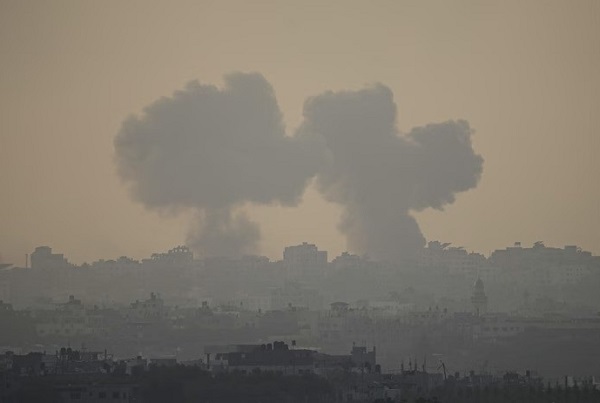
The latest ground actions follow an air campaign carried out overnight Tuesday into Wednesday, when the Abu al-Zuhur air base in north-western Syria was hit by eight Israeli strikes targeting its runway and storage areas. No casualties were reported in the information released at the time. Israel said the strikes were intended to prevent Turkish forces from deploying at the facility.
The office of Prime Minister Benjamin Netanyahu stated that Damascus was “about to violate” a security arrangement by allowing Turkish troops to be stationed at the base. It added that Israel had repeatedly warned Damascus that any such deployment would pose a threat to Israeli security, accusing Syrian authorities of ignoring those warnings. Ankara, however, rejected Israel’s account and dismissed the claims used to justify the attack as unacceptable.
The strikes occur as Syrian authorities work to rehabilitate military installations damaged during years of war. Turkey has provided military support to Damascus since the fall of Bashar al-Assad in December 2024, a factor that appears to heighten Israeli concern as the competition between Israel and Ankara grows over Syria’s evolving political and security landscape.
Widespread condemnations, with Washington offering an unusual rebuke
Initial Syrian responses condemned the raids. Foreign Minister Asaad al-Shaibani called the strikes an “unjustified provocation,” describing them as violations of Syrian sovereignty and threats to regional and international stability.
Turkey also condemned the air attacks, calling for the international community to take a firmer stance against what it described as escalating Israeli attacks in Syria and to hold those responsible accountable under international law. Regional states including Qatar, Egypt, and Saudi Arabia issued similar condemnations.
But the most notable reaction came from Washington, where U.S. officials delivered unusually direct criticism of Israel. U.S. Special Envoy for Syria and Iraq and U.S. ambassador to Turkey, Tom Barrack, said the United States was deeply concerned about the strikes, describing them as “unnecessary escalation” that does not help strengthen regional stability. He argued that the transitional Syrian government led by Ahmed al-Sharaa has not adopted an hostile approach or relied on proxy forces, and has repeatedly expressed a desire to reduce tensions with Israel. Barrack said the U.S. has hosted diplomatic discussions in the past and will continue to push toward that course.
He also said Washington is working to create a friction-prevention mechanism among Syria, Turkey, and Israel—aimed at limiting the risks of miscalculation and preventing any field incident from spiraling into a wider confrontation, especially given the presence of multiple interests and forces on Syrian territory.
Tensions since Assad’s fall
Since the fall of Assad’s regime, Israel has intensified airstrikes, targeting primarily Syrian military capabilities, seeking to prevent them from falling into the hands of the new authorities or being redeployed. At the same time, Israeli forces have moved into the United Nations-monitored buffer zone in southern Syria, where they still remain.
In contrast, Damascus is trying to rebuild capacities badly damaged by war and by strikes that followed the regime’s collapse. While the new authorities have repeatedly stated they do not seek confrontation with Israel, Israeli officials remain skeptical about the leadership, which includes figures who were reportedly associated with previously armed Islamist groups.
Alongside the field escalation, Syrian-Israeli talks mediated by the United States have been ongoing for more than a year in search of a security arrangement, though they have not produced a final understanding. On July 26, Al-Sharaa said Damascus, with the participation of several countries, is working toward such a deal, arguing that success could pave the way for a comprehensive peace without relinquishing Syria’s claim to the Golan Heights.
Al-Sharaa has also sought closer relations with Western governments since taking power, including a rapprochement culminating in a visit to the White House in November, making him the first Syrian leader to take that step.
