

Ahmed Kamel – Egypt Daly News
Egypt’s Public Prosecution has ordered a broad investigation into reports of extensive tree cutting in several parts of the country, following a wave of public anger and concern over the removal of mature trees from streets, public spaces and urban development areas.
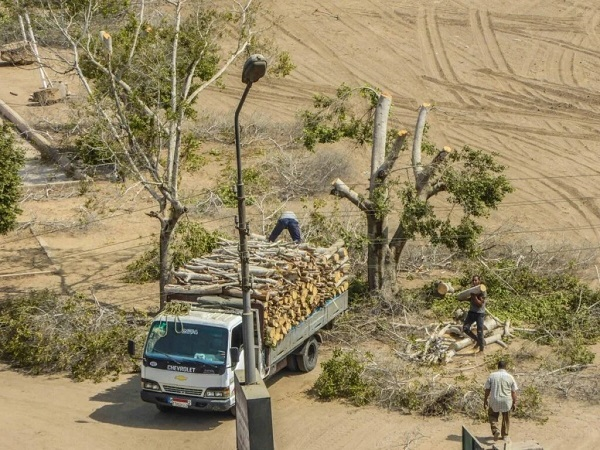
The incidents, described by many Egyptians as a “massacre of trees,” have generated widespread debate about the reasons behind the cutting, the scale of the work and whether the removal of the trees was necessary. Images and videos shared from different governorates fueled the controversy, with residents and environmental campaigners demanding explanations from local authorities.
In a statement, the Public Prosecution said it had begun reviewing a formal complaint concerning the reported incidents. It instructed the relevant oversight bodies to conduct the necessary inquiries and establish whether the reported tree cutting had taken place.
The investigation will examine the reasons given for removing the trees, the number of trees affected and the procedures followed by the authorities or contractors involved. Officials have also been asked to determine whether the work complied with applicable laws and regulations.
The prosecution ordered that appropriate legal measures be taken in light of the findings. The statement did not identify specific individuals or organizations as suspects, nor did it announce any immediate charges.
Public anger intensified after trees were cut along Al-Gamaa Al-Arabia Street in Giza. The work in that area became a focal point for criticism, prompting a broad media campaign and renewed calls for greater protection of urban greenery.
The controversy has also raised wider questions about Egypt’s approach to infrastructure development. Authorities have carried out major road, bridge and urban expansion projects in recent years, many of which have affected existing streetscapes and green areas. Supporters of the projects argue that the work is necessary to improve transportation and modernize cities. Critics say development should not come at the expense of trees that provide shade, reduce pollution and improve the quality of life in densely populated neighborhoods.
In response to the public reaction, the government instructed its agencies not to cut trees and called for strict procedures to be followed in any case involving their removal. Officials were also directed to consult environmental authorities before taking action and to expand planting and landscaping programs.
The government has further called for some areas that were cleared or damaged to be replanted. The stated objective is to increase green spaces rather than reduce them as part of urban development projects.
President Abdel Fattah al-Sisi has directed the government to develop a project aimed at “greening Cairo.” Under the initiative, any space cleared for a project or other purpose is expected to be converted into a green area where possible.
The ministries responsible for local development, housing and the environment have instructed their affiliated agencies to preserve trees in residential districts, road corridors, parks and other green spaces. The directives prohibit cutting or damaging trees during construction and development work and bar agencies from authorizing such action without following the required legal process.
Housing officials have also directed agencies overseeing new cities to protect existing trees and greenery. The instructions cover trees located in neighborhoods, along major roads, in public gardens and across landscaped areas. Officials were told to take legal action against violations and increase the amount of planting throughout the new urban communities.
The directives extend to Egypt’s governorates, which have been ordered to preserve existing trees and monitor their condition. Local authorities were also asked to continue implementing the national initiative to plant 100 million trees.
Environmental officials emphasized that trees must not be cut down or uprooted, and that no permission should be granted to others to do so, unless the governor approves the action and the Environmental Affairs Agency provides its opinion. The requirement is based on Egypt’s Environmental Law No. 4 of 1994, along with its executive regulations and subsequent amendments.
The investigation could determine whether the reported tree removal was carried out under valid permits, whether environmental reviews were completed and whether the number of trees cut matched the requirements of approved projects. It may also clarify whether local authorities followed the government’s stated policy of protecting trees during construction.
For many residents, the prosecution’s decision represents an important step toward accountability. The controversy has transformed what might previously have been treated as a local development issue into a national debate over public spaces, environmental protection and the future of Egypt’s cities. While the government has promised to expand greenery and restrict tree cutting, the outcome of the investigation will be closely watched by citizens and environmental groups seeking evidence that those commitments will be enforced.
