

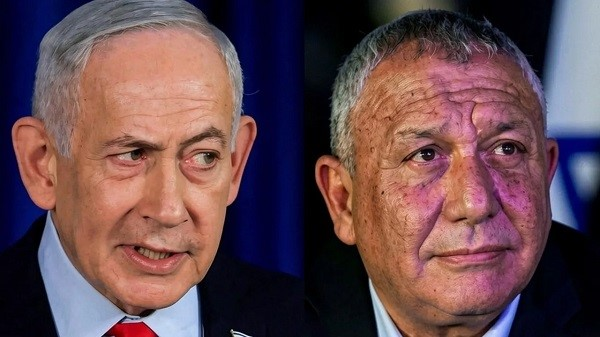
Gadi Eisenkot, leader of Israel’s Yashar party, has outlined four principles for potential partners in a future government, opening a possible path for cooperation with Arab lawmakers as the election leaves both major political blocs short of a parliamentary majority.
In a post on X, Eisenkot said the principles would form the basis for any political partnership. They require recognition of Israel as a Jewish, democratic, liberal and egalitarian state; commitment to the values of Israel’s Declaration of Independence; mandatory military or civilian service for all citizens without exceptions; and acceptance that Hamas is a terrorist organization whose military capabilities must be eliminated.
The conditions place Arab parties in a potentially influential position in coalition negotiations, while also raising questions about whether they could accept all four requirements. The election gave neither of the main blocs the 61 seats needed for a majority in the 120-member Knesset. Benjamin Netanyahu’s bloc won 53 seats, the opposition bloc secured 48, and Arab parties collectively won 19.
The results leave prospective coalition builders with difficult choices. Arab parties could potentially help an alternative government reach a majority, but cooperation would require agreement on major questions of national identity, military service and policy toward Hamas. The terms could also complicate negotiations with religious parties, particularly over compulsory service.
Mansour Abbas, leader of the United Arab List, known as Ra’am, has indicated a willingness to discuss the conditions. That response could provide a starting point for negotiations, but it does not establish that Ra’am or other Arab parties would agree to join a government or support a particular coalition.
The four conditions also reflect disagreements over security and the conduct of the war. Rabie said Eisenkot’s statement referred to the security failure of October 7 and its economic and international consequences, and suggested that it signaled support for an official inquiry into those failures. On military action, Rabie said Eisenkot had argued that he would not support current operations unless Israel faced a direct threat requiring an immediate response before a new government took office.
Such external backing could allow an administration to take office without Arab parties holding ministerial positions, but it would still depend on the parties’ willingness to support the arrangement. Netanyahu, Rabie said, could seek to use the issue to widen divisions within the opposition.
The election has thus created a government-formation contest in which the Arab parties could become central participants or pivotal outside supporters. Yet their increased parliamentary strength does not guarantee that a coalition can be assembled. Eisenkot’s principles may provide a clear framework for negotiations, but they also expose areas of profound disagreement over citizenship, military obligations and the war against Hamas.
With neither main bloc holding a majority, the next stage will depend on whether political leaders can reconcile those competing demands. The four conditions could serve as a basis for talks, as Eisenkot presents them, but they may also narrow the field of potential partners and deepen tensions between opposition factions.
