

Egypt Daily News – Egypt News.
A proposal to bring informal gold mining in southern Egypt under state oversight is being presented as a way to protect local livelihoods and secure a greater public share of the country’s mineral wealth. Yet the initiative raises a more basic question: will it strengthen accountable public control or place a valuable resource in the hands of a new, insufficiently transparent arrangement?
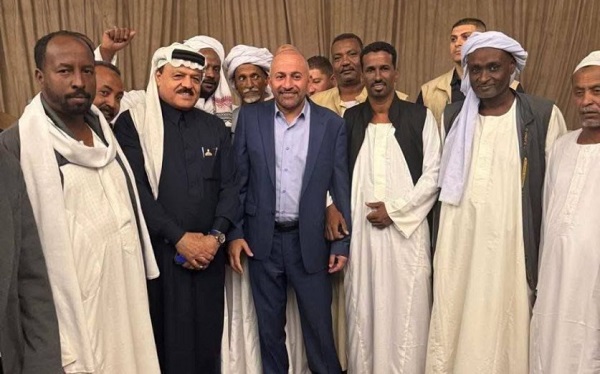
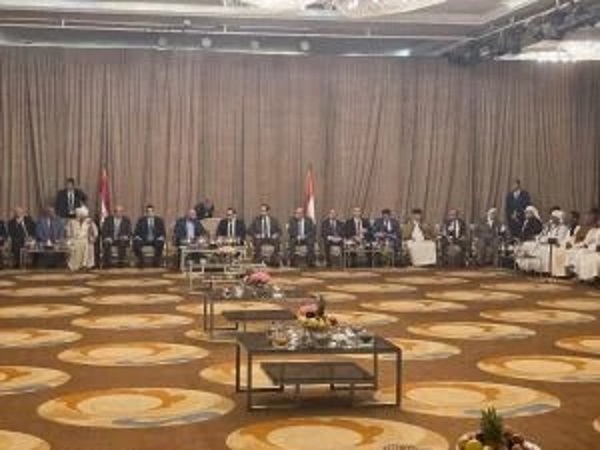
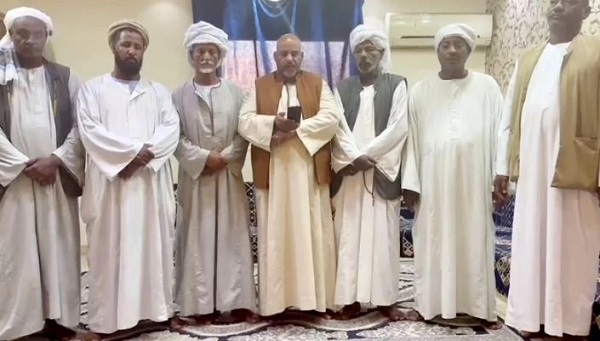
The proposal was discussed at a meeting convened under the auspices of Ibrahim al-Argani, head of the Egyptian Federation of Tribes and Families. Participants reportedly included lawmakers, representatives of communities in Aswan, Halayeb, Shalateen and Marsa Alam, security officials and representatives of the Future of Egypt Authority. They discussed formalizing the work of informal prospectors, known locally as “Dahaba,” and addressing cases involving people detained many of which are foreigners over unauthorized mining.
The aims sound reasonable. Bringing miners into a legal system could help reduce smuggling, improve workplace protections and give the state a clearer picture of production. But a meeting is not an agreement, and an announced initiative is not an accountable system. The information available does not establish that a final agreement has been signed, that a new company has been created or that the proposal has received formal approval. Those distinctions matter: public claims of progress should not outrun the evidence.
The central issue is control. Who would own or manage any proposed company? Who would appoint its leadership, audit its accounts and measure the gold it extracts? Where would the gold be sold, how would its price be determined, and what share of proceeds would reach the state, workers and local communities? Until these terms are public, “formalization” risks being a label for moving mining from an informal economy into a new structure whose authority and beneficiaries remain unclear.
That concern is especially relevant as Egypt seeks to expand the formal mining sector. In 2025, the Shalateen Mineral Resources Company reported that production from the Iqat mine had exceeded 900 kilograms in 2024, and said it aimed to raise production to about six tons within five years. The company has also described a project in Aswan intended to curb informal exploration and manage mining more systematically. These examples show that state-linked mining institutions already operate in the sector; they make it all the more important to explain how a new initiative would fit alongside them, rather than create overlapping powers or unclear lines of accountability.
The government’s wider mining strategy is also being promoted as an effort to attract investment and increase the sector’s economic contribution. At the 2026 Egypt Mining Forum, officials highlighted institutional and legislative reforms, including the reorganization of the mineral resources authority and a stated ambition to increase mining’s contribution to gross domestic product. Such goals may bring investment, but investment targets alone do not establish that the public will receive a fair return. The test is whether the rules governing access, revenue, processing and oversight are clear and applied consistently.
For the people who have worked in remote mining areas for years, the design of those rules could determine whether formalization offers a genuine path into legal work or simply pushes them aside. Licensing that is expensive, difficult to obtain or poorly adapted to local realities may benefit established operators while leaving small-scale miners without a viable route to compliance. A credible system would need accessible permits, clear safety and environmental standards, fair purchasing arrangements and a meaningful role for affected communities in shaping the rules. Consultation should not be reduced to announcing a decision after the important choices have already been made.
The environmental and labor questions are not secondary. Reporting from the Aswan region has described extensive gold-processing activity and the use of mercury and cyanide in informal extraction, alongside the presence of Egyptian, Sudanese and other migrant workers. That account underscores the potential costs of leaving mining outside effective oversight, but it also warns against treating enforcement alone as a solution. A system that regularizes production without transparent safety rules, monitoring and protections for workers could preserve the hazards while changing only who controls the trade.
The discussion of detained miners requires similar care. Participants reportedly raised cases of people held in connection with prospecting, and supporters have referred to their release. They should not be portrayed as favors granted by political intermediaries, nor used to blur the distinction between due process and a future licensing arrangement.
Nor should unverified claims about foreign miners or security arrangements be repeated as established fact. The proper response to uncertainty is disclosure: publish who may operate, under what legal authority, with what security arrangements and subject to whose oversight. If the initiative is intended to protect Egypt’s sovereignty over its mineral wealth, the public must be able to see where decision-making power rests.
Sovereignty is not secured simply because the state is present in a project or because an initiative is described as national. It depends on institutions that can be scrutinized, rules that apply openly and revenues that can be traced. Egypt’s gold should support the country and the communities whose livelihoods depend on it. Before this proposal is celebrated as a solution, its sponsors should disclose who will control the system, who will benefit, how workers will be protected and how the public’s share will be independently verified. Until then, the initiative remains a promise, not proof that Egypt’s interests are secure.
