

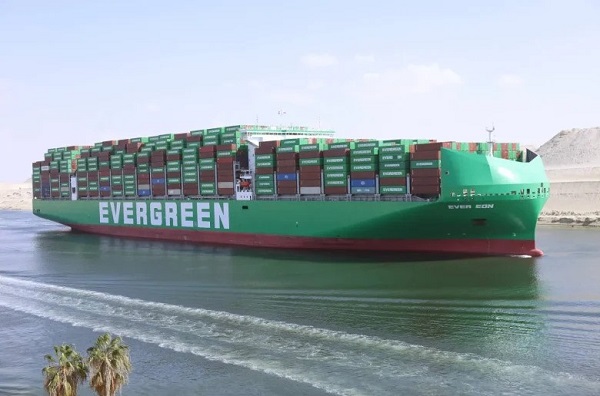
The global shipping line Evergreen is preparing to send a second voyage through the Suez Canal today, following its first transit earlier this week and a suspension of canal use lasting about three years. The return marks a step toward the possible resumption of passages by major shipping companies that diverted vessels amid security concerns and unrest in the Red Sea.
A source at the shipping line said Evergreen’s first voyage through the canal took place at the beginning of the week. The commercial service connects Singapore with Europe. The company’s decision to resume canal crossings followed what the source described as a relative improvement and greater stability in the Red Sea region.
The planned second transit offers a further indication that Evergreen has begun using the route again after its prolonged absence. However, the information provided does not specify the vessel’s name, cargo, schedule, or the number of additional voyages the company intends to make. Nor does it indicate that the shipping line has committed to restoring all of its former canal traffic.
Evergreen’s return is significant because the Suez Canal provides a shorter connection between East Asia and Europe than the alternative route around the Cape of Good Hope. According to the source, passage through the canal can reduce a voyage by approximately 20 days compared with the route around southern Africa. The shorter journey can also help reduce shipping costs for goods transported between the two regions.
The difference in route length affects several aspects of maritime operations. A shorter trip can mean less time at sea and lower fuel consumption, while reducing the operating period required for a vessel to complete a journey. These factors can influence the overall cost of transporting cargo and the time needed to move goods between Asian and European ports.
For shipping companies, choosing a route is not determined by distance alone. Security conditions, insurance costs and operational risks also shape decisions about where vessels travel. The source linked Evergreen’s resumption of canal crossings to a relative improvement in regional stability, while noting that the wider return of traffic remains dependent on how conditions develop.
The company’s earlier suspension came amid tensions and security events in the Red Sea. During that period, some shipping services shifted to alternative routes. Rerouting vessels around the Cape of Good Hope can lengthen voyages compared with using the Suez Canal, but companies weigh that additional time and expense against their assessments of safety and insurance exposure.
Evergreen’s two voyages are therefore being watched as a possible sign of a gradual return by some large shipping lines to the canal. The first crossing demonstrated that the company had resumed at least part of its commercial service through the waterway; the planned second journey would provide another data point. Still, two voyages alone do not establish that traffic has returned to its previous level or that other companies will follow.
The canal’s importance to international trade comes from its ability to shorten maritime routes linking East and West. When ships use it, they avoid the longer passage around Africa, potentially saving time, fuel and other operating expenses. Those savings can ease some of the cost burden on shipping operations and cargo transport, although the actual effect depends on the vessel, route and prevailing conditions.
A sustained return by shipping lines could help the canal recover some of the vessel traffic that moved to alternative routes during the period of Red Sea disruption. But the pace and scale of any recovery will depend on ongoing security developments and each company’s assessment of operational and insurance risks. The information available does not specify how Evergreen will make future routing decisions or whether the company expects to maintain regular crossings.
For now, Evergreen’s planned second transit follows an initial voyage earlier in the week and signals a cautious resumption of canal use on its Singapore-Europe service. The move underscores the commercial advantages of the shorter route while also highlighting that shipping decisions remain closely tied to conditions in the Red Sea. A broader return to the Suez Canal would require companies to continue reassessing those conditions and determine whether the route offers an acceptable balance of time, cost and risk.
