

Egypt Daily News – Egypt News.
Egypt’s Cairo Criminal Court has placed the Europe Muslim Council and 34 other entities on the country’s terrorism lists, according to the report, which presents the move as part of a legal action against organizations who are connected to the Muslim Brotherhood.
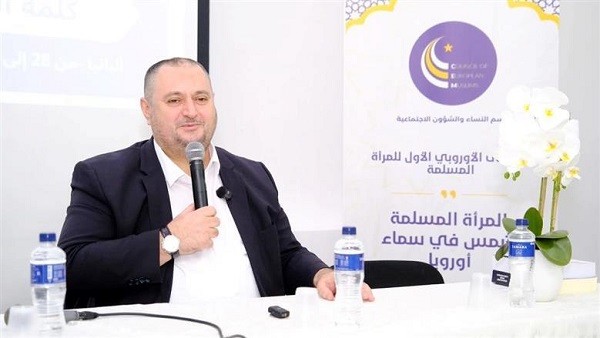
The decision has drawn renewed attention to the council after Egyptian television channel Extra News broadcast recordings attributed to Abdullah bin Mansour, identified in the report as the council’s head. In the excerpts, bin Mansour discusses his affiliation with the Muslim Brotherhood and his role in establishing the Union of Islamic Organizations in Europe, the organization later renamed the Europe Muslim Council.
“We brought together the Brotherhood members in Britain, Albania and Austria,” bin Mansour says in one recording, according to the quoted transcript. He describes the union as including organizations from 28 countries and says it later became the Europe Muslim Council.
In a separate recording, bin Mansour reportedly says that his membership in the Brotherhood had remained unchanged for about 40 years. He lists it alongside his telephone number and his wife as three constants in his life. A third recording addresses the movement of Egyptian Brotherhood members and leaders abroad. Bin Mansour is quoted as saying that the departure of members from Egyptian prisons and their subsequent travel to Europe, the United States and Canada helped spread the movement’s activity and establish organizations in those countries.
The recordings were presented by the broadcaster as evidence of the council’s relationship with the Brotherhood. The court’s inclusion of the council among 35 entities on Egypt’s terrorism lists is a separate legal development, grounded in the court process described in the report. The article does not provide the full court ruling or its detailed evidentiary findings.
Strategic affairs researcher Nehal al-Shafei said the court’s decision should be distinguished from political statements about it. She emphasized that it was issued by a judicial body rather than an executive authority and said the listing reflected the court’s conclusions about the activities of the entities and their alleged threat to national security.
Al-Shafei argued that the decision was aimed primarily at the Brotherhood’s international organization, rather than only at its operations inside Egypt. She described the movement as a network with branches operating under different organizational names in different countries, but connected, in her analysis, to a central structure. She also said the inclusion of the Europe Muslim Council reflected the reach of organizations she considers linked to the group.
The researcher said the ruling could lead European governments to examine Brotherhood-linked organizations more closely. She suggested that some governments might consider tighter oversight or restrictions, and predicted that parliaments in countries such as Germany and France could discuss the issue. Those are her forecasts; the report does not establish that European governments have adopted new measures following the Egyptian court decision.
Ahmed al-Anani, a member of the Egyptian Council for Foreign Affairs, also alleged that Brotherhood members who moved to Europe helped establish organizations there and build influence within local communities. He described the Union of Islamic Organizations in Europe, founded in 1989, as an effort to bring together organizations he considers associated with the Brotherhood. He said it was based in Brussels before changing its name to the Europe Muslim Council, and argued that the name change did not alter its structure or orientation.
Al-Anani further claimed that the organization continued to advance the Brotherhood’s political and ideological goals. He referred to a campaign he called the “Convoy of Steadfastness,” alleging that it sought to cross Egypt’s borders and promote narratives hostile to the Egyptian state. These assertions are his account and are not independently substantiated in the supplied material.
The report names Abdullah bin Mansour, Abdulaziz Ibrahim, Samir al-Falih, Shakib Arslan and Ibrahim el-Zayat as figures al-Anani considers influential within the council. He said three were Tunisian and two Egyptian, and that several held dual nationalities. He described bin Mansour as a Tunisian Brotherhood figure who later moved to France and obtained French citizenship.
Together, the court listing, the broadcast recordings and the analysts’ statements have intensified scrutiny of the Europe Muslim Council’s alleged ties to the Muslim Brotherhood. The recordings contain statements attributed to bin Mansour about his membership and the organization’s formation; claims about the council’s broader activities and its role in an international network remain allegations and interpretations presented by the Egyptian sources.
