
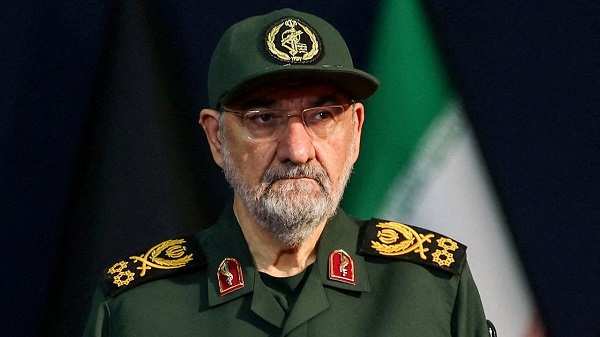
Iran’s senior security official Mohsen Rezaei has warned that Tehran could target U.S. military bases outside the Middle East, including facilities in Europe, if American forces use them to launch attacks against Iran. He also threatened to strike other distant military installations and islands, without identifying specific locations.
“If American aircraft take off from an American military base, even one located in a European country or some other distant region, to bomb Iran, we will strike those bases as well,” Rezaei said in an interview with the Beirut-based Al Mayadeen channel, broadcast Wednesday. The interview was conducted in Tehran.
Rezaei said Iran would not confine any response to nearby U.S. facilities. He warned that a renewed American attack could lead Iran to target military sites farther away, including locations it had not previously attacked. He did not name the bases or explain what criteria Iran would use to select them.
He also said Iran might strike “some islands” that, in his words, the United States believes are beyond the reach of Iranian missiles. His comments did not identify those islands or provide further details about the capabilities he was referring to.
The warning comes amid renewed threats by Washington and Israel to resume large-scale strikes against Iran. Tehran has said any response would not be restricted by geography. Rezaei’s remarks extend that warning to facilities in countries beyond the Middle East, while making the threat conditional: he said bases would become targets if they were used to support attacks on Iran.
The statement raises the possibility that any military action could involve countries hosting U.S. forces, even if those countries were not themselves directly involved in an attack. Rezaei urged governments that host American troops not to cooperate with operations against Iran. His comments, however, did not specify whether Tehran would distinguish between a host country’s participation in an operation and the presence of U.S. forces on its territory.
U.S. President Donald Trump has softened his public rhetoric in recent days, according to the information provided, after his Republican Party suffered losses in the midterm elections. The election result was described as partly linked to the effects of the war with Iran. Trump’s comments have suggested a reduced appetite for renewed military escalation, though the possibility of further action remains part of the broader standoff.
U.S. Secretary of State Marco Rubio said Tuesday that Washington did not currently see a need for major military operations against Iran. He characterized the economic campaign against Tehran as highly damaging. His remarks came as the United States continued to apply economic pressure while diplomatic efforts sought to end the conflict.
Qatar and Pakistan are leading diplomatic efforts aimed at reaching an agreement to end the war. The negotiations are continuing as both sides issue statements about the potential consequences of further escalation. Rezaei’s warning underscores the risk that renewed strikes could widen the geographic scope of the conflict, particularly if U.S. aircraft were to operate from bases outside the region.
The Iranian official’s threat did not indicate that an attack on a European base was imminent. Instead, he framed the potential targets as facilities that could be used to launch attacks on Iran. The distinction is central to his statement, which presents the threat as a response to a specific action rather than an unconditional declaration against all U.S. bases abroad.
Even so, the warning could heighten concern among countries that host American forces. The prospect of bases in Europe or distant areas being treated as targets would place additional pressure on governments to assess the risks of allowing their facilities to support any operation against Iran. Rezaei did not identify particular countries, and the interview excerpt provided no details about military planning or the means Iran might use.
With diplomacy still underway and Washington saying it does not currently see a need for major operations, the comments add to an already tense exchange of threats. Whether the warning remains rhetorical or becomes a factor in decisions by the parties will depend on how the conflict and negotiations develop. For now, Tehran has stated that it could retaliate beyond the Middle East if U.S. bases in distant regions are used to attack the country.
