
Egypt Daily News – Egypt News.
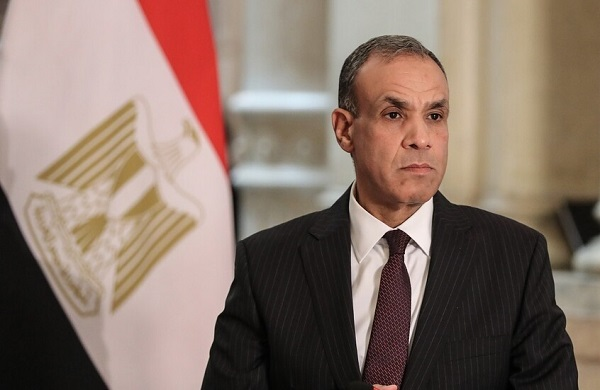
Egyptian Foreign Minister Badr Abdelatty has said that Egyptian forces have been present in Saudi Arabia for several months, confirming a military deployment that began before Egypt’s parliament voted to authorize President Abdel Fattah el-Sisi to support the kingdom’s defense.
In an interview broadcast Tuesday by the English-language service of France 24, Abdelatty said Egypt had a military presence in Saudi Arabia at the request of the kingdom. He said the deployment began several months earlier, following attacks on Saudi Arabia during an escalation involving Iran, and that Egypt was now working to strengthen its presence.
The timing places the deployment before the Egyptian House of Representatives voted on October 26 to authorize the president to take measures to support Saudi Arabia in defending its territory against external attacks. The vote followed a request from Sisi.
Abdelatty had addressed the question of parliamentary approval hours before the vote, at a joint press conference with United Nations Secretary-General António Guterres. A reporter from the German Press Agency asked why parliament’s approval was necessary if Egypt’s role was to be defensive, noting that the Constitution requires authorization for certain military missions abroad. The question also raised the possibility that Egyptian forces could become involved in combat rather than simply help defend Saudi territory.
The minister replied that Egypt’s support for Saudi Arabia was intended for defensive purposes. He said that under the Constitution adopted in January 2014, any form of military support abroad including sending equipment or troops for defensive purposes requires parliamentary approval. He said the president and government were bound by the Constitution.
Abdelatty also described extensive discussion in the House of Representatives before the vote. He said more than 500 lawmakers had asked to speak, whether in support of the proposal or in opposition to it, and argued that parliament needed time to debate the matter. He characterized the debate as part of the democratic process and said the government had to secure legislative approval for military support to Saudi Arabia.
In a separate interview with France 24’s Arabic service, broadcast Monday, Abdelatty described the parliamentary authorization as permission for Sisi to take measures he considered appropriate to support Saudi Arabia’s defensive operations. He said the security of the kingdom was linked to Egypt’s own security.
The minister said Egyptian forces had been in Saudi Arabia for several months in connection with the escalation involving Iran and attacks on the kingdom. He added that the president had authority to strengthen Saudi defenses, but stressed that the support was intended to remain within Saudi territory and would not cross the border into Yemen.
Abdelatty repeated on Tuesday that Egypt’s military presence was for defensive purposes only. His comments offered the clearest official explanation in the account of when the deployment began, why Egyptian forces were sent, and how Cairo says it intends to limit their role.
Saudi Arabia and other Gulf states faced missile and drone attacks from Iran at the beginning of the war with Iran, according to the report. While Iranian attacks later declined, Riyadh continued to face attacks by Yemen’s Houthi movement, which has targeted locations across Saudi Arabia.
Egypt’s parliamentary vote has also prompted concern that the country could be drawn into a wider regional conflict. After the vote, senior Houthi official Mohammed Ali al-Houthi described Egypt’s decision as tantamount to a “declaration of war” on Yemen. Abdelatty’s statements, by contrast, emphasize that Cairo’s stated mission is defensive and geographically limited to Saudi Arabia.
The deployment comes as Saudi Arabia seeks to deepen defense cooperation with regional military powers. Saudi Arabia, Turkey and Pakistan recently signed an agreement containing collective-defense provisions described as resembling NATO’s model and referred to as the “Mecca alliance.” Pakistan’s military spokesperson, Lieutenant General Ahmed Sharif Chaudhry, had also confirmed to CNN the previous month that Pakistani forces were in Saudi Arabia, saying the presence had continued for decades.
Saudi Arabia has also expanded defense ties with Syria. The two countries signed a cooperation agreement between their defense ministries this month. Amid reports that Syria had sent troops to support Saudi Arabia, Syrian Foreign Minister Asaad Hassan al-Shaibani said Monday that Syria had no forces in Yemen and no plans to deploy troops there in the near future.
The Egyptian government’s public framing remains that its forces are supporting Saudi defenses, not conducting operations across the border. Abdelatty’s confirmation that the deployment preceded the parliamentary vote adds a new dimension to the debate over the authorization: the vote came after Egyptian forces were already present, while the minister says constitutional approval was required for military support abroad and that Egypt is now seeking to reinforce the defensive role.
