

North Korean leader Kim Jong Un has rebuffed repeated attempts by President Donald Trump to reopen direct communication, including by returning an American letter unopened, according to a report by The Wall Street Journal citing people familiar with the matter.
The reported rejection comes as Trump has publicly floated another meeting with Kim and U.S. officials explored possible terms for a summit during the president’s recent trip to China. No meeting took place. The White House has not publicly confirmed the details of the returned letter, and one administration official told the newspaper that there had been no efforts to arrange a meeting with Kim.
According to the report, Trump tried to reach the North Korean leader last year through telephone and diplomatic channels, but received no response. U.S. officials later handed a letter for Kim to a North Korean diplomat in New York. The diplomat subsequently returned it to an American representative without opening it, the newspaper reported.
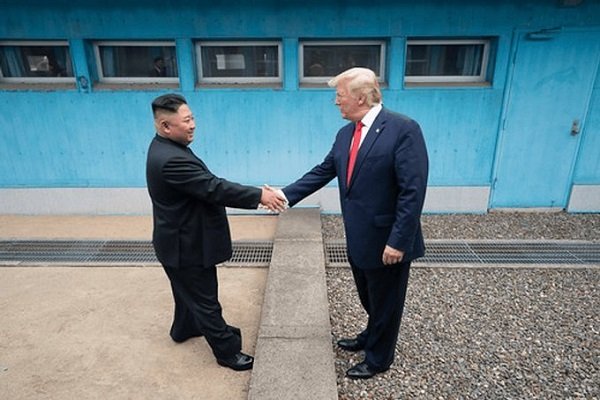
The episode contrasts with Trump’s first term, when he and Kim exchanged letters and met three times. Their summitry generated major diplomatic attention but did not produce an agreement to dismantle North Korea’s nuclear program. The last meeting between the two leaders took place at the Korean Demilitarized Zone in 2019.
Trump’s latest outreach appears to have been part of a broader effort to secure a foreign-policy breakthrough. In the weeks before his China visit, he publicly suggested he was open to meeting Kim and reportedly urged aides to explore the possibility. The North Korean leader did not appear for a meeting during the trip.
U.S. officials reportedly discussed ways to make a summit more acceptable to Pyongyang. Among the proposals was a possible statement that would not formally recognize North Korea as a nuclear-weapon state, but would also avoid Washington’s longstanding demand that the country dismantle its nuclear arsenal as a precondition for talks. In exchange, the United States would seek limits on North Korean nuclear tests and missile launches, while exploring closer diplomatic contacts.
The proposals would represent a significant shift in emphasis from the traditional U.S. goal of complete denuclearization. They would not necessarily amount to formal recognition of North Korea as a nuclear power, but could move negotiations toward arms control or limits on future development. The report did not provide details of the conditions Kim may have set, or explain precisely why U.S. officials considered them unacceptable.
The absence of an agreement reflects a fundamental gap between the two governments. Washington has long sought the dismantling of North Korea’s nuclear weapons and ballistic-missile programs. Pyongyang has rejected that approach, arguing that its weapons are necessary to deter what it describes as a threat from the United States and its allies. A proposal focused on limiting tests rather than eliminating existing weapons would leave that dispute unresolved.
North Korea’s growing arsenal has also changed the strategic context. The country’s nuclear and missile capabilities have advanced since the failed 2019 summit, and estimates cited in recent reporting put its stockpile at about 60 warheads. Pyongyang has developed intercontinental ballistic missiles that analysts say could reach parts of the United States. Estimates of the arsenal and the reliability of individual systems remain uncertain, since North Korea provides little verifiable information about its weapons.
Kim has also strengthened ties with Russia and China, potentially giving his government more diplomatic and economic options than it had during Trump’s first term. The extent to which those relationships reduce the effect of U.S. sanctions is difficult to measure, but closer cooperation with Moscow has added a new dimension to Washington’s efforts to isolate Pyongyang.
The International Atomic Energy Agency has recently reported signs of expansion at North Korea’s uranium-enrichment facilities. The report adds to concerns that the country is continuing to develop its nuclear capabilities even as diplomatic engagement remains dormant. North Korea has not agreed to international inspections that would allow outside monitors to establish the size and status of its program with confidence.
Trump has described Kim in personal terms and previously argued that his relationship with the North Korean leader could help advance diplomacy. But the reported return of the letter suggests that personal outreach alone has not been enough to overcome the strategic disagreement. The episode also shows the limits of summit diplomacy when neither side has settled on what negotiations are meant to achieve.
For now, the reported contact remains unconfirmed by public statements from Pyongyang or Washington. What is clear is that a planned or hoped-for meeting did not happen, and that no new negotiating framework has been announced. Without agreement on the purpose and terms of talks, the prospect of another Trump-Kim summit remains uncertain.
