

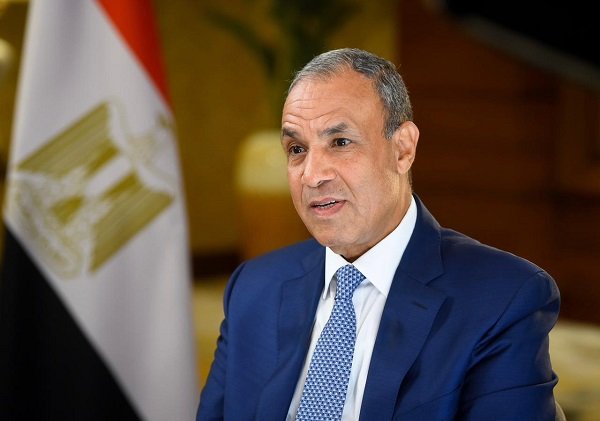
Egyptian Foreign Minister Badr Abdelatty has described the Aswan Forum for Sustainable Peace and Development as a leading platform for addressing security and development challenges across Africa, as the forum’s sixth edition convened in the southern Egyptian city.
Speaking to Egyptian television, Abdelatty said the forum had gained momentum since President Abdel Fattah El-Sisi chaired the African Union in 2019. He said its focus on the close relationship between security and development distinguished it from other gatherings, particularly its attention to preserving stability after conflicts have been settled.
The sixth edition brought together senior officials, ministers, representatives of the United Nations, the African Union and the European Union, regional and international partners, and civil-society representatives. Discussions covered peacebuilding, regional security, conflict prevention, development and the role of African countries in shaping responses to shared challenges.
At a roundtable on sustainable peacebuilding in the Great Lakes region, Abdelatty said lasting political settlements require addressing the root causes of conflict, strengthening dialogue, rebuilding trust and respecting international law. He emphasized the role of the Aswan Forum in bringing national, regional and international stakeholders together to support peace efforts.
The Great Lakes region has experienced recurring conflict involving armed groups, political instability and competition over resources. Abdelatty said the region’s natural wealth could contribute to shared prosperity if it were managed in ways that support stability and development. He called for continued cooperation among the Democratic Republic of the Congo, the African Union, the United Nations and international partners.
The minister also highlighted Egypt’s work through the Cairo International Center for Conflict Resolution, Peacekeeping and Peacebuilding. He cited its capacity-building programs in disarmament, demobilization and reintegration—processes intended to help former combatants leave armed groups and participate in civilian life. Egypt said it was ready to continue contributing to regional peace efforts and to cooperate with African and international institutions.
Abdelatty’s comments reflected the forum’s broader emphasis on linking political solutions with long-term recovery. Ending active fighting, he argued, is not enough to secure peace if the conditions that fueled conflict remain unresolved. Rebuilding trust, strengthening institutions and creating economic opportunities are also essential to reducing the risk of renewed violence.
The foreign minister also addressed the dispute over Ethiopia’s Grand Ethiopian Renaissance Dam, saying Ethiopia has a right to development but that Egypt has a right to life and water security. He called for a legally binding agreement, consistent with international law, to govern the dam’s operation and provide for coordinated management during prolonged drought.
Egypt regards water security as a core national security issue and has repeatedly sought an agreement with Ethiopia and Sudan on the dam’s filling and operation. Cairo has argued that predictable rules are necessary to protect downstream water supplies, particularly during periods of low rainfall. Ethiopia has described the dam as central to its development and electricity-generation plans. Negotiations have continued over the years, but the three countries have not reached a comprehensive agreement.
Abdelatty said Egypt would defend its national interests and would not compromise on its water rights. His remarks restated Cairo’s position that the countries sharing the Nile should agree on rules that balance Ethiopia’s development objectives with the concerns of downstream states. The long-running dispute remains a major diplomatic challenge for the region.
The minister also criticized Israel’s response to efforts to implement a peace plan for Gaza. He said Israel had missed an opportunity to bring meaningful change to the region and that, in Egypt’s view, there had been no positive Israeli response to efforts to implement the plan. Abdelatty said Cairo was counting on the United States to press for progress on President Donald Trump’s proposal for Gaza.
The comments underline how Egypt’s diplomacy connects African peacebuilding with wider regional issues. While the Aswan Forum’s core focus is Africa, its discussions also provide a setting for addressing regional crises, reconstruction and efforts to prevent escalation. Egypt has presented the forum as a place for dialogue among governments and international organizations, as well as for developing practical cooperation.
The forum’s central message is that peace and development are closely linked: stability is difficult to sustain where poverty, weak institutions and unresolved grievances persist, while economic progress depends on security and effective governance. Turning that principle into results will require governments and international partners to follow through on discussions especially in protracted disputes such as the Great Lakes conflicts, the Nile dam negotiations and the war in Gaza.
