

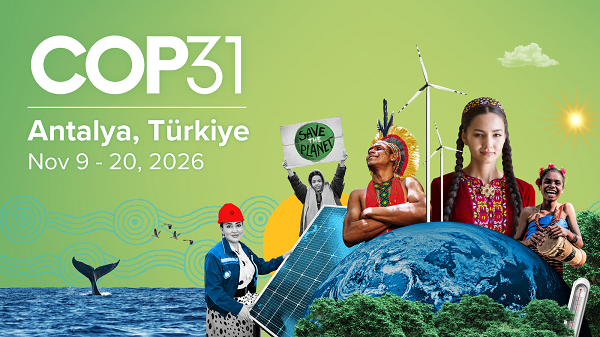
The United Nations climate conference in Antalya, Turkey, ended Sunday without an overarching agreement after nearly 200 countries failed to bridge deep divisions over fossil fuels and financial support for climate-vulnerable nations.
Negotiations continued beyond their scheduled close, making the summit the longest in the history of the annual climate talks. The final breakdown came when the European Union rejected a draft agreement that did not mention moving away from fossil fuels. Panama and several island nations also objected to the text, while other countries opposed parts of the proposed deal.
At the closing session, conference president Murat Kurum acknowledged that delegates had not reached consensus. The UN climate process relies on agreement among participating countries, leaving governments with few ways to adopt a contested text over objections. Kurum said the presidency had made its best effort but recognized that some parties would not support the draft.
The failure marks the first time since the 2009 Copenhagen summit that the annual conference has ended without an overarching agreement. It also exposes a widening gap between countries seeking stronger commitments to reduce emissions and those resisting language that could constrain the production and use of oil, gas and coal.
For the European Union, the absence of any reference to fossil fuels was a deal-breaker. Ireland’s climate minister, Darragh O’Brien, speaking on behalf of the bloc, said the EU could not endorse a climate agreement that did not even mention the principal driver of global warming. More than 100 countries had pushed during the negotiations to retain language on transitioning away from fossil fuels.
An early draft of the proposed Antalya Pact had called for an immediate transition away from fossil fuels in energy systems. That language disappeared from later versions, reflecting opposition from countries unwilling to accept a commitment they viewed as threatening their energy interests or economic development. The final text did not include a clear promise to phase down fossil fuel use.
The dispute is part of a broader struggle over how to implement the commitment made at the 2023 climate conference in Dubai to “transition away from fossil fuels.” Since then, governments have disagreed over how quickly that shift should happen, which countries should bear the costs and whether the commitment should apply equally to producers and consumers.
Climate finance was another major source of disagreement. Developing countries, many of which face severe climate impacts despite contributing relatively little to global emissions, have pressed wealthier nations to provide more support for adapting to heat, floods, droughts and other disasters. The draft called for efforts to at least triple adaptation finance by 2035, but did not establish a baseline or specify a concrete funding amount.
For vulnerable countries, the lack of a clear financial commitment left the proposed deal without a credible path to help communities prepare for climate impacts and recover from disasters. Critics said a target without a starting figure or defined contributions would be difficult to measure and enforce.
The draft also referred to expanding carbon capture technologies. Supporters argue that capturing and storing carbon dioxide could help reduce emissions from sectors that are difficult to decarbonize. Critics warned that relying on the technology without reducing fossil fuel production could allow continued pollution while delaying a shift to cleaner energy. They also questioned whether carbon capture can be expanded quickly and affordably enough to make a substantial difference.
The deadlock came as warnings about global warming grow more urgent. A recent UN emissions assessment said current policies could put the world on course for roughly 2.8 degrees Celsius of warming this century. The report said the 1.5-degree threshold will be exceeded, but argued that rapid emissions cuts could limit the scale and duration of that overshoot. It estimated that global emissions would need to fall sharply over the next decade to bring temperatures back toward the Paris Agreement’s goal by the end of the century.
Mohamed Adow, director of Power Shift Africa, called the outcome a failure of leadership and said the summit should serve as a wake-up call. Former Irish president Mary Robinson also criticized governments for failing to respond with urgency to the mounting risks.
Chris Bowen, the conference’s president of negotiations, described the result as disappointing but pointed to separate initiatives that emerged during the talks. More than 90 countries signed a pledge to expand electrification across their economies. Such voluntary commitments can advance action outside the main agreement, but they do not replace a shared decision on fossil fuels or establish new obligations for all participating countries.
The Antalya summit therefore ended with some national initiatives but no united global position on the central questions of fossil fuel use and adaptation funding. The breakdown leaves governments with the difficult task of rebuilding consensus while climate impacts intensify and the distance between existing policies and global temperature goals remains large.
