

Ahmed Kamel – Egypt Daily News
Regulatory Authority Denounces Unbalanced Technical Allegations
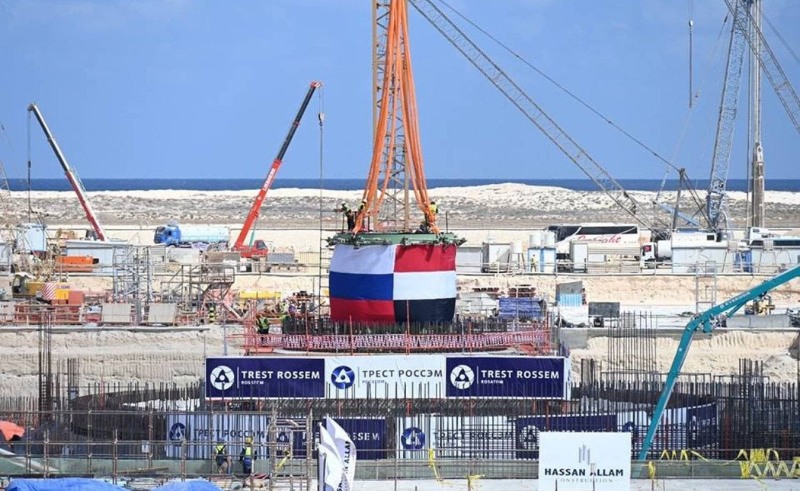
The Nuclear Power Plants Authority (NPPA) officially addressed alleged safety errors at the El Dabaa Nuclear Power Plant following a critical report published by POLITICO. Government officials clarified that the international publication severely misrepresented construction realities and lacked proper technical context regarding nuclear engineering.
The authority emphasized that isolating standard engineering observations from comprehensive quality procedures creates an inaccurate public perception of risk. They further noted that the report improperly mixed complex geopolitical issues with objective, highly regulated nuclear construction metrics.
Official Response and Rigorous Oversight Frameworks
Both the Egyptian authority and the Russian state contractor received formal inquiries from journalists prior to the article’s public release. Upon evaluation, the technical teams deemed the questionnaire highly biased and provided a detailed, data-backed counter-response to the publisher.
The El Dabaa mega-project adheres to highly advanced engineering solutions and exceptionally stringent quality control measures. Continuous independent inspections are maintained by the Egyptian Nuclear and Radiological Regulatory Authority alongside experienced Russian technical inspectors.
Standard Field Discrepancies and International Safety Benchmarks
According to the NPPA, minor technical discrepancies and subsequent corrective measures are entirely typical for infrastructure projects of this massive scale. These routine adjustments are performed under international quality standards to guarantee total compliance with approved engineering blueprints.
Safety protocols are meticulously executed based on comprehensive risk assessments, strict work permits, and mandatory supervisory approvals. The construction site operates under an extensive management system integrating occupational health, industrial safety, and a rigorous quality culture.
International Validation and Russian Contractor Collaboration
Continuous collaboration with the main Russian contractor ensures that all technical or procedural observations are addressed immediately through established regulatory frameworks. Strict regulatory measures govern security and operational integrity at the site to prevent any unauthorized actions or structural entries.
The ongoing Egyptian nuclear program receives continuous support and direct oversight from the International Atomic Energy Agency (IAEA). The global watchdog regards the El Dabaa project as a premier model for newcomer nations entering the nuclear energy sector.
Economic Implications for Egypt’s Future Energy Matrix
The El Dabaa facility represents a cornerstone of Egypt’s long-term economic development strategy to diversify its domestic energy portfolio. Once fully operational, the plant will provide clean, reliable baseload electricity to power the nation’s rapidly expanding industrial sector.
This massive shift toward nuclear energy reduces the country’s historical reliance on fossil fuels and helps meet international carbon reduction targets. The government remains fully committed to funding and protecting this infrastructure asset despite shifting global political pressures.
Public Trust and Transnational Media Accountability
Egyptian authorities expressed concern that sensationalized journalism could unnecessarily damage public trust in vital national security projects. They reaffirmed their commitment to total transparency by promising to release regular, validated safety updates directly to the public.
By countering biased reporting with verifiable engineering facts, the NPPA aims to reassure international partners of the project’s viability. The construction schedule continues moving forward efficiently under the guidance of world-class atomic energy experts.
Local Employment and Engineering Skill Development
The massive construction site has successfully generated thousands of specialized jobs for local Egyptian engineers and technical laborers. These workers receive extensive training from international experts to ensure they can maintain the facility safely for decades to come.
This transfer of highly technical knowledge significantly boosts the regional economy and elevates national engineering standards. Future generations of Egyptian scientists will directly benefit from the operational expertise gained during this collaborative build.
Environmental Benefits and Sustainable Development Goals
The integration of atomic energy aligns with Egypt’s broader environmental goals to reduce localized air pollution and greenhouse gas emissions. By replacing traditional thermal power stations, the facility prevents millions of tons of carbon dioxide from entering the atmosphere annually.
This sustainable shift directly supports the nation’s commitments under global climate agreements and preserves natural resources for the future. The project stands as a testament to the country’s green transition within the Mediterranean industrial landscape.
