

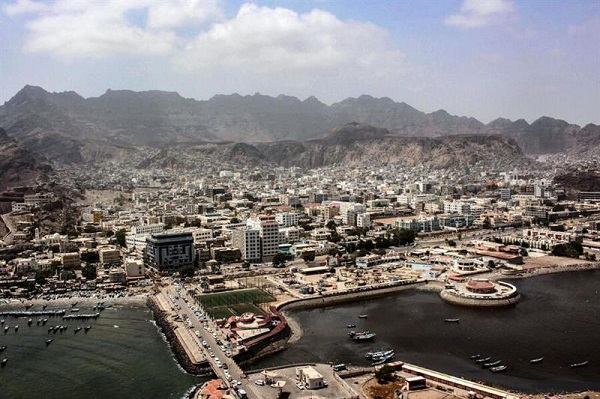
Yemen’s Houthi forces have moved to within about 60 kilometres of Aden, the interim seat of the internationally recognized government, according to military and government sources. Their reported advance into parts of Lahj province has prompted government forces to shift troops toward Aden and prepare defensive positions around the city.
Four military sources and two government officials said the Houthis had taken control of Al-Maqatirah and Al-Madaribah districts and were positioned at Al-Kharaz camp in Al-Madaribah, roughly 60 kilometres from Aden. The accounts indicate a marked southward push, though the information comes from sources aligned with the government and independent confirmation of control on the ground was not immediately available.
The government announced Sunday that its forces had completed a withdrawal from areas near the Bab al-Mandab Strait. It said the troops would be redeployed to locations where they were needed, with the security of Aden and nearby provinces a priority. The redeployment comes as government forces face pressure on several fronts and seek to reinforce areas closer to the city.
Military officials said on Friday that troops had begun building sandbag defences and digging tunnels around Aden. The preparations suggest the government is concerned about the possibility of further advances, although they do not indicate that the Houthis have entered the city or that an assault is imminent.
The latest reported gains include strategic positions in Al-Maqatirah and large areas of Al-Madaribah and Al-Arah, districts in Lahj province, southwest Yemen. The fighting has damaged communities along the road between Aden and Lahj. Dozens of buildings have reportedly been destroyed in clashes between Houthi forces and local resistance groups, with air support from the Saudi-led coalition backing Yemen’s internationally recognized government.
Aden has particular importance because it serves as the government’s interim seat. Any threat to the city could place additional pressure on an already fragmented political and military landscape, while raising concerns among residents about renewed fighting, displacement and damage to essential infrastructure.
The Houthis have also targeted Aden in recent weeks, according to government military sources. An October 15 assault reportedly struck the presidential palace and killed four people. The group attempted to seize Aden early in Yemen’s war in 2015 but failed. The current advance has revived memories of that campaign, though the latest situation is distinct and remains fluid.
Yemen’s conflict began in 2014, when the Houthis took control of the capital, Sanaa, and expanded their influence across much of the north. A Saudi-led coalition intervened the following year in support of the internationally recognized government. Years of fighting have divided the country among rival authorities and armed groups, leaving government forces and local factions responsible for holding territory across the south and west.
The shift of troops away from the Bab al-Mandab area highlights the competing demands facing government forces. The strait is a strategically important maritime passage connecting the Red Sea to the Gulf of Aden, while the current redeployment places emphasis on defending the government’s southern base. The government has not publicly detailed the scale of the redeployment or how it will maintain security in the areas from which troops have withdrawn.
The sources’ account of Houthi control and troop movements has not been accompanied by a full public statement from the group confirming the reported positions. Control of contested districts can change quickly, and claims from parties to the conflict may be difficult to verify independently.
For now, the clearest indication of the government’s concern is its decision to send forces toward Aden and the reported construction of defensive works around the city. The reported Houthi position at Al-Kharaz places the front line closer to the interim capital than it had been in recent months, but the distance alone does not determine whether the group can advance further. Developments will depend on the strength and coordination of forces defending the approaches, the course of fighting in Lahj, and decisions by the rival sides and their supporters.
The immediate issue for Aden is whether the government can stabilize the front before the fighting moves closer to the city. For civilians, the advance adds to the uncertainty in a conflict that has already caused widespread destruction and prolonged instability across Yemen.
