

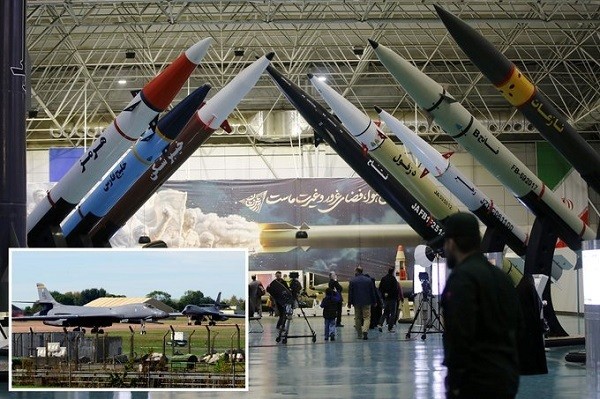
A US intelligence estimate that Iran may still have between 1,500 and 2,500 missiles is complicating debate in Washington over whether to pursue further military action against Tehran. The assessment suggests that, despite months of US and Israeli strikes, Iran retains a sizable weapons stockpile—though officials caution that the numbers are uncertain.
The estimate, reported by The Wall Street Journal, carries low confidence because US intelligence agencies cannot determine precisely how many missiles remain usable, how many are stored in military facilities, or how quickly Iran could deploy them. Officials nevertheless believe the country retains enough missiles, along with large numbers of drones and short-range weapons, to pose a potential threat to US forces and regional allies if hostilities resume.
The assessment differs sharply from public claims by President Donald Trump and other administration officials that the strikes have largely destroyed Iran’s military capabilities. It does not establish the exact damage inflicted during the campaign, but it indicates that the extent of Iran’s remaining arsenal is still a matter of debate.
That uncertainty has become part of the discussion over possible renewed strikes, potentially in coordination with Israel. The missile stockpile matters to Washington not only as a measure of what Iran has retained, but as a factor in calculating the risks of escalation. US officials have not publicly disclosed a definitive count of operational missiles, and the intelligence estimate does not specify how many could be launched at once.
Israeli military officials reportedly believe Iran still has more than 1,500 ballistic missiles, although estimates vary. Simone Ledeen, a former US deputy assistant secretary of defense for Middle East policy, said that even the low end of the US estimate would represent a recovery of more than half of Iran’s prewar missile arsenal. She said Tehran had rebuilt part of its stockpile between the 12-day conflict in June 2025 and the outbreak of the current war in February 2026.
The rebuilding effort is reportedly moving more slowly than before the fighting, with Iran relying mainly on components it had stockpiled in advance. A separate estimate cited by international media put Iran’s arsenal at no fewer than 1,700 ballistic missiles and suggested that the country could produce up to 50 a month. Such figures remain estimates; outside observers face significant limitations in assessing Iran’s military infrastructure and production capacity.
Underground facilities add to the uncertainty. Satellite images cited in earlier reporting indicated that Iran had cleared debris from entrances to some underground missile-storage sites damaged in strikes, allowing access to locations that had been blocked. An Israeli official said missiles stored underground may have survived the attacks. But images of reopened entrances do not by themselves reveal how many weapons remain inside or whether they are ready for use.
The question of Iran’s capabilities is also tied to how the Trump administration defines success. At a Veterans Day event, Trump said the United States wanted a “total victory, not a 93 per cent victory.” In an interview the following day, he said he would regard it as a defeat if Iran’s government remained in power when he leaves office. Those statements suggest that the administration’s objectives may extend beyond the destruction of military assets.
Regional diplomacy adds another constraint. Gulf allies are reportedly wary of renewed war because they fear Iranian retaliation, while Israeli Prime Minister Benjamin Netanyahu continues to press for further attacks. Mossad chief Roman Gofman travelled to Washington for discussions with US officials on Iran, underscoring the issue’s prominence in bilateral consultations.
For US policymakers, the reported arsenal presents competing risks. Further strikes could seek to weaken capabilities that may have survived, but could also trigger retaliation and expand the conflict. Holding back could leave Iran with a significant stockpile and an opportunity to continue rebuilding. The uncertainty in the intelligence makes both the scale of the threat and the likely effect of additional military action difficult to gauge.
The estimate does not prove that Iran can deploy every missile attributed to it, nor does it show that another attack is imminent. It does, however, challenge the idea that the country’s missile capacity has been eliminated. As Washington and its partners weigh their next steps, the key questions remain how much of the arsenal is operational, how quickly Iran can replenish it, and whether diplomacy can prevent another round of fighting.
