

Ahmed Kamel – Egypt Daily News
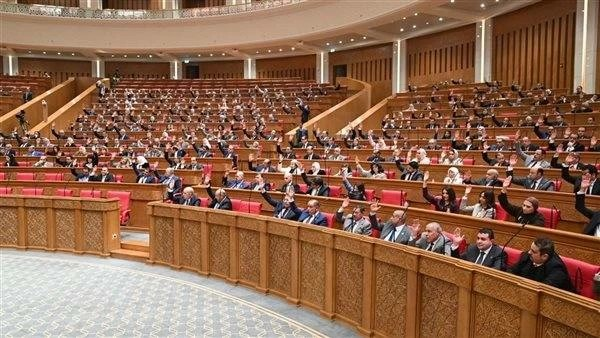
Egypt’s House of Representatives on Monday approved a mandate authorizing President Abdel Fattah el-Sisi to take necessary measures to support and defend Saudi Arabia, according to Egyptian state media. The decision was endorsed by a majority of lawmakers standing during a closed-door plenary session, following several days of confidential parliamentary discussions.
The vote followed emergency deliberations on October 18 and 19, chaired by House Speaker Hisham Badawi. Lawmakers had been considering a request from el-Sisi for authorization to provide defensive assistance if Saudi Arabia sought Egyptian support amid attacks on the kingdom. The House resumed the debate on Monday, October 26, and approved the mandate.
The measure gives the president authorization to act in support of Saudi Arabia, but the parliamentary approval is distinct from an immediate order to deploy troops. The reported request was for a mandate to take necessary measures, and Egyptian officials have described the proposed role as defensive. The public account of the vote did not specify what forces or capabilities might be involved, the geographic limits of any mission, or its duration.
The vote followed a constitutional process governing the use of Egyptian forces abroad. Article 152 of Egypt’s constitution states that the president, as supreme commander of the armed forces, may not declare war or send the military on a combat mission outside the country without first consulting the National Defense Council and obtaining approval from the House of Representatives by a two-thirds majority of its members.
Article 130 of the House’s internal rules provides for an urgent secret session to consider such a decision. The session is convened at the president’s request after consultation with the National Defense Council. The constitutional procedure is intended to require both executive and parliamentary authorization for a combat deployment beyond Egypt’s borders.
The National Defense Council, chaired by President el-Sisi, had previously approved providing Saudi Arabia with all necessary and possible forms of support. Its decision also affirmed support for Saudi security and stability while backing political and diplomatic efforts to reduce regional tensions. Monday’s parliamentary vote followed that council decision and addressed the legislative approval required under the constitutional framework.
The House’s discussions took place against the backdrop of escalating attacks on Saudi Arabia and concern over the wider conflict involving Yemen’s Houthi movement. The Egyptian government has presented support for Saudi Arabia as a matter of regional security and solidarity. At the same time, the possibility of Egyptian military involvement has prompted questions about the scope and consequences of any action.
During earlier deliberations, some lawmakers sought details about the proposed mission, including its objectives, duration, geographic reach and potential risks to Egyptian personnel. The parliamentary sessions were held in secret, and the full details of the debate were not made public. Several legislators and political figures had also called for caution, stressing diplomacy and the importance of avoiding a broader escalation.
The Egyptian Social Democratic Party said its lawmakers would abstain, arguing that parliament had not received enough information about the mission’s aims, length, cost and risks. Other lawmakers expressed reservations or asked for clarification. The closed proceedings meant that the public record did not provide a complete account of individual positions or the discussions that preceded the vote.
Egyptian officials have emphasized that any support should be understood as defensive. President el-Sisi previously said Egypt’s intention was to protect Saudi Arabia, not to attack another country. In remarks reported before the vote, he said Egypt was prepared to take measures to defend its Gulf allies, describing the approach as defensive. Foreign Minister Badr Abdelatty also said that sending Egyptian troops to Saudi Arabia required parliamentary approval.
The distinction between authorization and deployment is significant. Parliament’s approval provides a domestic constitutional basis for the president to take measures under the mandate, but the vote does not by itself establish that Egyptian forces have been sent abroad. The details of any future action would depend on decisions by the Egyptian leadership and the circumstances prompting a request for assistance.
Monday’s decision marks a formal step in Egypt’s response to the security situation facing Saudi Arabia. It also reflects the balance lawmakers have had to consider: Egypt’s stated commitment to supporting a close regional partner, the constitutional requirements for military action abroad, and concerns about becoming more deeply involved in the conflict.
The approval therefore carries both political and legal significance, while leaving operational questions unanswered in the public information available about the vote. The government has described the proposed assistance as defensive, and the parliamentary process has authorized the president to take necessary measures. The scope, timing and form of any action were not specified in the reported announcement.
