

Ahmed Kamel – Egypt Daily News
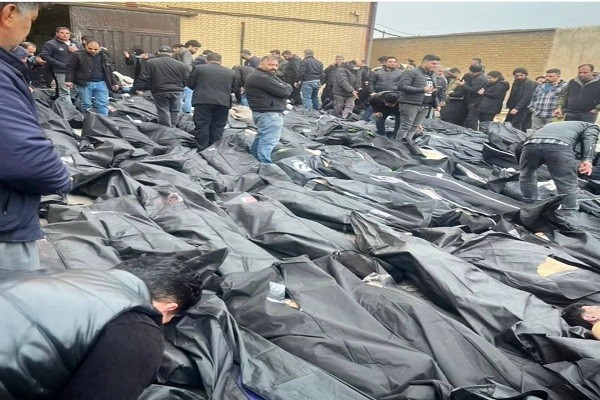
Iranian state television on Wednesday issued the first official death toll from the country’s recent wave of protests, saying at least 3,117 people were killed during demonstrations that erupted late last year and were met with a sweeping and violent crackdown by security forces. The announcement came as Iran’s foreign minister delivered his strongest warning yet to the United States, raising fears of a wider regional escalation.
State TV cited statements from the Interior Ministry and the Martyrs Foundation, an official body that supports families of those killed in conflicts, saying that 2,427 of the dead were civilians and members of the security forces. Authorities did not clarify the status of the remaining casualties or provide a detailed breakdown of how the deaths occurred.
Independent monitors have reported significantly higher figures. The U.S.-based Human Rights Activists News Agency said it had documented at least 4,560 deaths, relying on a network of activists inside Iran who verify fatalities. The Associated Press and other international media have been unable to independently confirm the toll, citing severe restrictions on reporting and a government-imposed internet shutdown that has been in place since early January.
The protests began on December 28, initially driven by mounting economic pressures, but quickly evolved into broader demonstrations against Iran’s ruling theocracy. The scale of the reported death toll exceeds that of any previous round of unrest in Iran in recent decades and evokes comparisons with the upheaval surrounding the 1979 Islamic Revolution.
As the casualty figures emerged, Iranian Foreign Minister Abbas Araghchi warned that Tehran would respond forcefully to any renewed military action by the United States. Writing in an opinion column published by The Wall Street Journal, Araghchi said Iran’s armed forces would be “firing back with everything we have if we come under renewed attack,” while insisting he was describing a reality rather than issuing a threat.
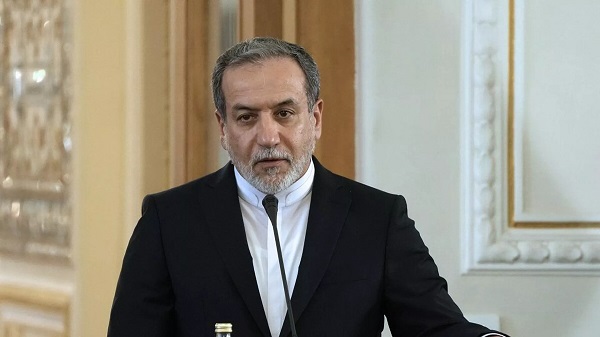
Araghchi argued that the most violent phase of the unrest lasted less than 72 hours and again blamed armed demonstrators and what he described as “terrorists” for the bloodshed. However, videos that have surfaced despite censorship and internet restrictions appear to show security forces repeatedly firing live ammunition at apparently unarmed protesters, an issue not addressed in his article.
Referring to the 12-day war launched by Israel against Iran in June 2025, Araghchi said Tehran had shown restraint at the time, but warned that any future confrontation would be far more destructive. He cautioned that an all-out conflict would engulf the wider Middle East, last far longer than anticipated by Iran’s adversaries, and have global consequences.
His comments came amid visible U.S. military movements. A U.S. aircraft carrier strike group led by the USS Abraham Lincoln has been moving west from Asia toward the Middle East, according to ship-tracking data, while U.S. military images have shown F-15E fighter jets arriving in the region and the repositioning of HIMARS missile systems. Although U.S. officials have stopped short of confirming the carrier’s destination, its position in the Indian Ocean places it only days from entering Middle Eastern waters.
Tensions have also prompted heightened security measures. Restrictions have reportedly been placed on U.S. diplomats’ travel near military bases in countries such as Kuwait and Qatar, while Iran last week closed its airspace, widely interpreted as preparation for a possible strike.
Iran’s Supreme Leader, Ayatollah Ali Khamenei, had earlier alluded to the scale of the casualties, saying the unrest had left “several thousand” people dead and blaming the United States for fomenting the protests. The Interior Ministry reiterated that claim on Wednesday, asserting that “terrorists used live ammunition” and accusing foreign-backed groups of responsibility for many of the deaths.
The Martyrs Foundation said Iran would pursue those it labeled as terrorists, alleging they were linked to Israel and “supported, equipped and armed” by the United States. Rights groups, however, have warned that such rhetoric could foreshadow harsher repression. The Human Rights Activists News Agency estimates that nearly 26,500 people have been arrested, raising fears that some detainees could face execution in a country already among the world’s top practitioners of capital punishment.
Adding to regional instability, a Kurdish armed group operating from northern Iraq claimed that Iran carried out a cross-border attack on one of its bases near Irbil, killing one fighter. Iran has not confirmed the strike, which, if verified, would mark its first foreign military operation since the protests began.
With protests now subdued but information still emerging slowly from inside Iran, observers fear the confirmed death toll may continue to rise. Combined with Iran’s increasingly confrontational rhetoric toward Washington and visible military deployments in the region, the crisis has underscored the risk that domestic unrest could spill into a broader international confrontation.
