

Ahmed Kamel – Egypt Daily News
U.S. President Donald Trump abruptly backed away from a new round of military action against Iran on Thursday, announcing that planned strikes had been called off only hours after he threatened to hit the country “very hard” and seize control of key parts of its oil industry.
The dramatic shift in tone came as Trump pointed to what he described as significant progress in negotiations with senior Iranian officials, raising hopes that a rapidly escalating confrontation between Washington and Tehran could be moving back toward diplomacy.
In a post on social media, Trump said he had decided to cancel planned military operations after encouraging developments in discussions with Iranian leadership. The announcement followed a tense 24 hours during which the president threatened further military escalation and suggested the United States could eventually take control of strategic Iranian energy infrastructure, including Kharg Island, the country’s main oil export terminal.
Trump Claims Progress Toward Major Agreement
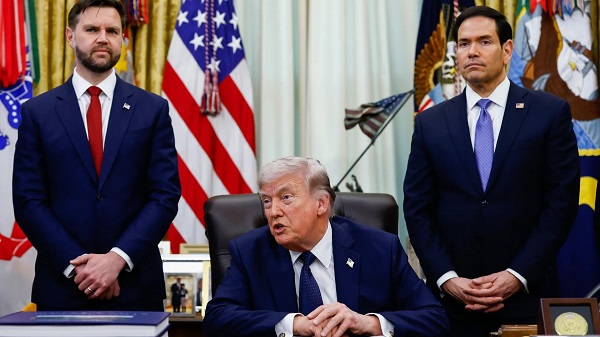
Speaking later at the White House, Trump painted an optimistic picture of ongoing negotiations, describing what he called a potential “great settlement” that could end the current conflict and reopen the Strait of Hormuz, one of the world’s most important energy shipping routes.
The president said negotiators had reached what he described as a strong memorandum of understanding and suggested a formal agreement could be finalized within days.
According to Trump, Iran has agreed in principle to abandon any pursuit of nuclear weapons and allow arrangements that would secure sensitive nuclear materials. He also indicated that Vice President JD Vance could attend a future signing ceremony in Europe should talks continue to progress.
“They will not have a nuclear weapon,” Trump told reporters. “They’ve agreed to that.”
The president further suggested that Iran’s supreme leader had signaled support for the emerging framework, although he acknowledged that discussions remained ongoing.
Tehran Urges Caution
Despite Trump’s optimistic assessment, Iranian officials offered a more measured response.
Iran’s Foreign Ministry said no final agreement has been reached and cautioned that negotiations remain unresolved. A ministry spokesperson, quoted by state media, acknowledged that much of a draft text had already been prepared but expressed frustration over what Tehran described as shifting American positions during the talks.
The cautious response highlighted the gap that often exists between public statements from both sides during high-stakes negotiations and underscored that significant obstacles may still remain before any formal agreement is concluded.
Adding to the uncertainty, elements within Iran’s powerful Islamic Revolutionary Guard Corps appeared to cast doubt on reports suggesting a breakthrough was imminent.
Escalation Followed by Diplomacy
Trump’s announcement came after another volatile day in the region.
Earlier Thursday, the president threatened to seize Kharg Island, which handles roughly 90 percent of Iran’s crude oil exports, and warned of new military strikes. The comments followed a second consecutive day of exchanges between American and Iranian forces after U.S. strikes targeted military infrastructure inside Iran.
Tehran, meanwhile, reported retaliatory operations against locations linked to American military activities in the Gulf region, while tensions remained high around the Strait of Hormuz.
The sudden pivot from threats of escalation to talk of a possible settlement reflects the unpredictable nature of the current crisis, where military pressure and diplomatic negotiations are unfolding simultaneously.
Strait of Hormuz Could Reopen
One of the most significant implications of any agreement would be the reopening of the Strait of Hormuz, a strategic waterway through which a substantial share of the world’s oil and natural gas exports pass.
Disruptions to shipping in the area have raised concerns among governments and energy markets, prompting calls from major powers for a negotiated resolution to the conflict.
Trump indicated that the United States would lift its blockade measures once an agreement is formally signed, potentially easing tensions in global energy markets and reducing fears of a wider regional confrontation.
Fragile Window for Peace
While both Washington and Tehran continue to exchange accusations, Trump’s decision to halt planned strikes has created a possible opening for diplomacy at a critical moment.
Whether that opportunity leads to a lasting agreement remains uncertain. Iranian officials continue to stress that negotiations are incomplete, while the recent military exchanges have demonstrated how quickly the situation can deteriorate.
For now, attention is focused on the next round of talks and whether negotiators can transform preliminary understandings into a formal agreement capable of preventing further conflict and stabilizing one of the world’s most volatile regions.
