

Ahmed Kamel – Egypt Daily News
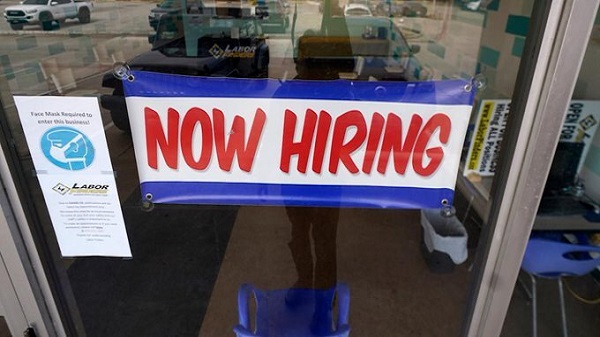
The U.S. labor market continued to show surprising resilience in May, with employers adding 172,000 jobs despite mounting inflationary pressures linked to rising energy costs and growing concerns over the economic fallout from the ongoing conflict involving Iran.
New figures released by the Bureau of Labor Statistics showed that hiring remained healthy across much of the economy, while the unemployment rate held steady at 4.3%, suggesting that businesses are continuing to expand payrolls even as consumers face higher prices and tighter financial conditions.
The stronger-than-expected employment gains offer a positive signal for the world’s largest economy, but economists warn that beneath the headline numbers, signs of strain are beginning to emerge.
Average hourly earnings increased 3.4% from a year earlier, marking one of the slowest rates of wage growth in several years. With consumer prices rising faster than paychecks, many households are experiencing a decline in purchasing power despite continued job creation.
That imbalance has become a growing concern for economists who fear that persistent inflation could eventually weaken consumer spending, which remains the primary engine of U.S. economic growth.
Energy costs have been a major driver of the latest inflation surge. Since the outbreak of hostilities involving Iran in late February, oil prices have climbed sharply, pushing gasoline and diesel prices significantly higher across the United States. The increase has rippled through the economy, raising transportation, manufacturing and logistics costs while putting additional pressure on household budgets.
Inflation accelerated to 3.8% in April, its highest level in three years, and investors are now closely watching next week’s consumer price report for further signs of whether price pressures are becoming entrenched.
The latest employment report strengthened expectations that the Federal Reserve could be forced to keep monetary policy tight for longer than previously anticipated. Financial markets reacted swiftly following the data release, with Treasury yields moving higher and stock futures declining as traders increased bets on future interest-rate hikes.
Investors now see a growing probability that policymakers will raise rates before the end of the year if inflation remains elevated and economic activity continues to show resilience.
The report arrives ahead of the Federal Reserve’s upcoming policy meeting, the first to be chaired by Kevin Warsh since taking over leadership of the central bank. The meeting is expected to provide important signals regarding how officials view the balance between supporting growth and containing inflation.
Several Federal Reserve officials have recently warned that inflation risks remain significant despite progress made over the past two years. Policymakers have expressed concern that waiting too long to respond could allow higher prices to become embedded across the broader economy, making future inflation more difficult and costly to control.
The strongest job gains in May came from healthcare and education, sectors that have consistently supported employment growth over the past year. Leisure and hospitality businesses also posted a surprisingly strong hiring month, indicating that demand for travel, entertainment and services remains relatively healthy despite rising living costs.
Government employment recorded additional gains, while manufacturing-related industries showed signs of stabilization after a challenging period.
Not every sector participated in the hiring surge, however. Financial services experienced notable job losses, while transportation and warehousing employment continued to decline as businesses adjusted to changing demand patterns and higher operating costs.
Adding to the positive picture, government statisticians revised employment figures for March and April upward, indicating that the labor market was stronger than initially reported during previous months.
Yet economists caution that the economy is becoming increasingly divided between strong employment conditions and growing inflationary pressures. Businesses continue to hire, but consumers are paying more for fuel, transportation and everyday goods. At the same time, wage gains have not fully kept pace with rising prices.
Another source of concern is diesel fuel, whose sharp increase has implications far beyond the energy sector. Because diesel powers freight transport, agriculture, construction equipment and supply chains, sustained price increases can spread quickly throughout the economy and contribute to higher costs for businesses and consumers alike.
Federal Reserve officials have also highlighted emerging inflation risks linked to the massive wave of investment in artificial intelligence infrastructure. Demand for data centers, advanced computer chips and memory systems has driven up prices in parts of the technology sector, creating another potential source of cost pressures.
For now, the U.S. economy continues to demonstrate remarkable resilience. But with inflation rising, energy markets under pressure and financial markets increasingly expecting tighter monetary policy, the coming months could determine whether strong job growth can continue without triggering a broader slowdown.
