

Ahmed Kamel – Egypt Daily News
Tensions between India and the United States have escalated sharply following Washington’s decision to impose steep new tariffs on Indian exports. In a significant move reflecting growing dissatisfaction in New Delhi, the Indian government has suspended plans to purchase new American weapons and aircraft, signaling a broader diplomatic rift between the two allies.
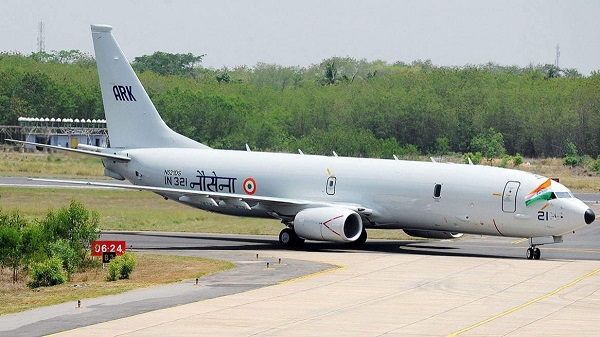
According to senior government officials in India, Defense Minister Rajnath Singh was scheduled to travel to Washington in the coming weeks to finalize and announce several high-value defense agreements. These included deals for U.S.-made Stryker armored combat vehicles from General Dynamics, Javelin anti-tank missiles co-developed by Raytheon and Lockheed Martin, and six Boeing P-8I reconnaissance aircraft. The total value of the suspended deals was estimated at approximately $3.6 billion. However, that visit has now been canceled.
The suspension of talks comes on the heels of an executive order signed by President Donald Trump in early August, which imposes an additional 25% tariff on Indian imports, particularly those tied to India’s continued purchase of Russian oil. With these new measures, the total tariffs on Indian goods entering the U.S. have climbed to 50%, among the highest imposed on any U.S. trade partner.
Sources in New Delhi stated that while the defense procurements have been frozen for now, they may be resumed in the future though likely at a much slower pace and only if Washington clarifies its position on tariffs and the future of bilateral relations. “Not at the pace we had anticipated,” one official noted.
India has strongly criticized what it sees as double standards in U.S. policy. While Washington has been pressuring New Delhi to scale back its trade with Moscow, several European allies of the U.S. continue to engage in business with Russia when it suits their interests. The Indian government views this as hypocritical and has grown increasingly vocal about the disparity.
Reacting to the latest developments, Indian Prime Minister Narendra Modi convened a high-level meeting on Friday to assess the potential economic impact of the new U.S. tariffs. In public statements following the meeting, Modi reaffirmed his administration’s commitment to safeguarding the interests of India’s farmers, fishermen, and livestock owners groups particularly vulnerable to trade-related economic shocks.
The deterioration in relations is especially notable given that, until recently, both nations had been working toward a broader bilateral trade agreement. Several rounds of negotiations had been held, but progress was stalled primarily due to U.S. demands that India open its agricultural markets to genetically modified (GM) crops. India has consistently rejected that proposal, citing concerns over food safety and potential harm to its agricultural sector.
Indian diplomats had hoped the tariff dispute could be resolved within the framework of a future trade deal. However, Trump’s decision to unilaterally impose sweeping tariffs paired with warnings of additional penalties if India continues its cooperation with Russia, has significantly reduced optimism for such an agreement.
This latest impasse places one of the world’s most strategically important bilateral relationships at a crossroads. With growing regional instability, competition with China, and shared interests in Indo-Pacific security, both Washington and New Delhi have much to lose from a prolonged diplomatic standoff. Still, India appears determined to assert its sovereignty in trade and foreign policy decisions, even if that means turning to alternative defense suppliers and recalibrating its strategic partnerships in the months ahead.
