

Ahmed Kamel – Egypt Daily News
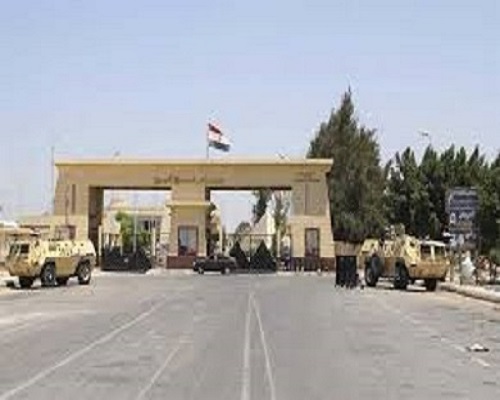
Tensions over the humanitarian situation in the Gaza Strip flared again this weekend as conflicting announcements emerged over the status of the Rafah border crossing between Egypt and the Gaza Strip, a vital gateway for the besieged Palestinian population.
On Saturday, the Palestinian Embassy in Cairo announced that the Rafah crossing, largely closed since May 2024, would reopen on Monday. According to the embassy, the move aimed to “enable Palestinian citizens residing in the Arab Republic of Egypt and wishing to return to the Gaza Strip to travel.”
This statement was met with swift contradiction from Israeli authorities later the same day. In a separate development, the office of Israeli Prime Minister Benjamin Netanyahu declared that Rafah would remain closed “until further notice.” The Israeli government made clear that any reopening of the crossing would be contingent on the return of the remains of Israeli hostages still believed to be held or killed in Gaza during the ongoing conflict with Hamas.
“Prime Minister Netanyahu has ordered that the Rafah crossing remain closed until further notice,” the statement read. It further emphasized that reopening the crossing would depend on “Hamas fulfilling its obligations to return the bodies of deceased hostages and adhering to the terms agreed upon in ceasefire negotiations.”
The Rafah crossing has become a flashpoint in the broader regional struggle over humanitarian access, military priorities, and diplomatic maneuvering. For Palestinians stranded outside Gaza, particularly in Egypt, the closure of Rafah has severed a critical lifeline home. At the same time, Israeli authorities have insisted that any gestures involving movement in or out of Gaza must be tied to progress on hostage recovery and ceasefire compliance.
Since the intensification of the Gaza conflict in late 2023, the Rafah crossing historically the only non-Israeli route in and out of the territory, has been subject to extreme restrictions. Egypt has largely coordinated crossing access in consultation with both Palestinian authorities and Israel, balancing humanitarian concerns against regional security dynamics.
The contradiction between the Palestinian embassy’s announcement and Israel’s firm stance underscores the fragile nature of negotiations over even limited access to Gaza. As families remain divided and humanitarian conditions worsen, the diplomatic gridlock continues to exact a heavy toll on civilians caught in the middle.
With no clear resolution in sight, the status of the Rafah crossing remains a symbol of the broader deadlock over Gaza’s future, where political imperatives often overshadow urgent humanitarian needs.
