

Ahmed Kamel – Egypt Daily News
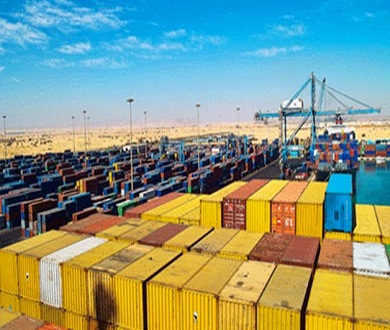
Egypt’s non-oil merchandise exports rose by nearly 21% year-on-year in the first nine months of 2025, reaching a total of $36.64 billion, according to statements by Essam El-Naggar, head of the General Organization for Export and Import Control.
The export growth comes as part of the Egyptian government’s broader strategy to strengthen foreign currency inflows through increased exports, especially amid economic pressures and fluctuating traditional revenue streams such as the Suez Canal. Cairo is targeting $145 billion in total exports by 2030, with industrial goods accounting for approximately $118 billion of that total.
El-Naggar noted that Egypt’s total trade volume between January and September approached $96 billion. Exports remain one of Egypt’s most vital sources of hard currency, alongside tourism, Suez Canal revenues, and remittances from Egyptians working abroad.
Exports Help Offset Suez Canal Revenue Drop
In 2024, Egypt’s total exports grew by 5.4% to reach $44.8 billion, with non-oil exports accounting for $39.4 billion, according to data from the Central Agency for Public Mobilization and Statistics (CAPMAS) released earlier this year. This rise played a crucial role in cushioning the impact of falling dollar inflows caused by disruptions to Suez Canal traffic, following repeated Houthi attacks on shipping routes in the Red Sea.
As a result, the export sector has emerged as a critical economic pillar in Egypt’s efforts to maintain currency stability and reduce reliance on more volatile income sources.
Tighter Links Between Export Support and Local Content
The Egyptian government is also moving to link export support more directly with domestic value addition. Under a new framework, companies must demonstrate a 5% annual increase in the local content of their products to qualify for export subsidies, while maintaining a minimum local component of 35%.
This initiative aims to promote industrial depth, reduce reliance on imported inputs, and strengthen supply chains within the domestic economy.
In line with these priorities, the government has significantly increased its allocation for export subsidies in the 2025–2026 state budget, raising it to EGP 45 billion up from EGP 23 billion targeted at the close of the previous fiscal year ending in June.
A Strategic Economic Target
Egypt’s long-term export vision forms a cornerstone of its broader economic reform strategy, which also includes attracting foreign direct investment, upgrading industrial infrastructure, and expanding free trade agreements, particularly with Africa, the Middle East, and Asia.
Officials see export growth not only as a means of stabilizing foreign currency reserves, but also as a path to job creation and industrial modernization key goals for a country navigating inflation, debt burdens, and regional geopolitical uncertainty.
As global trade patterns continue to shift and domestic reforms take shape, Egypt’s export-driven approach appears to be gaining traction though sustaining momentum will depend on external demand, internal productivity, and the resilience of global supply chains.
