

Ahmed Kamel – Egypt Daily News
Syrian President Ahmad al-Sharaa said his country has attracted nearly $28 billion in new investments over the past ten months since the fall of Bashar al-Assad’s government last December, marking a significant shift in the war-torn nation’s economic trajectory.
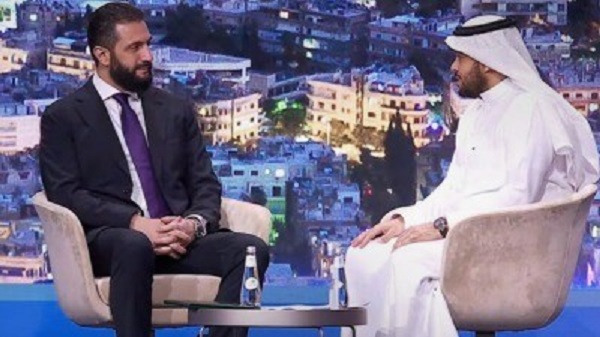
Speaking at the ninth edition of the Future Investment Initiative (FII) in Riyadh on Wednesday, al-Sharaa emphasized his commitment to rebuilding Syria’s economy without relying on foreign aid. “We have attracted about $28 billion in investments during the past ten months, including roughly $28 billion within the first six months,” he said during an onstage interview where he was introduced as a “special guest.”
The Syrian leader, who attended the session alongside Saudi Crown Prince Mohammed bin Salman, said that several major Saudi companies have already begun investing in Syria. He added that his government had reformed investment laws to allow foreign investors to freely repatriate their capital abroad, signaling an effort to build confidence among international financiers.
“The opportunities in Syria are enormous,” al-Sharaa said. “There is room for everyone to invest and participate in rebuilding our nation.”
Rebuilding a Country After 15 Years of War
Syria is embarking on an immense reconstruction effort after nearly fifteen years of devastating conflict that killed tens of thousands, displaced millions, and destroyed much of its urban infrastructure. For decades, the country’s economy was isolated by international sanctions that severely restricted foreign investment and access to capital.
The fall of Assad’s regime late last year paved the way for a new political landscape and a recalibration of regional alliances. Saudi Arabia, which had long been at odds with Damascus, has positioned itself as a leading partner in Syria’s post-war recovery.
Saudi Arabia Takes the Lead in Syria’s Reintegration
Since the end of the civil war, Riyadh has moved swiftly to embrace Syria’s new leadership. Saudi Arabia hosted al-Sharaa’s first foreign visit in February, symbolizing a dramatic thaw in relations.
In May, Crown Prince Mohammed bin Salman reportedly persuaded U.S. President Donald Trump to lift long-standing sanctions on Syria. The move paved the way for renewed economic engagement, culminating in a historic trilateral meeting between Trump and al-Sharaa a former jihadist who spent five years in a U.S. prison in Iraq before emerging as Syria’s new head of state.
In July, Saudi Arabia signed $6.4 billion in investment and partnership agreements with Damascus to help fund reconstruction projects, particularly in energy, housing, and infrastructure. A month earlier, Riyadh and Doha jointly pledged to settle $15 million of Syria’s debt to the World Bank a gesture viewed as a sign of growing regional support for the country’s economic revival.
As Syria seeks to rejoin the global economy, al-Sharaa’s statements in Riyadh underscored his attempt to project stability, encourage private investment, and reposition his government as a credible partner in rebuilding one of the Middle East’s most war-ravaged nations.
