

Ahmed Kamel – Egypt Daily News
A growing split has emerged between Donald Trump and Israeli Prime Minister Benjamin Netanyahu over how to handle the escalating confrontation with Iran, after the US president abruptly paused planned military strikes in favor of renewed diplomacy.
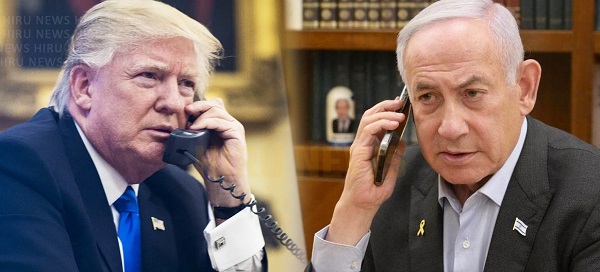
The disagreement surfaced during a tense phone call Tuesday between the two leaders, according to US and Israeli officials familiar with the conversation, highlighting increasingly different calculations in Washington and Tel Aviv as the region edges closer to a wider conflict.
Just days earlier, Trump had reportedly informed Netanyahu that the United States was preparing a new round of targeted attacks against Iranian-linked sites, an operation expected to be carried out under the name “Operation Sledgehammer.” The strikes were anticipated early this week and had already triggered concern across Gulf capitals fearful of a regional escalation.
But within 24 hours, the White House changed course.
Trump announced that the strikes were being suspended following urgent appeals from Qatar, Saudi Arabia and the United Arab Emirates, which have been quietly pushing for a diplomatic framework to prevent a full-scale war between Washington and Tehran.
Behind the scenes, Gulf officials, Pakistani mediators and White House representatives have spent recent days attempting to revive indirect negotiations with Iran, creating a narrow opening that Trump now appears willing to explore despite mounting pressure from Israel.
Speaking to reporters Wednesday, Trump signaled that diplomacy had not yet collapsed.
“We’re in the final stages of Iran. We’ll see what happens,” he said. “We’ll either have a deal or we’re going to do some things that are a little bit nasty.”
That shift has reportedly angered Netanyahu, who has long argued that Tehran uses negotiations to buy time while advancing its nuclear capabilities. During Tuesday’s hour-long call, the Israeli leader urged Trump not to delay military action and warned that hesitation would only strengthen Iran’s position, according to officials familiar with the discussion.
Israeli sources said senior figures around Netanyahu are increasingly frustrated with what they view as Trump’s pattern of issuing military threats before stepping back under diplomatic pressure.
For Israel’s leadership, the concern goes beyond rhetoric. Iranian officials have continued refusing demands to surrender or transfer the country’s stockpile of highly enriched uranium, one of Washington’s main conditions for any agreement.
Reuters reported that Iranian Supreme Leader Mojtaba Khamenei recently instructed officials not to send the near-weapons-grade uranium stockpile abroad under any circumstances. While the White House said it had not formally received such a message, Trump publicly insisted Thursday that the United States would never allow Tehran to retain the material.
“No, no, we get the highly enriched. We will get it,” Trump told reporters. “We’ll probably destroy it after we get it, but we’re not going to let them have it.”
Iran publicly downplayed reports of progress.
Foreign Ministry spokesman Esmaeil Baghaei dismissed speculation surrounding uranium negotiations and denied claims of an imminent diplomatic breakthrough, calling them “media speculation.” At the same time, Tehran acknowledged that messages continue to be exchanged with Washington through Pakistani intermediaries.
Pakistan has quietly become one of the central channels in the crisis. Military chief Field Marshal Asim Munir is expected to travel to Tehran as mediation efforts intensify. Pakistani officials have already hosted direct contacts between senior American and Iranian representatives in recent months as part of efforts to prevent open war.
Despite the ongoing talks, multiple core disputes remain unresolved, including Iran’s enrichment activities, sanctions relief and access to frozen assets abroad.
US Secretary of State Marco Rubio acknowledged Thursday that negotiations remain fragile.
“There’s some good signs, but I don’t want to be overly optimistic,” Rubio said before departing for Europe and India. “If we can get a good deal done, that would be great.”
Still, Trump has continued pairing diplomacy with explicit military threats, insisting the US military remains ready to act if negotiations fail.
“If we don’t get the right answers, it goes very quickly,” Trump warned. “We’re all ready to go.”
The growing divide between Washington and Tel Aviv now threatens to complicate coordination at a critical moment in the Iran crisis, with Israel pushing for immediate force while the White House attempts one final diplomatic gamble before deciding whether to escalate militarily.
