

Ahmed Kamel – Egypt Daily News
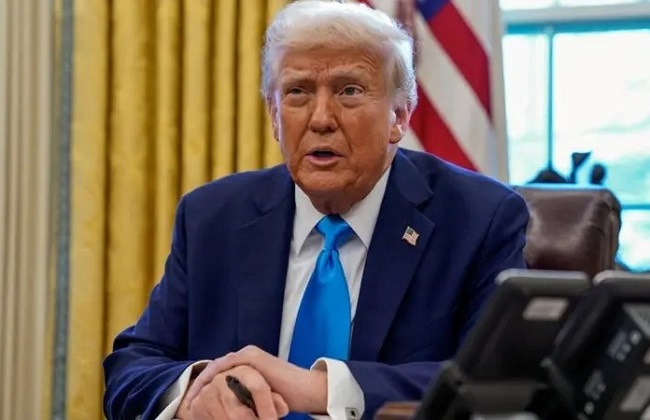
U.S. President Donald Trump announced Saturday that a broader agreement with Iran has been “largely negotiated,” signaling what could be the most significant diplomatic breakthrough since the outbreak of the U.S.-Iran war earlier this year.
In a statement posted on Truth Social, Trump said final details are still being discussed but indicated that a framework agreement is close to completion and could be formally announced in the coming days.
“An Agreement has been largely negotiated, subject to finalization between the United States of America, the Islamic Republic of Iran, and the various other Countries,” Trump wrote.
Regional Leaders Join High-Stakes Talks
Before making the announcement, Trump held discussions from the Oval Office with leaders and senior officials from Saudi Arabia, United Arab Emirates, Qatar, Egypt, Jordan, Pakistan, Turkey and Bahrain.
According to officials familiar with the discussions, the regional leaders encouraged Trump to move forward with the proposed framework and expressed support for efforts aimed at ending the conflict and restoring stability across the Middle East.
Trump also confirmed that he held a separate call with Israeli Prime Minister Benjamin Netanyahu, describing the conversation as positive.
Strait of Hormuz to Reopen
One of the most significant elements of the proposed agreement is the reopening of the Strait of Hormuz, the strategic waterway through which a large share of the world’s oil and liquefied natural gas supplies pass.
“In addition to many other elements of the Agreement, the Strait of Hormuz will be opened,” Trump said.
The closure of the waterway following the outbreak of hostilities severely disrupted global energy markets and raised fears of a broader economic crisis. Reopening the strait is viewed by regional governments as a critical step toward restoring stability and international trade flows.
Framework Agreement Would End War First
Iranian officials have described the emerging document as a preliminary framework rather than a final settlement.
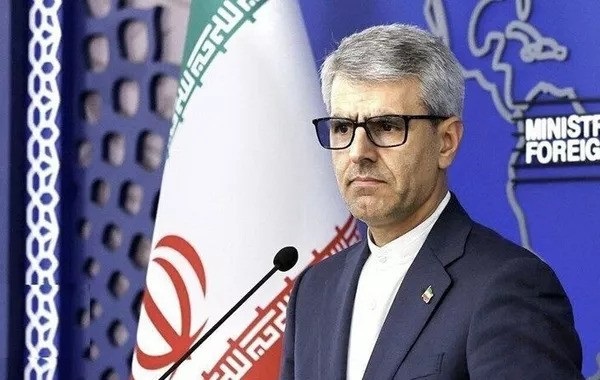
Foreign Ministry spokesman Esmaeil Baqaei said Tehran wants the agreement to focus initially on ending the war, easing economic pressure and creating a path toward broader negotiations. According to Iranian officials, the draft includes provisions for ending hostilities, lifting some restrictions on Iranian assets and establishing a timetable of roughly 30 to 60 days for follow-up negotiations.
Notably, Iran’s nuclear program is not expected to be addressed in detail during the first phase of discussions.
Nuclear Questions Remain Unresolved
Despite Trump’s optimistic announcement, major differences remain over some of the most sensitive issues in U.S.-Iran relations. Washington continues to insist that Iran can never obtain a nuclear weapon and must address concerns surrounding its stockpile of highly enriched uranium.
U.S. Secretary of State Marco Rubio reiterated this week that any long-term agreement must include safeguards preventing Iran from developing a nuclear weapon. Iran, however, has maintained that nuclear issues should be addressed only during a later phase of negotiations.
Pakistan Emerges as Key Mediator
A central role in the talks has been played by Pakistan’s military chief, Asim Munir, who traveled to Tehran for high-level meetings with senior Iranian officials. Pakistani officials described the latest round of diplomacy as productive and said negotiations over the past 24 hours had generated encouraging progress toward a final understanding.
Qatar also dispatched senior officials to Tehran to support mediation efforts.
Israel Voices Concerns
While Israel has welcomed continued U.S. consultations, Israeli officials remain concerned that an interim agreement could leave unresolved what they view as the most critical issues: Iran’s nuclear program and its stockpile of enriched uranium.
According to Israeli sources, Netanyahu is expected to convene senior ministers and security officials to assess the implications of the emerging agreement and determine Israel’s next steps. Some prominent Republican lawmakers have also voiced caution, warning that a deal perceived as too favorable to Tehran could alter the regional balance of power and undermine long-term security objectives.
A Critical Few Days Ahead
Although both Washington and Tehran are signaling progress, negotiators on all sides acknowledge that key disputes remain unresolved and that previous efforts have collapsed at the final stage.
Iran’s parliament speaker, Mohammad Bagher Ghalibaf, warned that Tehran has rebuilt its military capabilities during the ceasefire and would respond forcefully if hostilities resume. Nevertheless, officials involved in the mediation effort say momentum is moving toward a diplomatic breakthrough rather than a return to war.
With Trump declaring that a deal is now “largely negotiated,” the coming days could determine whether months of conflict give way to a fragile peace—or whether remaining disagreements once again derail the process.
