

Ahmed Kamel – Egypt Daily News
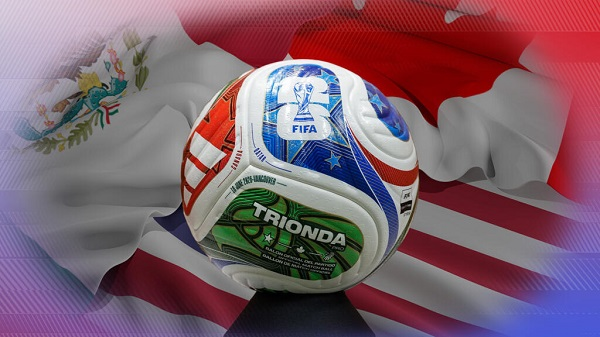
The biggest and most ambitious FIFA World Cup in history gets underway Thursday as the eyes of billions turn toward North America for a tournament that promises to redefine international football.
For the first time ever, 48 national teams will compete across three host nations the United States, Mexico, and Canada, in a World Cup expanded in both scale and global reach. Over the next six weeks, football’s greatest stars, emerging talents, and new footballing nations will battle through 104 matches before the tournament concludes with the final on July 19 at MetLife Stadium in New Jersey.
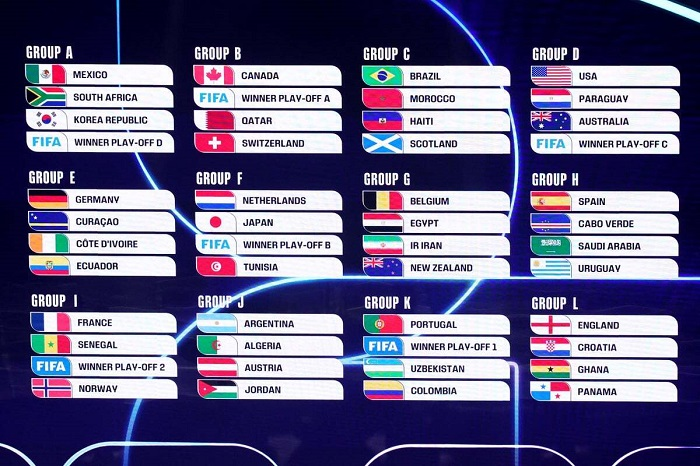
The opening match will take place at Mexico City’s iconic Azteca Stadium, marking the third time the legendary venue has hosted a World Cup opener after the 1970 and 1986 tournaments. Mexico will face South Africa in a symbolic rematch of the opening game of the 2010 World Cup.
A Historic Expansion
Since the inaugural World Cup in Uruguay in 1930, FIFA’s flagship tournament has undergone numerous transformations. None, however, compare to the changes introduced in 2026.
The expansion from 32 to 48 teams represents the most significant structural shift in modern World Cup history. The enlarged field allows greater representation from Africa, Asia, North and Central America, and other emerging football regions, giving nations that previously struggled to qualify a realistic pathway to the world’s biggest sporting stage.
Teams such as Curacao, Cape Verde, and Haiti are among those benefiting from the expanded format, bringing fresh stories and new audiences to a competition traditionally dominated by football’s established powers.
With 104 matches scheduled, the tournament will also be the longest and most extensive World Cup ever staged.
A Continental Tournament
For the first time, three countries are jointly hosting the competition, creating a logistical operation unlike anything seen before in international football.
Sixteen host cities spread across thousands of kilometers will stage matches, transforming the World Cup into a truly continental event. Organizers have relied on North America’s extensive transportation networks, modern stadiums, and experience hosting major sporting spectacles to manage the unprecedented scale.
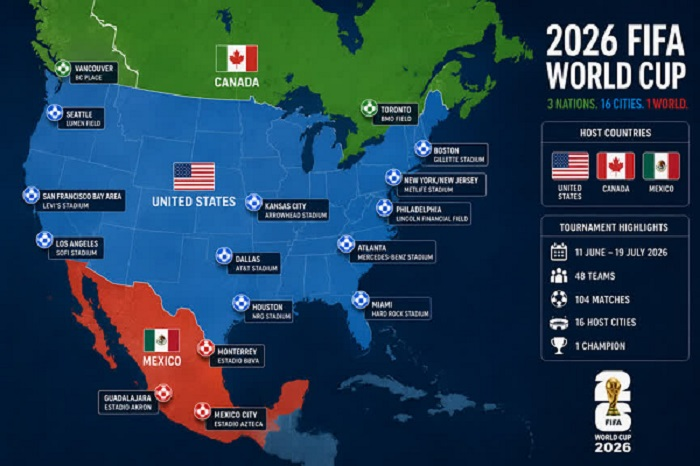
Beyond football, the tournament serves as a showcase for regional cooperation between the United States, Canada, and Mexico, highlighting their economic strength, tourism industries, and organizational capabilities before a global audience.
Technology Takes Center Stage
World Cup 2026 is expected to become the most technologically advanced edition of the tournament.
From enhanced video assistant referee systems to artificial intelligence-powered performance analysis, technology will play a larger role than ever before. Digital ticketing systems, crowd-management platforms, real-time data services, augmented reality broadcasts, and interactive fan applications are all expected to reshape how supporters experience the competition.
For broadcasters and media organizations, the tournament will also provide new opportunities to deliver immersive coverage to audiences across multiple platforms.
The Favorites
Defending champions Argentina enter the tournament among the leading contenders to retain their crown, while France remains a formidable force thanks to the depth and quality of its squad.
Brazil once again arrives carrying the weight of expectation, with the five-time world champions seeking to reclaim football’s ultimate prize. Spain hopes its emerging generation can restore the glory of its golden era, while England and Germany both possess the talent and pedigree to challenge deep into the competition.

Among Arab nations, Morocco enters the tournament with significant expectations following its historic run to the semifinals in Qatar 2022, a breakthrough that transformed perceptions of African and Arab football on the global stage.
Yet the expanded format could create opportunities for unexpected contenders, potentially producing some of the most memorable upsets in World Cup history.
Economic Windfall
The World Cup’s influence extends far beyond the football pitch.
Analysts expect the tournament to generate record revenues through broadcasting rights, sponsorship agreements, tourism, merchandising, and commercial partnerships. Overall economic activity linked to the competition could exceed $11 billion, making it one of the most lucrative sporting events ever staged.
Host cities are preparing for an influx of more than one million international visitors, with hotels, restaurants, transportation providers, and entertainment businesses anticipating a major surge in demand.
Local authorities also hope the infrastructure investments associated with the tournament will leave a lasting legacy long after the final whistle is blown.
Security and Logistical Challenges
Organizing a tournament of this magnitude presents enormous challenges.
With 48 teams, hundreds of thousands of traveling supporters, and matches spread across three countries, authorities have spent years developing complex coordination plans involving security agencies, transportation networks, airports, emergency services, and football governing bodies.
Cybersecurity has emerged as a major priority, alongside crowd management, stadium protection, and safeguarding critical infrastructure.
Organizers have also introduced measures to address extreme summer temperatures expected in several host cities, including cooling facilities, hydration stations, and enhanced medical services designed to protect players and spectators.
More Than a Football Tournament
Throughout its history, the World Cup has served as more than a sporting competition. It has been a platform where cultures meet, rivalries unfold, and nations present themselves to the world.
In an era marked by geopolitical tensions and global uncertainty, FIFA hopes the 2026 tournament can once again unite billions through a shared passion for football.
As kickoff approaches, anticipation continues to build across every continent. Whether it delivers new champions, unforgettable underdog stories, or iconic moments destined for football history, one thing is already certain: World Cup 2026 will be unlike anything the sport has ever seen.
