

Ahmed Kamel – Egypt Daily News
Unprecedented Industrial Scaling for Long-Range Firepower
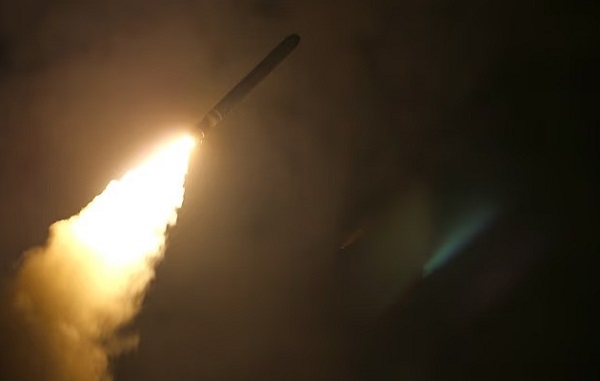
The United States Department of Defense has officially finalized a massive twenty-two billion dollar contract with RTX subsidiary Raytheon. This unprecedented seven-year industrial commitment will aggressively scale up Tomahawk cruise missile manufacturing across domestic production lines.
The newly signed aerospace agreement expands manufacturing from a baseline of just sixty missiles per year to over one thousand units annually. Defense officials rushed to finalize the procurement contract as the intense regional conflict against Iran continues to strain localized ammunition reserves.
Strategic Military Response and Frontline Fleet Requirements
Acting Navy Secretary Hung Cao stated that the procurement contract leverages every available logistical tool to accelerate delivery to frontline combat forces. He emphasized that the weapon systems are being distributed at an entirely unprecedented pace to maintain naval supremacy.
Cao explained that ensuring the Navy has sufficient firepower is absolutely vital for long-term national deterrence. He noted that the Pentagon is actively utilizing all industrial mechanisms to fully satisfy current operational demands in international waters.
Industry Reaction and Strategic Maritime Fleet Integration
Aerospace giant RTX quickly released an official statement confirming the massive production expansion to stabilize long-term defense pipelines. The company noted that the extensive contract guarantees a predictable and highly reliable flow of guided munitions for the next seven years.
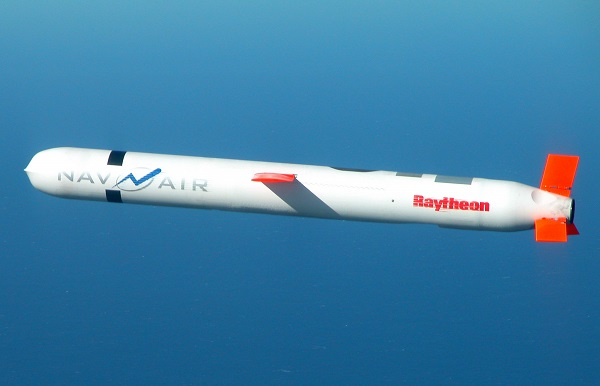
Tomahawk cruise missiles represent an indispensable tactical staple of the United States Navy surface fleet and submarine force. These highly specialized guided weapons allow American warships to execute pinpoint, long-range strikes against heavily fortified inland targets.
Independent Technical Assessments and Global Air Defense Tracking
Independent defense analysts at the Center for Strategic and International Studies recently published a report tracking severe drawdowns in American air defense infrastructure. The specialized think tank estimated that domestic stockpiles of key defensive interceptors have plummeted by roughly half since February.
According to these data-backed assessments, combat operations have severely drained defensive infrastructure originally intended for global deployment. The massive strategic drain highlights the accelerating velocity of guided ammunition consumption under current wartime conditions.
Specific Strategic Depletion Metrics for Interceptor Inventories
Prior to the outbreak of regional hostilities, Washington maintained an estimated two thousand Patriot interceptor missiles safely within its strategic reserves. The military also possessed more than four hundred active THAAD units designed to intercept high-altitude ballistic threats.
Both of these advanced defensive systems have witnessed a substantial, quantifiable decline throughout the subsequent months of continuous regional combat. These specific logistics reports raised sharp concerns among defense planners regarding long-term ammunition sustainment.
White House Reassurances and Official Procurement Policies
President Donald Trump and Defense Secretary Pete Hegseth explicitly denied any critical or debilitating shortages within the national arms inventory. They stated that the American armed forces retain more than enough ordnance to handle any emerging global contingencies.
Despite these high-level political reassurances, the Pentagon continues to quietly accelerate parallel manufacturing contracts for vital interceptor components. This dual approach helps maintain public confidence while practically resolving complex industrial bottleneck challenges.
Comprehensive Defense Industrial Base Stabilization Efforts
The newly signed aerospace agreements aim to stabilize the broader industrial supply chain while compensating for unprecedented field consumption rates. The massive influx of capital ensures that American forces maintain long-term operational readiness during prolonged global friction points.
Additionally, the military signed supplementary deals earlier this month to accelerate the fabrication of underlying radar and guidance components. This comprehensive industrial approach guarantees that the domestic manufacturing base can sustain prolonged high-intensity combat operations abroad.
Domestic Economic Impact and Advanced Manufacturing Jobs
The massive capital injection will heavily stimulate the domestic defense industrial base across multiple manufacturing facilities. This extended production line is projected to generate thousands of highly skilled engineering and technical jobs inside the United States.
Local sub-contractors will also experience a dramatic surge in demand for specialized electronic components and rocket motor assemblies. This domestic industrial boost guarantees that American manufacturing capacity remains resilient against global economic disruptions.
