

Ahmed Kamel – Egypt Daily News
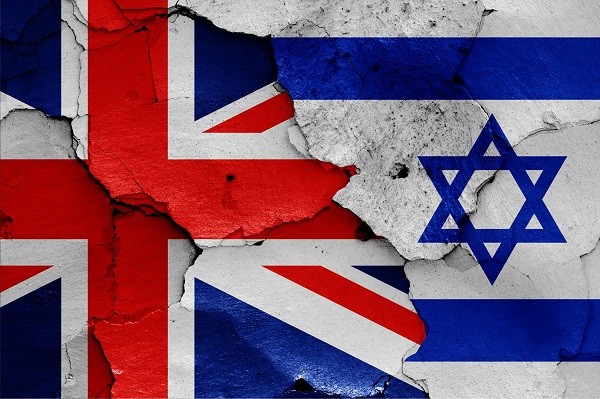
Britain’s decision to impose sanctions on Israeli settlements in the occupied West Bank has triggered a sharp diplomatic confrontation with Israel, drawing threats of retaliation, criticism from senior American officials and fresh divisions within the British Labour Party.
Foreign Secretary Ed Miliband announced the measures in Parliament, accusing Israeli settlers of what he described as “rampant terrorism” and warning that the expansion of settlements was undermining the prospect of a future Palestinian state.
Under the plans, Britain will prohibit the import of goods produced in Israeli settlements and restrict commercial activity linked to settlement expansion. Companies involved in construction, infrastructure, finance, real estate and related services could face penalties if their work supports the development or marketing of properties in the settlements.
The government also intends to prevent British businesses from advertising settlement properties and will restrict the sale of weapons to Israel where ministers believe they could materially contribute to the occupation of Palestinian territory. The measures are being coordinated with France, Canada and several other countries.
Miliband said the sanctions would not apply to normal trade with Israel, stressing that the government was targeting settlement activity rather than seeking a wider economic confrontation with the country.
“Britain is not silent in the face of deep injustice and nor is it powerless,” he told MPs.
He described the two-state solution as the government’s guiding objective and argued that action was necessary to prevent the permanent destruction of a viable Palestinian state. The foreign secretary said Britain could no longer stand by while settlement construction and violence continued in the West Bank.
Israel responded angrily. Its government announced that it would close the British consulate in East Jerusalem, which is accredited to the Palestinian Authority. Israeli officials described the British measures as hostile interference in the country’s internal affairs.
Foreign Minister Gideon Saar condemned the policy as “morally distorted” and compared it with historic language used during the British Mandate in Palestine. He accused the Labour government of attempting to pressure Israel economically while ignoring the Jewish people’s historic connection to the land.
“The Jewish people have the right to live throughout the Land of Israel,” Saar said, arguing that Israel’s ties to the territory were supported by a long historical record.
Israeli Finance Minister Bezalel Smotrich went further, calling for the expulsion of Britain’s ambassador. He accused London of adopting an antisemitic position and claimed that the British government was attempting to deflect attention from domestic political and economic problems by attacking Israel.
President Isaac Herzog urged Britain to pursue dialogue rather than sanctions. He warned that the decision could prove to be a serious strategic mistake, particularly if other countries joined the campaign.
The dispute has also spilled into the South Atlantic. Itamar Ben-Gvir, Israel’s national security minister, called on the government to recognise Argentina’s claim to the Falkland Islands, which Argentina refers to as the Malvinas. He also urged Israel to impose sanctions on Britain until what he described as the British occupation of the islands ended.
Britain has repeatedly rejected Argentina’s claim to sovereignty over the Falklands. Islanders voted overwhelmingly in 2013 to remain British, and successive British governments have insisted that their right to determine the islands’ future must be respected.
Labour MP Emily Thornberry criticised Ben-Gvir’s intervention in Parliament, arguing that Israeli officials should concentrate on the situation in Gaza and the West Bank rather than entering the Falklands dispute.
The British government’s announcement has also provoked a strong reaction in the United States. Mike Huckabee, the US ambassador to Israel, accused Britain of discriminating against Israel and the Jewish people. He suggested that the sanctions could have consequences for British companies operating in the United States.
Huckabee pointed to Florida legislation that restricts state and local government business with companies involved in boycotts of Israel. Republican congressman Randy Fine, who supported the measure, warned that British firms complying with the new restrictions could lose access to contracts and official services in Florida.
Fine said the consequences could affect British businesses seeking permits, collecting taxes or carrying out other activities requiring contact with state authorities. He argued that the British policy amounted to support for groups hostile to Israel and warned that it could cost British companies billions of dollars.
Former British Foreign Secretary Kemi Badenoch accused Labour of pursuing a policy driven more by internal party politics than by a realistic strategy for peace. She said the government’s position risked creating a hostile atmosphere around Israel while claiming to oppose antisemitism.
Tom Tugendhat, the Conservative opposition’s foreign affairs spokesman, said his party agreed that Israeli settlements were illegal and condemned violence by extremist settlers. However, he argued that the government’s approach was simplistic and unlikely to change Israeli policy.
Tugendhat also warned that sanctions could strengthen hard-line politicians in Israel ahead of its election, rather than helping advocates of compromise.
The measures come as Labour faces pressure from activists and voters demanding a tougher position on Israel. The party has suffered losses to the Greens and to independent candidates campaigning primarily on the war in Gaza and Palestinian rights.
At the same time, some Labour MPs have expressed concern that the government’s policy could increase the risk of antisemitic attacks against Britain’s Jewish community. Miliband acknowledged the rise in antisemitism and said the government remained committed to protecting Jewish citizens.
He also condemned the Hamas attacks of October 7 and recognised Israel’s right to defend its population. However, he said that right could not justify the scale of suffering in Gaza or the obstruction of humanitarian aid. He argued that growing evidence of possible war crimes demanded an international response.
Miliband, who has spoken publicly about his Jewish heritage and his family’s experience of fleeing Nazi persecution, said there was no contradiction between supporting Israel’s existence and backing Palestinian statehood.
He told MPs that he felt a profound sense of shame over the devastation in Palestine and insisted that Britain’s policy was intended to preserve, rather than abandon, the possibility of peace.
The response from Washington remains uncertain, with President Donald Trump yet to announce whether the United States will take formal action. British officials are preparing for further diplomatic and economic pressure as the dispute intensifies.
What began as a targeted sanctions policy has now widened into a confrontation involving Israel, Britain, the United States and Argentina. The dispute threatens to strain British-Israeli relations further while exposing deep disagreements within Britain over how to respond to settlement expansion, the war in Gaza and the future of the Middle East peace process.
