
Ahmed Kamel – Egypt Daily News
President Abdel Fattah El-Sisi has said his presidency will end in 2030 and that Egypt’s Constitution will not be amended, while proposing a 30-month programme to prepare a new generation for senior public office.
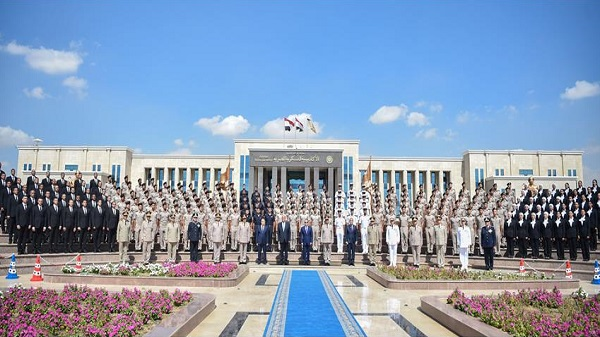
Speaking on Saturday at a graduation ceremony for the first cohort of the Egyptian Military Academy and new graduates of military colleges, President Sisi described the end of his term as settled. He said the country should begin preparing people capable of taking responsibility well before the transition, so that voters and state institutions would have a pool of qualified candidates to consider.
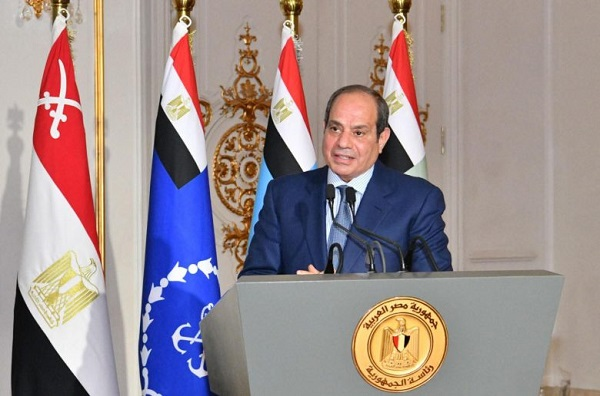
The proposed programme would be based at the Military Academy and would target doctorate holders aged 40 to 50 from recognised Egyptian or foreign universities. Applicants would undergo selection tests, and the academy would provide up to 30 months of training. President Sisi said the initiative could accommodate groups of 200, 300, 500 or more, depending on the selection process, and that the Armed Forces would cover its costs.
The curriculum, as described by the president, would focus on how the state functions, how its resources are managed and what is required to preserve its institutions. He argued that leadership requires more than public-speaking ability, and that people taking on senior roles must understand the responsibilities and pressures involved.
President Sisi proposed that the Speaker of the House of Representatives work with the ministers of higher education and justice, along with politicians and intellectuals, to develop the programme’s framework and draft legislation governing the selection of eligible candidates. He said the programme should help prepare people for leadership across government, not just the presidency, including ministerial, parliamentary and local roles.
Important details remain to be determined, including how candidates would be assessed and how training would relate to existing legal requirements for running for president. President Sisi did not make clear whether completing the programme would be optional or a formal condition for particular offices. He said the public should ultimately have the chance to choose among people who meet the relevant standards.
The proposal comes as President Sisi reiterated that his current term will end in 2030. His remarks follow earlier statements rejecting constitutional amendments to extend his time in office. Constitutional changes adopted in 2019 extended presidential terms from four years to six and permitted President Sisi to seek a third term, which runs until 2030. In his speech, he said his commitment to that timetable did not mean he would stop working to prepare the state for the future.
Egypt, he said, had citizens capable of taking on national responsibilities if they received proper preparation. He also warned against treating governance as something that could be learned only after taking office, arguing that senior officials need a substantial understanding of state institutions before assuming leadership positions.
President Sisi used the ceremony to draw lessons from earlier periods of economic and political turmoil. He recalled the role of former defence minister Hussein Tantawi, saying Tantawi had worked over many years to build up resources that could help the state meet future challenges. President Sisi said the Armed Forces provided 80 billion Egyptian pounds to support the country in 2011, after reducing expenses. He also attributed economic losses of 450 billion dollars to the upheavals of that period, figures he presented as a reason to remember the costs of instability.
He thanked Saudi Arabia, the United Arab Emirates and Kuwait for support to Egypt in 2013, including shipments of fuel, wheat, gas and bottled butane at a time when the country faced severe economic pressures. His remarks cast the proposed leadership initiative within a broader appeal for institutional stability, economic resilience and continuity in government.
The president also turned to regional security, saying Egypt would be prepared to take measures to protect Gulf allies if asked. He called for Parliament to convene in an emergency session to authorize such action, stressing that any response would be defensive rather than an attempt to attack another party. He described Egyptian and Saudi security as closely connected and warned against threats to Saudi Arabia, the Red Sea and international shipping routes.
President Sisi also referred to instability along Egypt’s southern and western borders, saying the security of Sudan, Libya and Gaza has implications for Egypt and the wider Arab region. The comments underscored the government’s emphasis on national security as part of its case for maintaining stable state institutions.
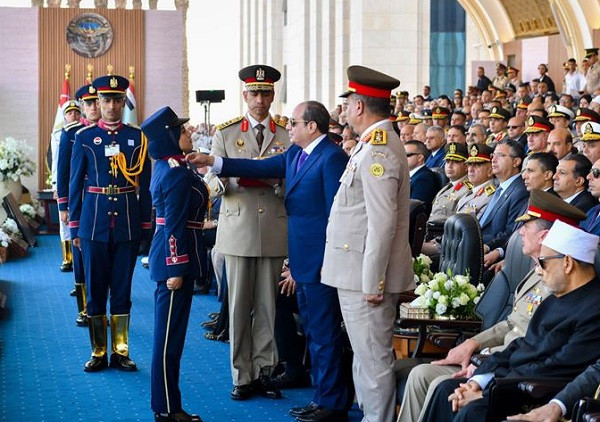
The ceremony included the graduation of military college students and the first cohort of the Egyptian Military Academy. Graduates demonstrated physical training and combat skills, and President Sisi presented honours to top students. In his address, he told graduates that military strength depends not only on weapons but also on knowledge, competence, discipline and commitment.
He urged them to perform their duties professionally and continue developing their skills. More broadly, he argued that Egypt’s development depends on high-quality education and the preparation of capable officials without favouritism. Building a future leadership pool, he said, was a shared responsibility.
The proposal places the Military Academy at the centre of a wider effort to train people for civilian as well as military leadership roles. Whether that effort becomes a structured route into public office will depend on the legislation and selection rules developed in the coming months. For now, President Sisi has framed the initiative as preparation for a transition in 2030, while reaffirming that the Constitution will remain unchanged.
