
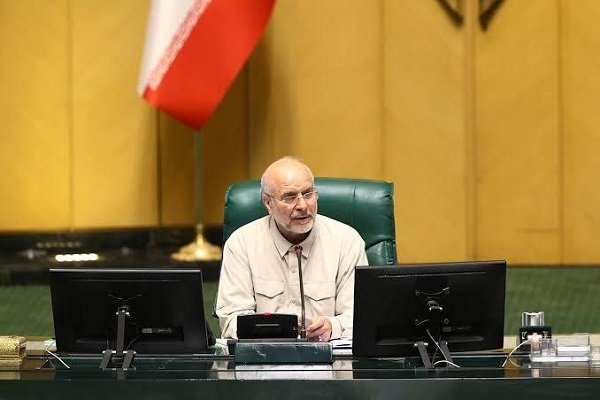
Iranian Parliament Speaker Mohammad Bagher Qalibaf said Tuesday that Tehran would not enter negotiations to end the conflict until its seven conditions are fulfilled, while warning that Iran could widen the battlefield if its adversaries made what he called a mistake.
“Our position is the same as before,” Qalibaf said in remarks carried by Iranian state media. He said Iran would take no steps toward talks before the conditions were met and was prepared to respond forcefully to hostile actions. The warning signals that Tehran is maintaining a hard line even as diplomatic contacts continue through regional intermediaries.
Qalibaf did not provide a full list of the seven conditions in the remarks quoted by Iranian media. Iranian reporting on Tehran’s proposal has identified demands that include lifting the U.S. naval blockade of Iranian ports, easing oil sanctions and addressing other economic restrictions. The exact wording and sequencing of all seven points were not independently confirmed. The absence of a complete public list leaves uncertainty over what Iran would consider sufficient to begin negotiations.
The speaker’s statement followed his earlier call to end the prolonged state of “neither war nor peace.” On Sunday, Qalibaf argued that the current uncertainty could not continue indefinitely and said Iran needed “sustainable deterrence” to remove the threat of another war. He also criticized domestic political debate that frames advocates of negotiation as weak and supporters of military resistance as warmongers, saying such accusations do not produce a practical way forward.
The message combines a refusal to negotiate under current conditions with an argument that Iran needs stronger deterrence. Qalibaf has said Iran’s adversaries now understand that another campaign similar to the recent 40-day conflict would not achieve their objectives. He accused them of shifting toward economic pressure and attempts to destabilize Iran internally. Those statements represent the Iranian leadership’s account of its adversaries’ strategy and are not independent evidence of the motives behind U.S. policy.
The phrase “change the geography of the battle” is deliberately broad. Qalibaf did not identify specific targets, locations or military actions Iran might consider. In the context of the regional conflict, the warning could be intended to signal that Tehran views the confrontation as extending beyond its own territory, but it does not establish that Iran has decided to open a new front or launch a particular operation.
That distinction matters as tensions remain high around the Strait of Hormuz and the U.S. naval blockade. The waterway is a critical route for global oil and gas shipments, and any disruption could affect commercial shipping well beyond the region. A direct clash involving Iranian and U.S. forces could also prompt retaliation against military facilities or shipping, increasing the risk that a limited encounter would escalate.
President Donald Trump has said he may consider renewed military strikes against Iran after the New Year if negotiations do not produce an agreement. He has also warned that U.S. forces would attack Iranian vessels that attempt to challenge the blockade. Trump’s statements and Qalibaf’s warning have left diplomacy taking place alongside explicit threats of further military action.
The two sides appear to disagree not only over the substance of a settlement but also over the conditions under which talks should proceed. Washington has pressed for an agreement addressing Iran’s nuclear program and security activities. Tehran, in turn, has emphasized sanctions relief, an end to the blockade and assurances against renewed attacks. Public statements from both governments have not established that a negotiated framework is close.
Regional mediation remains a possible channel. Qatar and other governments have previously carried messages between Washington and Tehran, and reporting has described continuing contacts even as formal negotiations have stalled. But mediation can only bridge the gap if both sides are willing to discuss terms; Qalibaf’s latest remarks suggest Iran wants key conditions addressed before it commits to that process.
The speaker also urged Iranian officials to stop reducing the debate to a choice between surrender and war. His call for a clear, operational approach appears aimed at presenting deterrence as a way to prevent renewed conflict, rather than as an announcement that Iran intends to restart hostilities. Still, the strategy he described depends on military and economic pressure that Washington and Tehran each regard as a threat.
For now, Qalibaf’s remarks set out Iran’s public position, not a detailed negotiating offer or a confirmed military plan. Tehran says it will not enter talks before its seven conditions are met and warns that any further hostile move could broaden the confrontation. The unresolved question is whether the two sides can find a way to begin substantive negotiations before the blockade, regional threats and competing demands trigger another round of fighting.
