

Ahmed Kamel – Egypt Daily News
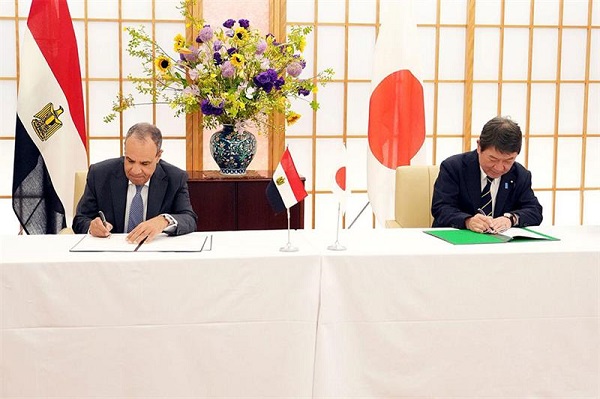
Egypt and Japan took a significant step toward deepening bilateral relations on Wednesday by signing a preliminary framework for a comprehensive strategic partnership, laying the groundwork for a future presidential-level agreement that would formalize cooperation across economic, diplomatic and development sectors.
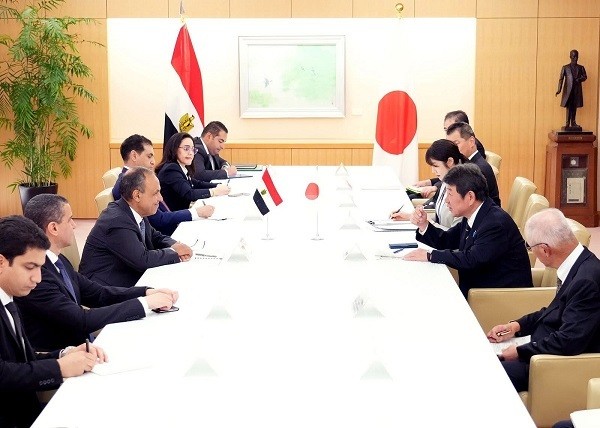
The framework was signed during the third round of the Egyptian-Japanese Strategic Dialogue in Tokyo, where Foreign Minister Badr Abdelatty and Japanese Foreign Minister Toshimitsu Motegi reviewed the expanding partnership between the two countries and explored new areas for cooperation.
The move reflects the rapid evolution of relations between Cairo and Tokyo since both governments elevated ties to a Strategic Partnership in 2023, with growing emphasis on investment, education, technology, infrastructure and regional development initiatives.
Partnership Enters New Phase
Officials described the latest dialogue as part of a broader effort to transform the relationship from one largely centered on development assistance into a multidimensional strategic partnership with stronger political and economic foundations.
According to Egypt’s Foreign Ministry, Abdelatty stressed the importance of maintaining regular strategic consultations and activating all mechanisms established under the partnership framework.
The discussions covered a wide range of issues, including economic cooperation, regional developments, development assistance, cultural exchanges and joint initiatives across Africa.
The signing of the preliminary framework is expected to pave the way for a formal strategic partnership document to be endorsed at the presidential level in a future high-level meeting.
Cairo Seeks Greater Japanese Investment
Economic cooperation featured prominently during the talks, with Egypt highlighting its efforts to attract foreign investment amid ongoing reforms aimed at improving the business environment.
Abdelatty presented Egypt as a strategic destination for Japanese manufacturers and investors seeking access to regional markets through the country’s extensive network of trade agreements spanning Africa, the Arab world and Europe.
Particular attention was given to opportunities within the Suez Canal Economic Zone, which Egyptian officials continue to promote as a major industrial and logistics hub capable of serving international supply chains.
The foreign minister encouraged Japanese companies to expand their investments in Egypt, arguing that the country’s geographic position and improving infrastructure offer significant advantages for export-oriented industries.
As global companies increasingly seek to diversify production networks and reduce supply-chain risks, Egyptian officials believe the country is well positioned to attract a larger share of Asian manufacturing investment.
Development Cooperation Remains Cornerstone
While economic cooperation is expanding, development assistance remains one of the strongest pillars of Egyptian-Japanese relations.
The two ministers reviewed projects supported by the Japan International Cooperation Agency (JICA), which has played a central role in financing and supporting major initiatives in education, transportation, healthcare and human-resource development.
Egypt expressed appreciation for Japan’s longstanding support, particularly in education and scientific research, areas that have become defining features of the bilateral relationship.
Officials also discussed ways to expand cooperation in support of Egypt’s sustainable development objectives and long-term economic modernization plans.
Education and Culture Continue to Drive Relations
Education remains one of the most visible success stories of Egyptian-Japanese cooperation.
Projects such as the Egypt-Japan University of Science and Technology (E-JUST) and the expanding network of Egyptian-Japanese Schools have become flagship examples of knowledge transfer and institutional partnership between the two countries.
The talks also addressed cultural cooperation, with Egyptian officials highlighting Japan’s support for the Grand Egyptian Museum, one of the largest cultural projects undertaken in the region.
Abdelatty described the museum as a symbol of the depth of cooperation between Cairo and Tokyo and a successful model of collaboration extending beyond traditional development assistance.
Joint Focus on Africa
The strategic dialogue also examined opportunities for trilateral cooperation involving Egypt, Japan and African countries.
Egyptian officials argued that combining Egypt’s regional reach with Japan’s technological and development expertise could help support investment, capacity building and peacebuilding efforts across the continent.
Discussions included mechanisms for advancing commitments made during the Tokyo International Conference on African Development (TICAD), with a particular focus on sustainable development, technology transfer and economic growth.
Cairo also promoted cooperation through African institutions focused on conflict resolution and peacebuilding, reflecting Egypt’s efforts to position itself as a bridge between international partners and emerging African markets.
Regional Issues on Agenda
Beyond bilateral relations, the ministers exchanged views on developments across the Middle East and other international issues.
Japanese officials praised Egypt’s role in promoting regional stability and acknowledged Cairo’s diplomatic efforts to address ongoing crises in the region.
A fourth round of the strategic dialogue is scheduled to continue on Thursday, focusing on regional and international developments and further coordination between the two governments.
The latest agreements suggest that Egyptian-Japanese relations are entering a new stage, with both countries seeking to build a broader strategic partnership that extends beyond development cooperation into investment, diplomacy and long-term geopolitical coordination.
