

Egypt Daily News – Egypt News.
Egypt’s Transport Minister Kamel Al-Wazir has pledged to carry out an urgent programme of railway safety improvements across the country within a maximum of one year, following a collision in Giza that killed seven people and injured 125.
Al-Wazir announced the plan on Saturday during a meeting with officials and employees from railway operating departments. He apologized on behalf of himself and ministry staff to the families of those killed and injured. The meeting opened with a minute of silence and the recitation of Al-Fatiha in memory of the victims.
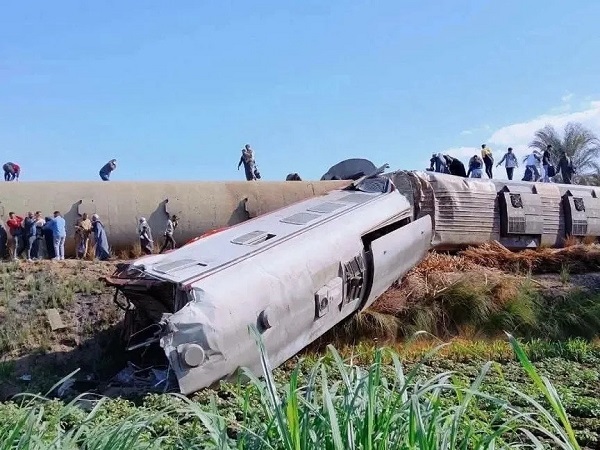
The collision occurred on 8 November near Kafr Ammar and Al-Raqqa stations in Giza Governorate. Tahya Misr train 134, travelling from Giza to Fayoum, struck the rear of stationary train 2010, which was bound from Cairo to Aswan. Several carriages derailed.
The Public Prosecution is investigating the crash, and President Abdel-Fattah El-Sisi has ordered an urgent inquiry and called for accountability for anyone found responsible. Al-Wazir cautioned against drawing conclusions before investigators complete their work, while saying the ministry would examine each accident to identify its causes and reduce the risk of similar incidents.
The minister said measures that can be taken immediately would begin without delay. Other upgrades are to be completed under a timetable of no more than one year, with the necessary funding provided. The programme includes accelerating the modernization of railway signalling, expanding surveillance cameras along tracks and completing their installation at stations and inside locomotives. It also calls for updated rescue equipment and more railway inspection machines.
Al-Wazir ordered more intensive checks across railway operations, including maintenance workshops, locomotive and carriage servicing facilities, signalling towers and train crews. He said no train should leave a workshop until its technical condition and readiness for service have been fully checked.
The plan also calls for reviewing train timetables to better match passenger demand with the capacity of available trains. The ministry is to balance service frequency and passenger volumes on individual lines, while continuing signalling upgrades. Al-Wazir said modernization had been completed on the Cairo–Alexandria, Beni Suef–Asyut and Asyut–Nag Hammadi lines; the remaining safety and signalling projects are to be finished within the one-year deadline.
Operational rules featured prominently in the meeting. Al-Wazir said automatic train control systems must remain switched on throughout journeys. Drivers and their assistants were instructed to monitor track conditions and signals, follow authorized speed limits and never pass a red signal. Signal-box operators and tower controllers were told to confirm that tracks are clear and safe before permitting a train to proceed, and to maintain communication with drivers and central control rooms.
The minister also called for strict procedures to protect trains stopped at red signals and to respond to obstacles on tracks or at railway crossings. Regular and surprise drug tests are to be conducted among employees of the ministry and its affiliated bodies and companies. Al-Wazir warned that employees found using narcotics could face disciplinary action, including dismissal. He also urged expanded safety training for operational staff and greater use of employees who have received training abroad.
Investigators have separately begun examining the circumstances of the collision and railway operations. Reporting on the inquiry has described allegations of failures to monitor signalling and the disabling of an automatic control system on the moving train. Those claims are part of the investigation and do not, on their own, establish the full cause of the crash. The inquiry has also been tasked with reviewing equipment, staffing, signalling and the effectiveness of earlier safety upgrades.
The accident has renewed scrutiny of whether investment in railway modernization is translating into safer journeys. Egypt’s network serves major cities and regional routes, but its safety record has been marked by deadly incidents over many years. The ministry’s announced measures address infrastructure, equipment and staff procedures, though the effects will depend on how consistently they are funded, completed and enforced.
Al-Wazir said senior officials would intensify oversight. One day each week is to be devoted to monitoring railway operations from 8 a.m. to 8 p.m., while a committee of senior ministry officials will inspect facilities throughout the week. He also called for public awareness campaigns against burning waste near railway lines and directed staff to take precautions when fires threaten train movements.
The ministry’s programme to replace dangerous level crossings with bridges and other infrastructure was also discussed. Al-Wazir said 54 bridges had been built over the most hazardous crossings.
At the meeting’s close, railway employees apologized to El-Sisi and the Egyptian public for the collision and pledged to work to protect passengers. The investigation into the crash remains ongoing, while the ministry’s one-year deadline sets a timetable for the promised network-wide safety work.
