

Ahmed Kamel – Egypt Daily News
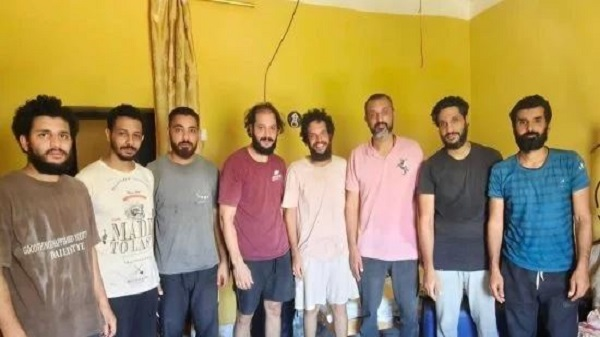
Eight Egyptian sailors who were kidnapped aboard the oil tanker M/T Eureka off Somalia have been released following months of diplomatic efforts involving Egypt, Somalia and Yemen.
The sailors were freed on Tuesday evening after being held since May 2, when armed pirates seized the vessel near the Somali coast. Egyptian officials said the crew members are expected to return to Cairo early Friday after traveling first to the Egyptian Embassy in Mogadishu.
The Ministry of Foreign Affairs said the release followed sustained high-level contacts led by Foreign Minister Badr Abdelatty with Somali and Yemeni officials. President Abdel Fattah El-Sisi had instructed Egyptian authorities to intensify efforts to secure the sailors’ freedom and ensure their safety.
The M/T Eureka was carrying diesel and had been sailing toward the Yemeni port of Mukalla to unload its cargo when it was attacked. The vessel was reportedly diverted toward waters off Puntland, a semi-autonomous region in northeastern Somalia. The ship had 12 crew members on board, including eight Egyptians and four Indian nationals.
The tanker was owned by a Yemeni company, which prompted Egypt to coordinate closely with both the Yemeni and Somali governments during the crisis. The vessel’s ownership and its route through the Gulf of Aden added complexity to negotiations, as the release involved parties in several countries and required communication with local authorities and community representatives in Puntland.
Egyptian officials said a specialized operations room was established within the consular sector of the Foreign Ministry, while the Egyptian Embassy in Mogadishu maintained a separate crisis unit. The teams monitored the sailors’ conditions, coordinated with Somali authorities and worked to provide any medical or practical assistance required during their captivity.
Maintaining contact between the sailors and their families was another central element of the government’s response. Egyptian officials said the Foreign Ministry helped arrange regular communications between the detained crew members and their relatives. Meetings were also held with the families to provide updates about the negotiations and explain the measures being taken to secure the sailors’ release.
The communications helped ease some of the psychological pressure caused by the prolonged abduction, officials said. The sailors had spent almost five months in uncertain and difficult conditions while their families remained concerned about their health and safety.
Nader Zaki, a spokesman for the Egyptian Foreign Ministry, said Abdelatty had instructed the embassy in Mogadishu to receive the sailors, check on their physical condition and arrange their return to Egypt on the earliest available flight.
The release followed months of negotiations that reportedly encountered several obstacles. Earlier reports indicated that the pirates had demanded a ransom for the crew and vessel, with figures varying during the negotiations. Some discussions reportedly broke down after the captors increased their demands, prolonging the standoff.
Egyptian officials did not disclose whether a ransom was paid or provide details about the circumstances of the release. Such information is often withheld in hostage cases because it can affect ongoing investigations and future negotiations involving other seafarers.
The incident has drawn renewed attention to the continuing threat of piracy in waters around Somalia and the Gulf of Aden. Somali piracy declined sharply after reaching a peak in the early 2010s, when heavily armed groups attacked commercial ships and demanded large ransoms for crews and cargoes. International naval patrols, private maritime security teams and improved ship-protection procedures helped reduce successful attacks for several years.
More recently, insecurity in the Red Sea and the wider Middle East has increased pressure on shipping companies. Attacks on commercial vessels in and around the Red Sea have forced some ships to take longer routes around Africa, increasing journey times, fuel costs and insurance premiums. The expansion of shipping activity along alternative routes may also create new opportunities for criminal groups operating off the Somali coast.
Maritime security specialists have warned that pirates can exploit limited coastal governance, poverty, weak law enforcement and the large distances separating commercial vessels from naval patrols. Puntland authorities have carried out operations against suspected pirate groups, but the region’s difficult geography and political tensions complicate efforts to prevent attacks.
For Egypt, the release of the eight sailors brings an end to an extended consular and diplomatic crisis. It also highlights the risks faced by Egyptian seafarers working on commercial vessels in waters exposed to piracy and armed conflict.
The sailors are expected to undergo medical assessments after reaching Mogadishu and may receive further support before beginning their journey home. Their families have welcomed the release after months of uncertainty, while Egyptian officials have praised the cooperation of Somali and Yemeni authorities.
The Foreign Ministry said Cairo would continue working to protect Egyptian nationals abroad and strengthen coordination with countries along major maritime routes. The case is also likely to encourage renewed discussions about crew safety, vessel security and the responsibilities of shipping companies operating in high-risk waters.
