

Ahmed Kamel – Egypt Daily News
The fragile calm that followed weeks of fighting between Iran and the United States showed fresh signs of collapse on Wednesday after new military exchanges spread deeper into the Gulf, damaging critical infrastructure in Kuwait and threatening to pull additional countries into a conflict that was supposed to be winding down.
What was initially presented as a ceasefire between Washington and Tehran is increasingly resembling a temporary pause between rounds of confrontation. Drone attacks, missile interceptions and retaliatory strikes have continued across the region, while diplomatic efforts aimed at extending the truce appear to be losing momentum.
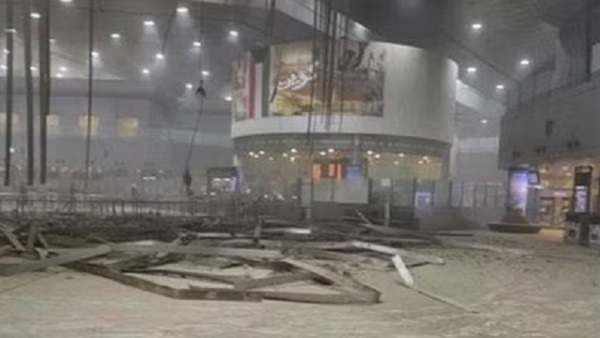
The latest escalation centered on Kuwait, where authorities temporarily shut down commercial air traffic after drones struck facilities at Kuwait International Airport. The attack left at least one person dead and forced airlines to suspend operations, highlighting how Gulf states are becoming increasingly exposed as tensions between Iran and the United States spill beyond their original battlegrounds.
The incident immediately triggered military responses across the region. American officials said U.S. forces intercepted additional drones and missiles directed toward military positions in Kuwait and Bahrain, while Bahraini defenses reportedly destroyed multiple incoming threats aimed at the island kingdom.
Washington responded by targeting Iranian military infrastructure on Qeshm Island, a strategic location overlooking the Strait of Hormuz. Tehran quickly acknowledged launching attacks against American military assets in the Gulf, framing its actions as retaliation for U.S. operations.
The exchange marks one of the most serious tests of the ceasefire since it was announced and reinforces concerns that both sides are maintaining military pressure while publicly supporting negotiations.
Beyond the immediate battlefield, the economic consequences continue to grow.
The Strait of Hormuz remains a focal point of the crisis. Iran’s continued pressure around the waterway, combined with ongoing U.S. restrictions on Iranian maritime activity, has kept global energy markets on edge. The narrow passage handles a substantial share of the world’s oil exports, making every new military incident a potential threat to international energy supplies and shipping routes.
At the diplomatic level, conflicting signals are emerging from Tehran and Washington.
Iranian media outlets closely associated with the country’s security establishment reported that communication with ceasefire mediators had effectively stalled. According to those reports, Iranian officials are linking future negotiations to developments in Lebanon, where Israel has intensified military operations against Hezbollah despite a separate ceasefire framework.
The position reflects Tehran’s broader strategy of treating its regional allies and interests as interconnected fronts rather than isolated conflicts.
President Donald Trump rejected suggestions that talks had broken down, insisting communications with Iran were continuing and expressing confidence that negotiations remained alive despite mounting tensions on the ground.
The disagreement over the status of diplomacy underscores the uncertainty surrounding efforts to prevent a renewed regional war.
Perhaps the most significant development is the growing connection between the Gulf crisis and the fighting in Lebanon. Iranian officials increasingly view Israel’s operations against Hezbollah as part of the same strategic confrontation involving Tehran, Washington and their respective allies.
That linkage raises the stakes considerably. Any escalation along the Israeli-Lebanese border now carries the potential to influence negotiations involving Iran and the United States, making a durable ceasefire more difficult to achieve.
For Gulf governments, the latest attacks are a reminder that remaining on the sidelines may no longer be possible. Kuwait and Bahrain were not the primary actors in the conflict, yet both found themselves directly affected by missiles and drones crossing their airspace.
As military exchanges continue and diplomatic channels struggle to produce results, the ceasefire that once appeared to offer a pathway toward de-escalation is increasingly being tested by competing regional conflicts, strategic rivalries and a growing lack of trust among the parties involved.
The result is a Middle East that remains one miscalculation away from a much wider confrontation.
