

Egypt’s National Council for Wages has approved raising the private-sector minimum monthly wage to EGP 8,500, effective January 1, 2027, as the government seeks to increase workers’ incomes and improve compliance with pay rules in a sector that accounts for most of the country’s employed workforce.
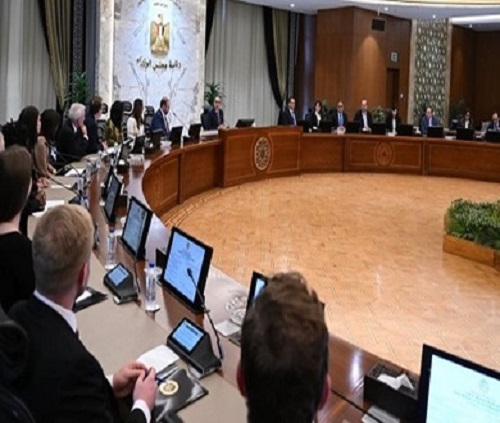
Prime Minister Mostafa Madbouly chaired the council’s extraordinary meeting, attended by senior government officials and representatives of employers and workers. He said the government had prioritized wage improvements and wanted private businesses to apply the minimum wage. President Abdel-Fattah El-Sisi has also directed the government to work on improving citizens’ incomes, officials said.
The council approved several related measures. Workers in temporary jobs or part-time positions will have a minimum hourly wage of EGP 34 net. It also set a minimum annual periodic increase for private-sector employees, starting from each establishment’s 2027 financial year: at least 3% of the wage used to calculate social insurance contributions, with a minimum increase of EGP 350.
The decisions follow earlier increases in the private-sector wage floor. The previous minimum was EGP 7,000 a month, introduced in 2025. The new rate will take effect at the start of 2027, rather than immediately, giving businesses time before the change becomes binding.
The meeting also addressed how future wage decisions should be developed. Finance Minister Ahmed Kouchouk said the government would present proposals for raising incomes over the coming years and seek agreement with private-sector representatives. Madbouly directed the formation of a joint working group of government and business representatives to study wage proposals through 2030.
The council’s newly constituted membership reflects the tripartite structure set out under Egypt’s Labour Law No. 14 of 2025, bringing together government, employer organizations and labor representatives. It is chaired by the minister responsible for planning and economic development and includes officials from ministries and public bodies concerned with labor, finance, industry, social protection, investment, women’s affairs and social insurance. Six members represent employers’ organizations and six represent labor organizations.
Planning and Economic Development Minister Ahmed Rostom presented labor-market figures to the council. The private sector employed approximately 26.5 million people in 2025, inside and outside establishments, out of around 32 million employed people nationally. Egypt had nearly four million private-sector establishments, including both formal and informal businesses.
Those figures underscore the scale of the challenge in applying wage rules across a diverse economy. The workforce counted as private-sector employment includes people in different kinds of work and workplaces, and not every worker has the same employment arrangement. The government’s announcement does not, by itself, explain how compliance will be monitored across that range of businesses or what enforcement measures will be taken against employers that fail to pay the required minimum.
Rostom said economic participation had recovered in recent years after declining through 2020, while a substantial gap remained between men’s and women’s participation in the labor force. He also highlighted the need to move beyond increasing the number of people in work and focus on improving the returns workers receive. Officials pointed to falling unemployment among both men and women as an indication of improvement in labor-market performance, while acknowledging the need to expand women’s access to jobs.
Inflation and real economic growth were among the indicators discussed as inputs in determining private-sector wage scenarios. The timing and size of wage increases matter to workers’ purchasing power, while businesses must incorporate higher payroll costs into their operations. The council did not announce a mechanism linking the EGP 8,500 rate automatically to future changes in prices.
The newly approved hourly minimum is aimed at temporary and part-time work, while the annual increase is calculated against the social-insurance wage rather than simply stated as a percentage of the new monthly minimum. The EGP 350 floor means the annual raise cannot fall below that amount under the council’s decision, even where 3% of the relevant insured wage would be less.
The meeting included ministers responsible for finance, labor, social solidarity, investment and foreign trade, planning and economic development, and industry, as well as representatives of business associations, labor organizations and public institutions. By setting a new minimum and organizing discussions about wage policy through 2030, the council has established both an immediate target for 2027 and a forum for considering later changes. The impact will depend on implementation, enforcement and whether wage gains keep pace with workers’ living costs.
