

Ahmed Kamel – Egypt Daily News
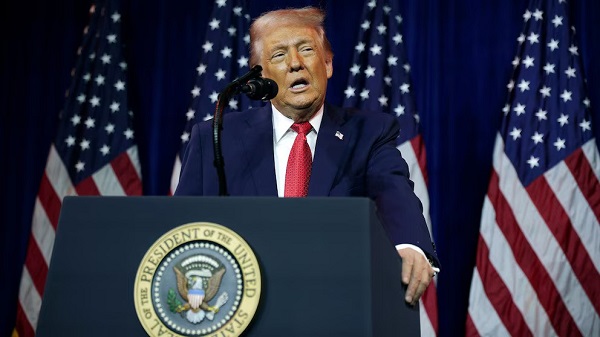
President Donald Trump announced late Saturday that he will halt an imminent wave of new airstrikes against Iran, claiming that Middle Eastern mediators have established the preliminary parameters for a comprehensive deal to end the five-month-old war. Writing on social media, Trump asserted that the emerging framework mandates the immediate, complete, and total reopening of the strategic Strait of Hormuz alongside a permanent end to Iran’s nuclear threat.
The American president clarified that his decision to cancel the massive weekend bombardment remains strictly conditional on the allied coalition’s ability to rapidly finalize a binding treaty with Tehran.
However, the prospects for an immediate diplomatic breakthrough fractured on Sunday when Iranian Foreign Ministry Spokesperson Esmail Baghaei aggressively dismissed the White House timeline during a live broadcast on state television. Baghaei explicitly declared that the Strait of Hormuz will under no circumstances return to its pre-war operational status, noting that while Tehran is discussing maritime shipping regulations with Oman, no active talks are underway regarding a full reopening of the waterway.
The diplomatic gridlock materializes as Iran’s Defense Ministry publicly warned that its missile forces remain fully mobilized and completely alert in the face of ongoing concrete threats from the United States.
According to a regional mediation official speaking on the condition of anonymity, the newly proposed baseline framework calls for both Washington and Tehran to immediately halt all hostile cross-border operations as a prerequisite to resuming formal peace talks. Under the tentative terms, Iranian-aligned militias in Iraq would permanently cease drone and missile attacks against Jordan and the Gulf states, while the United States would fully dismantle its naval blockade to allow Iran to resume international crude oil exports.
Trump added that Israel has verbally joined the commitment to enforce the ceasefire, though the Israeli cabinet has conspicuously refrained from issuing any public confirmation or supporting statements.
The sudden pause in the U.S. air campaign follows a high-stakes, candid phone consultation between Trump and Saudi Crown Prince Mohammed bin Salman on Saturday afternoon. Internal diplomatic sources verified that the Saudi leader raised profound concerns regarding the severe impact a massive American military escalation would inflict on the global economy if Tehran retaliated by targeting energy infrastructure across the Arabian Peninsula.
Saudi officials explicitly warned the White House that while Riyadh, the United Arab Emirates, and Qatar possess advanced air defense matrices to repel direct Iranian strikes, neighboring Kuwait remains exceptionally vulnerable to low-altitude drone saturation attacks launched by Iraqi-based paramilitary factions.
