

Ahmed Kamel – Egypt Daily News
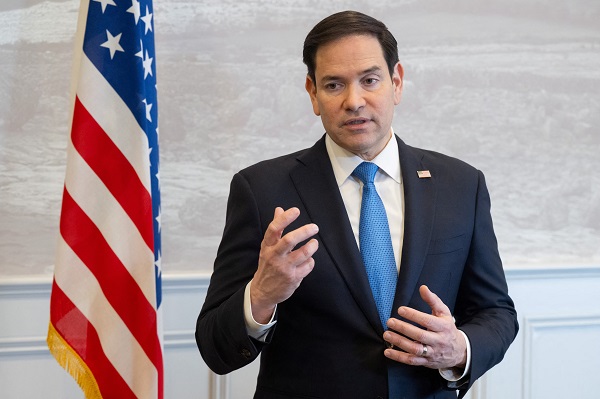
The United States has approved the release of $320 million in military assistance to Egypt after Secretary of State Marco Rubio waived restrictions that had delayed the funds because of concerns over Egypt’s human rights record.
The decision was announced as Washington seeks to strengthen security cooperation with Cairo amid major regional tensions. The US State Department said the waiver was issued in the interest of American national security and reflected Egypt’s strategic importance to the United States, as well as the security cooperation the country provides.
In a letter sent to members of Congress, Rubio highlighted Egypt’s role in helping address the conflict involving the United States and Iran. Egyptian officials have reportedly been involved in efforts to ease tensions and support diplomatic communications between Washington and Tehran as the conflict continues.
The State Department said the decision recognized the importance of maintaining close security ties with Egypt at a time of growing regional challenges. It also stressed that the Trump administration would continue to raise human rights concerns in its broader discussions with the Egyptian government.
The $320 million forms part of the annual US military assistance allocated to Egypt. Washington provides Cairo with approximately $1.3 billion in economic and military support each year, with the military portion delivered primarily through the Foreign Military Financing program. That program allows recipient countries to purchase American-made defense equipment and services.
The funds covered by the latest waiver were previously subject to conditions imposed by Congress. Those conditions were introduced in response to concerns about Egypt’s record on human rights, political freedoms and the treatment of detainees. US officials and international rights organizations have repeatedly raised allegations involving arbitrary arrests, restrictions on freedom of expression, torture and other abuses.
Under US law, the secretary of state has the authority to waive certain human rights-related requirements when doing so is considered necessary for national security. The administration used that authority in the latest decision, arguing that continued military cooperation with Egypt is particularly important during the current period of instability.
The waiver is not the first time Washington has overridden restrictions placed on military assistance to Egypt. Successive Republican and Democratic administrations have taken similar steps, often citing Cairo’s role in regional security, counterterrorism, border protection, mediation and the protection of vital waterways.
The Biden administration also issued a waiver in 2024. At the time, the decision was linked in part to Egypt’s involvement in diplomatic efforts aimed at ending the war in Gaza and supporting negotiations between Israel and Hamas.
Egypt has long occupied a strategically important position in US foreign policy in the Middle East. It controls the Suez Canal, maintains a major role in regional diplomacy and shares borders with Libya, Sudan, Israel and the Gaza Strip. The country’s armed forces are also among the largest in the region and have maintained close military ties with the United States for decades.
American military assistance to Egypt expanded after the two countries established formal relations following the signing of the Egyptian-Israeli peace treaty in 1979. Since the late 1980s, Egypt has received approximately $1.3 billion annually in US military support. The assistance has helped finance purchases of aircraft, armored vehicles, missiles, naval equipment and other defense systems.
Supporters of the waiver argue that maintaining the military relationship gives Washington influence over Egypt and preserves cooperation on issues such as counterterrorism, border security, intelligence sharing and regional conflict mediation. They also say that cutting or delaying assistance could weaken a partnership considered essential to US interests.
Critics, however, argue that repeated waivers reduce the effectiveness of congressional human rights conditions. Rights advocates say that releasing funds without demanding measurable improvements may send the message that security cooperation takes precedence over accountability.
The decision is therefore likely to renew debate in Washington over how the United States should balance strategic interests with its stated commitment to human rights. American lawmakers and advocacy groups have frequently questioned whether military assistance should continue without stronger guarantees concerning political freedoms and the treatment of detainees.
For Egypt, the release of the funds represents a diplomatic and security gain. It confirms that Cairo remains a significant partner for Washington despite continuing disagreements over domestic policies and human rights. The decision may also help Egypt obtain American defense equipment and maintain the readiness of its armed forces.
The waiver reflects the complex relationship between the two countries. While Washington continues to criticize Egypt’s human rights record, it also views Cairo as an indispensable partner during periods of regional conflict. As tensions involving Iran and other Middle Eastern actors continue, security cooperation is expected to remain at the center of the US-Egyptian relationship.
