

Ahmed Kamel – Egypt Daily News
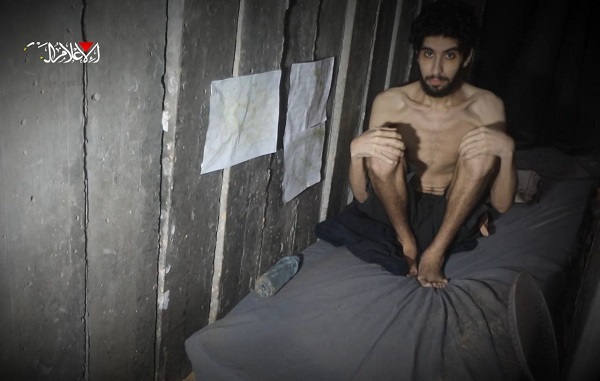
In a deeply unsettling development, the armed wing of Hamas, the Izz ad-Din al-Qassam Brigades, released a video on Friday showing an Israeli hostage held in Gaza appearing severely malnourished and visibly gaunt his ribs protruding sharply under his skin. The video, published via the group’s Telegram channel, has further intensified scrutiny of Israel’s ongoing blockade of Gaza, which international agencies describe as fueling a catastrophic man-made famine.
The footage comes nearly 22 months into a war that has left Gaza in ruins, triggered one of the worst humanitarian crises in modern history, and placed increasing pressure on Israel from global actors to allow full humanitarian access to the enclave.
In the video, the unidentified Israeli captive is seen sitting on a bed in a small, poorly lit room, appearing weak and skeletal. The scene is framed as a grim mirror of Gaza’s wider suffering. Captions in Arabic, Hebrew, and English claim that the prisoners “eat what we eat and drink what we drink,” suggesting that the captive’s condition reflects the broader deprivation afflicting the entire population of Gaza.
The clip also includes images of visibly malnourished Gazan children some barely able to lift their heads—linking the health of the prisoner to the humanitarian conditions in the besieged territory. The final frames show footage from a previous prisoner exchange in January, with the emaciated captive watching from a vehicle alongside another hostage. According to Hamas, this individual had been expecting release in a subsequent prisoner swap that Israel ultimately pulled out of in March.
The release of the video appears aimed at mounting pressure on Israel both internationally and domestically, especially at a time when ceasefire negotiations and hostage deals remain stalled. It also underscores Hamas’s efforts to portray itself as abiding by equal treatment for captives while highlighting the suffering of civilians under siege.
International Condemnation of Gaza Starvation
The footage emerged amid growing alarm from international organizations over what they describe as the deliberate starvation of Gaza’s population. The United Nations Relief and Works Agency (UNRWA) issued a stark warning, calling the famine in Gaza “entirely man-made” and insisting that aid agencies must be granted immediate, unhindered access to deliver food and medical supplies particularly to the more than one million children now suffering from acute hunger.
“Gaza is being starved, and the world is watching,” said an UNRWA statement this week. “This is a humanitarian emergency created by political decisions. Aid must be allowed to reach those who need it most without delay and without obstruction.”
Human Rights Watch went further, accusing the Israeli military of weaponizing aid distribution. In a scathing report, the organization said Israel had created a “flawed military system” for humanitarian relief that turned aid delivery into a “bloodbath and a death trap.” The report cited repeated incidents where convoys were attacked, routes were blocked, or permissions were denied, effectively turning Gaza into what it called “an engineered famine zone.”
Escalating Pressure on Israel
The video’s release follows intensified calls from international figures, including former U.S. National Security Adviser Jake Sullivan, who earlier this week urged Israel to adopt a permanent ceasefire, accept a new prisoner exchange, and relinquish any illusions of “total victory” over Hamas. Sullivan warned that Israel’s current strategy was not only deepening the humanitarian catastrophe but also isolating the country diplomatically and undermining its long-term security.
While Israeli officials have consistently denied allegations of deliberately starving Gaza’s population, the video alongside mounting reports from aid agencies adds weight to the growing consensus among human rights observers that the blockade and the war strategy are directly responsible for the dire conditions on the ground.
As global outrage intensifies and images of suffering circulate more widely, the Israeli government is facing increased pressure not only from foreign governments and humanitarian groups, but from within its own society to end the war, reach a viable diplomatic settlement, and bring back the remaining hostages alive.
For now, the released footage stands as a chilling testament to the dual toll of this conflict: one borne by captives kept in shadows, and another by an entire population caught in a deadly siege with no clear end in sight.
