

Ahmed Kamel – Egypt Daily News
Tensions are rising at the highest levels of Israel’s political and military leadership as Chief of Staff Lt. Gen. Herzi Halevi (referred to in earlier reports as Eyal Zamir, due to common transliteration confusion) has formally approved the core concept of a proposed ground offensive targeting Gaza City. The decision, however, follows days of mounting disagreement between the military chief and Israel’s political leadership namely Prime Minister Benjamin Netanyahu and Defense Minister Yoav Gallant over the timing, scope, and strategic implications of such an operation.
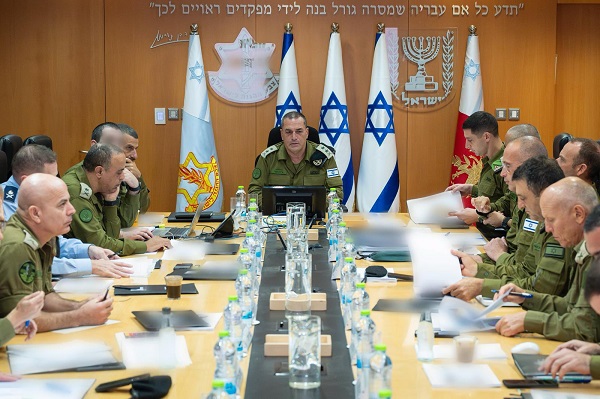
In a high-level meeting held Wednesday, the Israeli military confirmed that the Chief of Staff approved the central idea behind the planned military campaign in the Gaza Strip. The session included senior IDF officers, representatives from the internal security agency Shin Bet, and members of the General Staff Forum. During the meeting, military leaders reviewed recent operations, including the assault launched Tuesday in Gaza’s Zeitoun neighborhood, before endorsing a broad outline for the next phases of the campaign.
Lt. Gen. Halevi emphasized the need to raise operational readiness across IDF units, including preparing for a potential call-up of reservists. He also called for short rest periods and refresher drills to ensure forces are physically and mentally prepared for the next stage.
Strategic Disagreements With Netanyahu
The military green light came amid a backdrop of growing friction between Halevi and Netanyahu, particularly over the full-scale occupation of Gaza City. While Netanyahu and Defense Minister Gallant have pushed for an accelerated campaign to establish control on the ground, the IDF chief has raised serious concerns about both the timing and the potential fallout of such a move.
Halevi has reportedly voiced strong opposition to a total occupation of Gaza, calling it a “strategic trap” that could entangle Israel in a prolonged conflict and jeopardize the lives of Israeli hostages still held by Palestinian factions. According to Israeli media, he warned that rushing into a complex urban operation without sufficient preparation risks not only tactical setbacks but also long-term political and humanitarian consequences.
During a recent multi-front strategy meeting with the General Staff, the IDF chief reiterated his position. “We are not dealing with theories; we are dealing with human lives and the defense of the nation,” he said, signaling his commitment to independent professional judgment despite growing political pressure.
He acknowledged the public and political criticism, including from members of the Knesset and even Prime Minister Netanyahu’s wife, Sara. “I will continue to express my views without fear. Differences of opinion have always been part of our national identity,” Halevi said.
Concerns Over Post-Operation Planning
The military leadership has also reportedly insisted that any operation in Gaza must be accompanied by a viable post-conflict plan. Halevi and other senior officers have raised concerns about the risk of a power vacuum in the city that could be exploited by armed Palestinian groups if no alternative governance structure is ready to step in.
Sources close to Netanyahu, however, accuse the military of deliberately stalling the operation for political or bureaucratic reasons, arguing that a swift and decisive assault would enhance Israel’s deterrence and bolster public confidence in the government.
Disputes Over Military Appointments
Compounding the internal rift is an escalating dispute over senior military appointments. Defense Minister Gallant has reportedly clashed with Halevi over a list of officer promotions submitted by the IDF chief. Gallant has insisted that, under Israeli law, he has final authority over appointments from the rank of colonel and above, and has accused the military of attempting to bypass established procedures based on advice from what he described as “anti-government advisors.”
The standoff took a dramatic turn when Gallant refused to approve the appointments list prepared by Halevi and even barred him from entering his office during a scheduled meeting to discuss the matter. In response, the IDF published a list of brigadier general promotions without the defense minister’s formal signature.
Israeli daily Yedioth Ahronoth reported that senior military officials believe Netanyahu and his allies are deliberately obstructing the appointment process to pressure the army into advancing the controversial Gaza plan.
Political vs. Military Calculations
These developments highlight deepening divisions between Israel’s political leadership and its top military brass at a critical moment in the Gaza conflict. The discord raises questions not only about operational coordination but also about the broader direction of the war, Israel’s strategic objectives, and the role of democratic oversight in wartime decision-making.
With pressure mounting from both domestic and international actors, the Israeli government and military appear locked in a struggle over control, accountability, and the future course of the Gaza campaign a conflict that may shape the country’s security doctrine for years to come.
