

Ahmed Kamel – Egypt Daily News
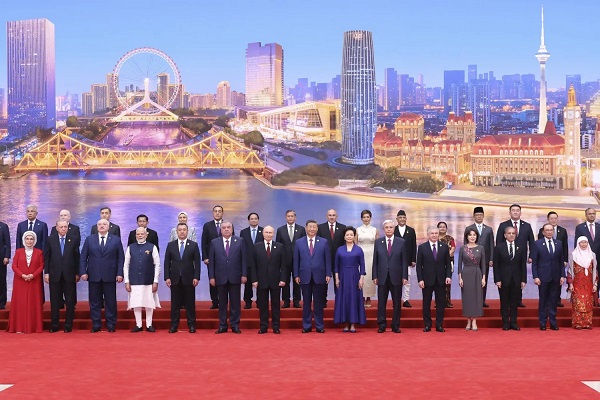
At a high-stakes geopolitical gathering in Tianjin, the leaders of the Shanghai Cooperation Organization (SCO) delivered a sharp rebuke to Western dominance and signaled a bold push toward reshaping the global order. Hosted by China and attended by leaders from Russia, India, Iran, Turkey, and several other Eurasian nations, the summit became a platform for articulating a vision of a multipolar world where the Global South plays a central role.
Chinese President Xi Jinping laid out the contours of what he called a “Global Governance Initiative,” calling for the end of unilateralism and power-based politics. “We must take a clear stand against hegemony and coercive politics, and practice genuine multilateralism,” Xi said in his opening remarks, framing the initiative as a direct counterpoint to Western-led institutions.
A New Vision for Global Governance
President Xi emphasized that the world is at a “new crossroads” in global governance, pointing to the ongoing instability and fragmentation of the international system. “The international situation has become more chaotic and complex,” he warned, urging member states to confront Cold War mentalities and power blocs that divide the world.
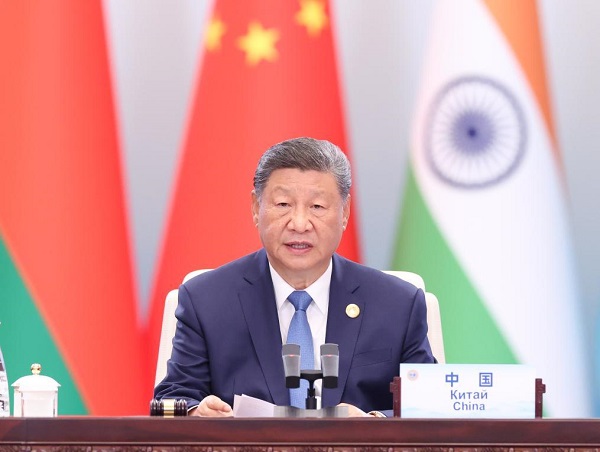
In a strategic move to reinforce economic autonomy, Xi announced the creation of a new development bank under the SCO, designed to finance infrastructure and social projects without reliance on Western financial institutions. China committed 2 billion yuan ($280 million) in grants to SCO members for the current year, along with an additional 10 billion yuan in concessional loans.
Xi also unveiled plans for a regional artificial intelligence cooperation center and invited SCO members to participate in China’s lunar research station symbols of Beijing’s ambition to lead not only in economic affairs, but in space and technological innovation.
Russia Echoes Call for Multipolarity
Russian President Vladimir Putin, addressing the summit just days after a high-profile visit to North Korea, strongly echoed Xi’s rhetoric. He dismissed Western narratives about the Ukraine conflict, arguing that the war was the product of a 2014 coup in Kyiv supported by the West, and subsequent NATO expansion efforts. “The crisis in Ukraine is not a result of Russian aggression, but of external interference and geopolitical engineering,” Putin stated.
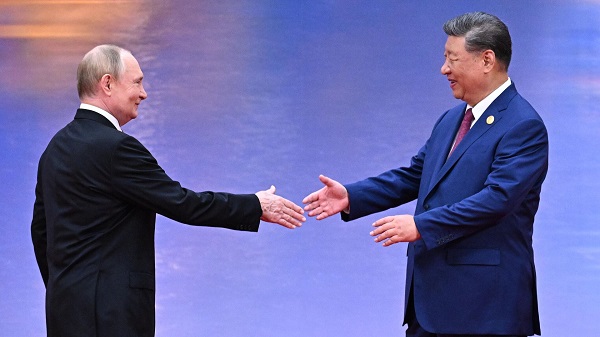
He praised the SCO as a genuine example of multipolar cooperation, noting that member countries were increasingly settling trade in national currencies rather than relying on the U.S. dollar, a trend Russia and China have both championed as part of their broader strategy to weaken Western financial influence.
Putin also emphasized the distinctiveness of the SCO’s vision of security, contrasting it with what he called the exclusionary frameworks of NATO and the European Union. “This security system will not allow one country to guarantee its safety at the expense of others,” he said, underlining the bloc’s commitment to inclusiveness and regional balance.
India Signals Pragmatism Amid Tensions
Indian Prime Minister Narendra Modi, making his first visit to China since 2018, walked a careful diplomatic line. In a symbolically powerful moment, he was photographed chatting with both Xi and Putin before the summit’s formal opening. Later, he joined Putin in the Russian leader’s armored “Aurus” limousine en route to their bilateral meeting an image widely circulated on social media.
Following the meeting, Modi posted on X (formerly Twitter): “Conversations with President Putin are always valuable,” signaling that, despite geopolitical differences, India remains committed to engaging with Russia. Modi stressed the need for “trust and mutual respect” in India’s relations with both China and Russia, and called for stronger trade ties and cooperative development.
Ukraine Urges China to Take Active Role in Peace Efforts
Following Putin’s speech, Ukraine issued a diplomatic appeal to Beijing. In a statement from its Ministry of Foreign Affairs, Kyiv acknowledged China’s geopolitical influence and urged it to play “a more active role” in promoting peace. The statement stopped short of criticism, reflecting Ukraine’s cautious approach toward Beijing, which maintains strong ties with Moscow but has styled itself as a potential mediator.
Iran, Turkey, and North Korea Feature Prominently
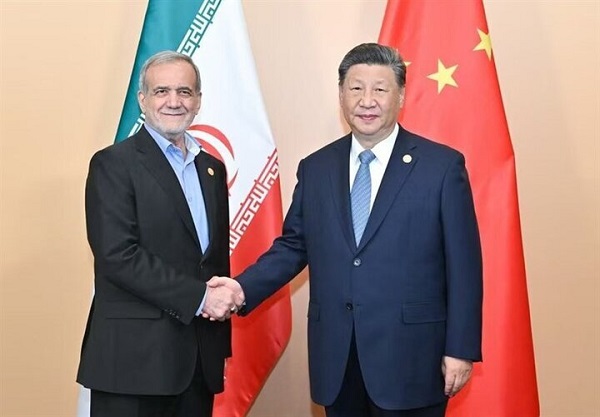
The summit also provided space for key bilateral engagements. Putin met with Iranian President Masoud Pezeshkian to discuss Tehran’s nuclear program, reiterating Moscow’s support for Iran’s right to pursue a peaceful civilian nuclear agenda. The meeting came amid renewed Western pressure on Iran, including recent moves by France, Germany, and the UK to reinstate UN sanctions.
Putin also met Turkish President Recep Tayyip Erdoğan, praising Ankara’s mediation efforts in the Ukraine conflict. “Turkey’s role in these matters remains essential,” Putin stated, suggesting a continued role for Erdoğan in potential future negotiations.
In a dramatic addition to the summit’s geopolitical symbolism, North Korean leader Kim Jong Un is expected to attend a massive military parade in Beijing later this week, commemorating the 80th anniversary of the end of World War II. His participation underscores North Korea’s growing alignment with Russia and China in the evolving global divide.
From Security Bloc to Global Player
Founded in 2001 as a regional security organization, the Shanghai Cooperation Organization has rapidly evolved into a major geopolitical actor. With ten full members including China, Russia, India, Iran, and Pakistan and 16 observer and partner states, the SCO now represents nearly half of the world’s population and over 23% of global GDP.
This year’s summit marked the most consequential meeting in the organization’s history, unfolding against a backdrop of mounting global crises: the U.S.-China trade rivalry, the war in Ukraine, and intensifying disputes over Iran’s nuclear ambitions.
Rather than operating as a passive coalition, the SCO is increasingly positioning itself as a counterweight to Western-led institutions, seeking to redefine the principles of international cooperation, development, and security.
A Divided World, A Rising Bloc
With calls for “true multilateralism,” financial self-reliance, and regional integration, the SCO summit sent a clear signal: the emerging powers of the Global South are no longer content with a subordinate role in a Western-centric world order.
As the leaders of China, Russia, and India stood shoulder to shoulder backed by influential partners like Iran and Turkey they presented a vision of a future where global governance is more inclusive, less dominated by Western priorities, and increasingly shaped by the voices of the non-Western world.
Whether this vision can be realized remains to be seen. But the summit in Tianjin underscored a growing reality: the post-Cold War era of Western unipolarity is giving way to a more contested and multipolar world one where the Global South is asserting its place at the table.
