

Ahmed Kamel – Egypt Daily News
A recent incident involving the killing of an Egyptian man by Libyan police officers in the eastern Libyan town of Emsaed has ignited widespread anger across Egypt’s Matrouh Governorate, particularly among tribal communities with longstanding ties to Libya. The incident, which occurred during a police raid, has prompted both popular outrage and official responses, including a high-level investigation ordered by the Libyan military leadership.
A Deadly Raid on the Border
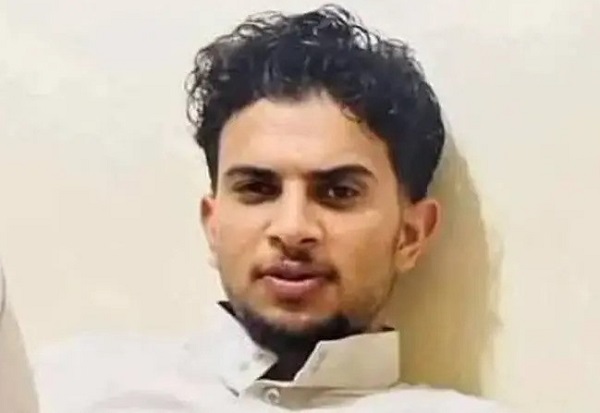
The victim, Salah Abdullah Al-Mahfouzi, a young Egyptian national, was reportedly killed during a raid conducted by Libyan police forces in the town of Emsaed near the Egyptian-Libyan border. Al-Mahfouzi had entered Libya with official documentation and was legally residing in the country at the time of the incident. Eyewitness accounts and a video circulated online suggest that the victim may have been subjected to mistreatment prior to his death.
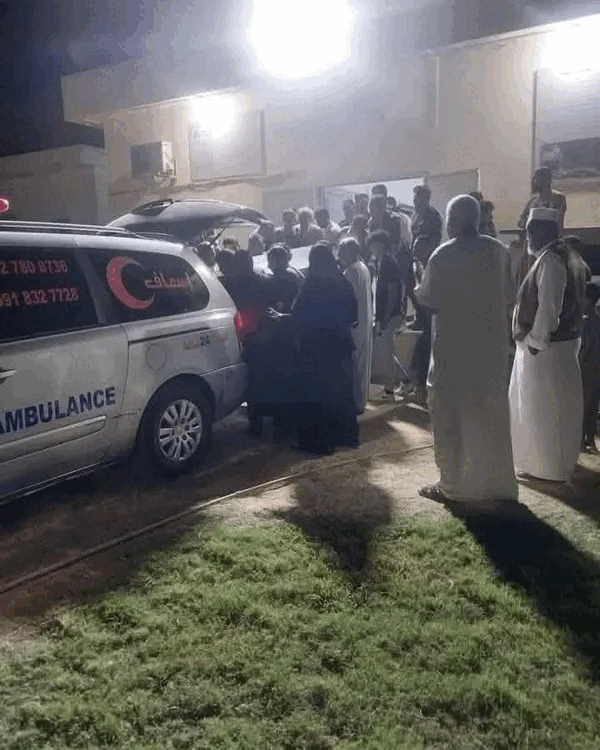
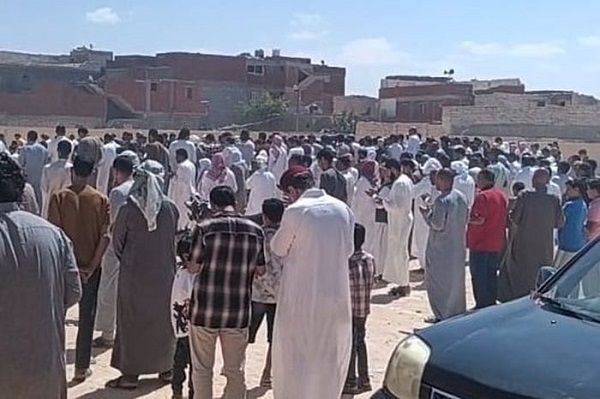
Following the incident, Al-Mahfouzi’s body was transferred to Tobruk Hospital and later repatriated to Egypt, where his funeral in Matrouh was attended by hundreds of mourners. The emotional outpouring at the funeral reflected the deep-rooted tribal solidarity in the region, where cross-border kinship ties remain strong.
Immediate Response and Investigation
In the wake of the killing, Libyan military officials moved swiftly. General Khalifa Haftar, the Deputy Commander of the Libyan National Army and son of the commander Khalifa Haftar, ordered an immediate investigation. The Libyan Military Prosecution also issued arrest warrants for two police officers suspected of involvement in the incident. The suspects are now reportedly in custody and under investigation.
General Haftar emphasized that “no one is above the law” and vowed that justice would be served. He also expressed his condolences to the victim’s family and the people of Matrouh, promising that such incidents would not be repeated and would be dealt with in accordance with the law.
Tribal Reactions: Justice over Revenge
The killing has sparked significant public anger in Matrouh, a province where tribal affiliation plays a central role in social and political life. Salah Al-Mahfouzi was a member of the Mahafeez tribe, part of the larger Awlad Ali tribal confederation. His death resonated across tribal lines, prompting unity among local leaders.
In a statement, tribal elder Abdul Karim Al-Mahfouzi praised the swift action of Libyan authorities and noted that the tribe of the alleged perpetrators had acknowledged the crime and engaged in traditional reconciliation efforts. “The Libyan tribe took responsibility and even entered the protection of another tribe until the matter could be resolved peacefully,” he said.
Despite the emotional weight of the incident, tribal leaders called for restraint. “This is a personal crime, not a political or tribal one,” said Sheikh Bashir Abdul Karim Al-Mahfouzi. “Our relations with the Libyan people are strong and historic. We will seek justice through the law, not through vengeance.”
A Broader Context of Concern
The killing comes just days after another disturbing incident involving a different Egyptian national in Libya. In that case, a Libyan farm owner was arrested for terrorizing an Egyptian worker using a lion, filming the event and posting it on social media. The video caused widespread outrage in both countries and led to the arrest of the perpetrator, the seizure of the wild animals he kept, and the freezing of his assets pending further investigation.
These back-to-back incidents have sparked concern about the safety and treatment of Egyptian migrant workers in Libya, many of whom work in agriculture and construction, often in remote or poorly regulated areas. While tens of thousands of Egyptians continue to work in Libya, often driven by economic necessity, cases of abuse have fueled calls for better oversight and bilateral cooperation.
Egyptian Media and Official Commentary
Prominent Egyptian journalist Mostafa Bakry described Salah Al-Mahfouzi’s death as a “national shock,” noting that the young man had entered Libya legally. Bakry commended the Libyan authorities for their rapid response and legal clarity. “General Saddam Haftar’s statements were not mere words. They were an unequivocal commitment to justice,” he said during his televised program Facts and Secrets.
He also highlighted the mature response of the Mahafeez tribe, which issued a public statement urging young people to remain calm and allow the law to take its course. “This is not the path of blood revenge,” the statement read, “but of truth and justice.”
A Call for Justice and Protection
The family of Salah Al-Mahfouzi has called on both Egyptian and Libyan authorities to ensure the perpetrators are brought to justice. “Our son was not a criminal. He was working to earn a living. His life was taken unjustly by those who should have protected him,” said one family member.
The Egyptian government has yet to issue an official statement, but local officials in Matrouh have reportedly been in contact with Libyan counterparts. There are also growing calls for the establishment of a formal protocol between the two nations to safeguard the rights of Egyptian workers in Libya.
One People, Two Countries
Despite the tragedy, many in both Egypt and Libya have emphasized the historical and familial bonds that tie the border communities together. Tribal leaders from both sides have reiterated that such incidents, while tragic, should not be allowed to undermine the broader relationship between the two peoples.
“We are one blood,” said a Libyan tribal spokesman near the border. “The death of an Egyptian is the death of a Libyan, and we must honor that bond with truth and justice.”
