

Ahmed Kamel – Egypt Daily News
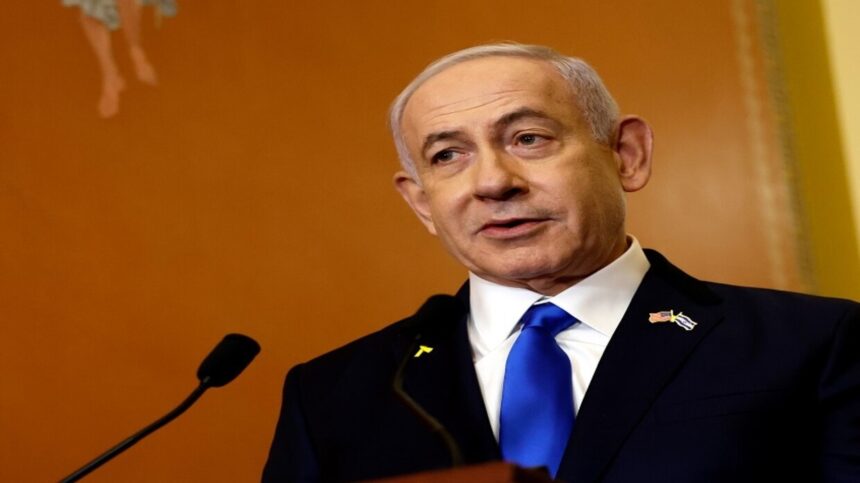
Israeli Prime Minister Benjamin Netanyahu arrived in New York late Wednesday to address the 80th session of the United Nations General Assembly, but the international spotlight had long since faded. The once-prominent figure found himself in an unusual and symbolic position: arriving just as world leaders were departing, and janitorial crews were sweeping up the confetti of global diplomacy.
According to a report by the Israeli daily Haaretz, Netanyahu’s trip reflects an unprecedented moment of political isolation for both himself and the Israeli government. Unlike previous years when Israeli leaders scheduled back-to-back meetings with global counterparts on the sidelines of the UN General Assembly, Netanyahu is expected to have no such engagements with high-level international figures during his stay.
The image is stark: a leader who once boasted of unparalleled access to Washington, Moscow, and key European capitals now walks the corridors of the United Nations largely alone accompanied, metaphorically at least, only by cleaning staff.
An Empty Schedule, a Diminished Presence
Netanyahu’s address is slated for Friday, long after most of the major world leaders have concluded their speeches and returned home. The timing alone underscores the new diplomatic reality facing Israel. Once a central player in Middle Eastern and global strategic dialogues, Israel now finds itself on the outside of key conversations, particularly regarding the future of Gaza and the Palestinian issue.
In what is being viewed by some Israeli commentators as a sign of deepening marginalization, Netanyahu was reportedly excluded from a high-level closed-door meeting held this week at UN headquarters. The gathering, organized by Arab and Islamic leaders in coordination with former U.S. President Donald Trump, focused on ending the war in Gaza and proposing a new political framework for the territory.
Participants in the meeting included Qatari Emir Sheikh Tamim bin Hamad Al Thani, Turkish President Recep Tayyip Erdoğan, and senior officials from other influential Arab states. According to sources familiar with the discussion, the proposal centers on an immediate ceasefire in Gaza, followed by Arab-led governance and reconstruction sidelining Hamas both politically and militarily.
A senior Qatari official described the meeting as “satisfactory” for the Arab side, hinting at potentially significant diplomatic outcomes. Yet what caught the attention of Israeli analysts and regional observers alike was the secrecy: no leaks, no press briefings, and, most tellingly, no Israeli participation.
The Loneliness of a Once-Untouchable Leader
For Netanyahu, the lack of an invitation is more than a diplomatic snub it reflects a broader erosion of Israel’s traditional alliances. Once celebrated by his supporters as a political mastermind capable of reshaping the global discourse around Israel, Netanyahu now faces growing opposition not only from international actors but from figures he long considered allies.
The contrast is especially stark given Netanyahu’s past efforts to position himself as the key interlocutor between the West and the Middle East. Now, many of the leaders who once shared the stage with him or at least the photo ops have turned away. Some have publicly criticized Israel’s policies, while others have shifted their focus to new regional dynamics, such as the Saudi-French push for recognition of a Palestinian state a diplomatic initiative gaining traction despite its lack of immediate implementation.
UN Session Reflects Israel’s Deepening Isolation
This year’s General Assembly session has been described by some observers as one of the most critical and adversarial for Israel in recent memory. A growing number of UN member states have openly condemned Israel’s handling of the Gaza conflict and its broader policies toward Palestinians. Calls for a permanent ceasefire, international investigations, and recognition of Palestinian statehood have grown louder.
While Netanyahu may still count on staunch support from a shrinking circle of allies, most notably Donald Trump, his presence at the UN this year is a far cry from the confident, globally connected image he once projected.
A Shifting Diplomatic Landscape
The broader implications of Netanyahu’s isolation go beyond optics. As regional powers increasingly take the lead in proposing solutions to the Israeli-Palestinian conflict without Israeli input a new political architecture may be forming. If these efforts gain momentum, Israel could find itself reacting to a peace process shaped by others, rather than directing it.
For now, Netanyahu will deliver his speech to a sparsely attended UN hall on Friday. Whether his words will resonate beyond the walls of the General Assembly remains to be seen. But one thing is clear: the stage he once dominated has changed and he is no longer at its center.
