

Ahmed Kamel – Egypt Daily News
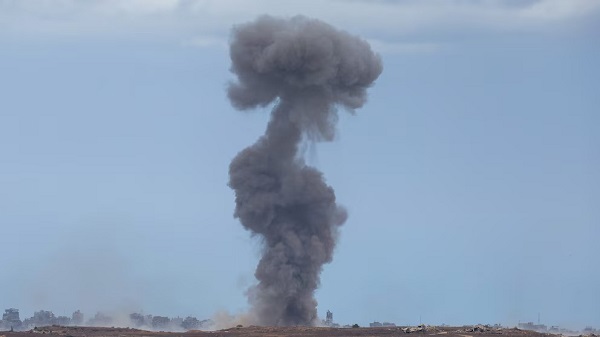
Explosions echoed across the Gaza Strip Thursday morning even as a ceasefire agreement between Israel and Hamas appeared imminent, raising hopes of a temporary halt in one of the most devastating and prolonged phases of the Israeli-Palestinian conflict in decades.
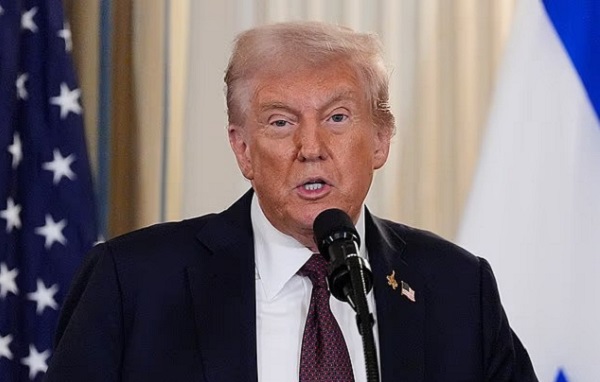
U.S. President Donald Trump announced Wednesday night that both sides had agreed to the first phase of a peace plan brokered during high-stakes negotiations in Sharm el-Sheikh, Egypt. The proposed deal includes the return of hostages held by Hamas, the release of Palestinian prisoners from Israeli jails, and a limited withdrawal of Israeli Defense Forces (IDF) from parts of Gaza.
The Israeli government is expected to formally ratify the agreement at 6 p.m. local time Thursday (11 a.m. ET). A ceasefire could come into effect shortly afterward, potentially ending a brutal chapter of the war that has left tens of thousands dead and nearly 170,000 injured.
“This represents the first steps toward a strong, durable, and everlasting peace,” Trump said during a televised interview, adding that hostages may be released as early as Monday.
Despite the optimism, violence persisted on the ground. Gaza’s Ministry of Health, run by Hamas, reported that 10 people were killed and 49 wounded in the past 24 hours. Large explosions were seen and heard across central and southern Gaza Thursday morning, signaling ongoing Israeli airstrikes as the ceasefire deadline loomed.
Since the war reignited in October 2023, the Gaza health ministry says 67,194 Palestinians have been killed and 169,890 wounded. Since the collapse of the last ceasefire in March 2025, over 13,000 have died. Israel’s casualties include thousands of civilians and soldiers, though its government has not released recent official figures.
Hostage and Prisoner Exchange to Begin
According to Israeli officials, the ceasefire’s first phase will include the release of the remaining 20 hostages believed to be alive. They are expected to be handed over in a single group on Sunday or Monday.

The deal also calls for the release of a significant number of Palestinian prisoners from Israeli custody. Hamas confirmed it had submitted a list of names for approval by Israeli authorities. The list is under review, and an official announcement is expected soon.
Trump told Fox News that the agreement includes not only the return of living hostages but also the bodies of at least 28 individuals believed to have died while in captivity. “They’re deep in the earth,” Trump said, alluding to the complex network of tunnels beneath Gaza where many hostages are believed to have been held. “So much is happening to get the hostages freed, and we think they’ll all be coming back on Monday.”
Mixed Reactions from Leaders
Palestinian Authority President Mahmoud Abbas welcomed the agreement, calling it a potential turning point for broader political negotiations. In a statement released Thursday, Abbas reiterated that sovereignty over Gaza “belongs to the state of Palestine” and emphasized the need for unity between Gaza and the West Bank under a single Palestinian government.
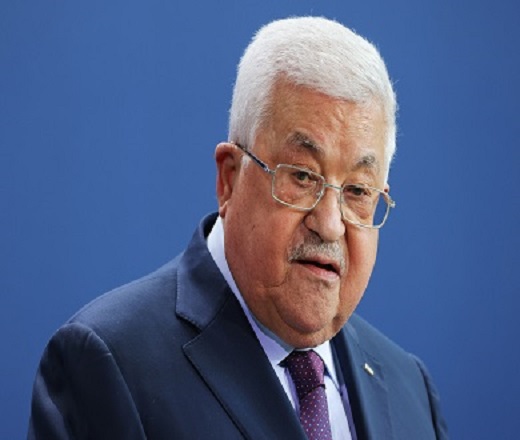
He also expressed hope that the deal would serve as a “prelude to reaching a permanent political solution,” including the end of Israeli occupation and the establishment of an independent Palestinian state based on pre-1967 borders, with East Jerusalem as its capital.
However, not all reactions were positive. Israeli Finance Minister Bezalel Smotrich, a leading figure in the far-right Religious Zionism party and a member of Prime Minister Benjamin Netanyahu’s governing coalition, announced he would oppose the agreement.
Smotrich argued that releasing Palestinian prisoners would only strengthen future generations of militants. “I feel a tremendous responsibility to ensure this is not a ‘hostages in exchange for stopping the war’ deal,” he posted on social media. “Immediately after the hostages return home, the State of Israel must continue to strive for the true eradication of Hamas and the genuine disarmament of Gaza.”
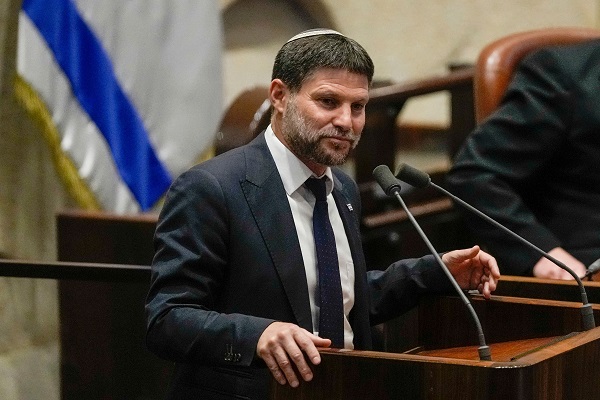
Smotrich, who advocates for expanding Israeli settlements and opposes Palestinian statehood, warned that the prisoner release risks empowering future terror leaders.
Gaza Remains Dangerous Despite Deal
Despite the pending ceasefire, the Israel Defense Forces issued a warning to Palestinians on Thursday advising them not to return to northern Gaza, calling it an active combat zone. “IDF forces continue to surround Gaza City, and returning to it is extremely dangerous,” said Avichay Adraee, IDF spokesperson for Arab media.
In parallel, the Hamas-run Gaza Government Media Office urged civilians to remain cautious and avoid travel between north and south Gaza until a formal announcement of the ceasefire is made. “Do not feel completely reassured until a clear and confirmed official announcement is issued,” the office warned.
Fragile Peace on the Horizon
Though the agreement has been hailed by many as a diplomatic breakthrough, it remains fragile. On the ground, both fear and hope are palpable. Families in Gaza await the possibility of respite from the constant bombings, while Israeli families pray for the safe return of their loved ones.
The next 72 hours will be critical. If the ceasefire holds and hostages are returned, it could open the door to a more enduring political process. Yet, as history has repeatedly shown in this region, the road from a temporary truce to lasting peace is fraught with obstacles political, ideological, and humanitarian.
For now, Gaza waits battered, bloodied, but watching closely for the first signs of silence after nearly a year of war.
