

Ahmed Kamel – Egypt Daily News
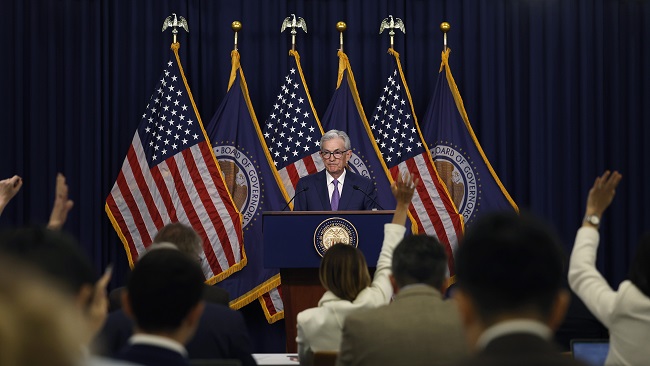
The U.S. Federal Reserve on Wednesday announced a 25-basis-point cut to its benchmark interest rate, lowering it to a target range between 3.75% and 4%. The move marks the Federal’s Reserve second consecutive rate reduction, following a similar cut in September, and brings borrowing costs to their lowest level in three years.
In a statement following the Federal Open Market Committee (FOMC) meeting, the Fed said that available indicators suggest economic activity continues to expand at a moderate pace. However, job growth has slowed over the course of the year, and the unemployment rate has edged up slightly though it remains relatively low. Inflation, the statement noted, has risen since the beginning of the year and remains elevated.
“The Committee seeks to achieve maximum employment and inflation at the rate of 2 percent over the longer run,” the statement read. “Uncertainty surrounding the economic outlook remains high, and the Committee is attentive to risks on both sides of its dual mandate.” Policymakers said that downside risks to employment have increased in recent months, warranting a modest adjustment to the policy stance.
As part of its decision, the Fed also announced it will conclude the reduction of its securities holdings starting December 1, signaling a shift toward a more accommodative monetary policy. The Committee emphasized it will “carefully assess incoming information, evolving economic outlooks, and the balance of risks” before considering further adjustments.
Despite the rate cut, inflation accelerated slightly in September to 3%, up from 2.9% in August, but still below market expectations of 3.1%. The latest inflation data were released later than usual due to a temporary government shutdown, which delayed several key economic reports.
Split Within the Fed
The decision revealed continued division among policymakers. Chair Jerome Powell and Vice Chair John C. Williams joined the majority in supporting the 25-basis-point reduction, along with Michael S. Barr, Michelle W. Bowman, Susan M. Collins, Lisa D. Cook, Austan D. Goolsbee, Philip N. Jefferson, Alberto G. Musalem, and Christopher J. Waller.
Two members dissented: Stephen A. Miran, who favored a larger half-point cut, and Jeffrey R. Schmid, who preferred leaving rates unchanged.
Broader Economic and Political Context
The rate decision comes amid heightened political and economic uncertainty in Washington. A partial government shutdown earlier this month forced about 700,000 federal employees into unpaid leave, while a similar number continued working without pay. The White House warned that another prolonged shutdown could delay key economic data releases, complicating the Fed’s ability to assess inflation and labor trends.
“The inability of survey experts to collect field data could deprive us of critical information and the economic consequences could be severe,” a White House spokesperson said.
Former President Donald Trump criticized Fed Chair Jerome Powell on Wednesday, accusing him of acting too slowly to cut rates and of failing to respond decisively to signs of economic weakness. Trump has repeatedly argued that the Fed’s policies have constrained growth and made U.S. exports less competitive.
With inflation still above target and political tensions running high, the Fed now faces a delicate balancing act: supporting a slowing labor market while avoiding the risk of reigniting price pressures. Investors will be closely watching upcoming data and statements for clues about whether further rate cuts may follow before the end of the year.
