

Ahmed Kamel – Egypt Daily News
The already dire war in Sudan plunged to new depths of horror this week after a massacre inside El-Fasher’s Saudi Maternity Hospital left an estimated 460 people dead, including patients, nurses, and doctors. The attack, described by aid agencies as one of the deadliest single incidents since the conflict began in April 2023, came just days after paramilitary forces reportedly executed more than 2,000 civilians during a two-day killing spree.

The World Health Organization confirmed that the hospital the last functioning medical facility in the besieged Darfur city was struck for the fourth time in a month. “One nurse was killed and three other health workers were injured,” the WHO said. Two days later, paramilitaries from the Rapid Support Forces (RSF) allegedly stormed the building, abducting six health workers and killing hundreds of patients and their companions.
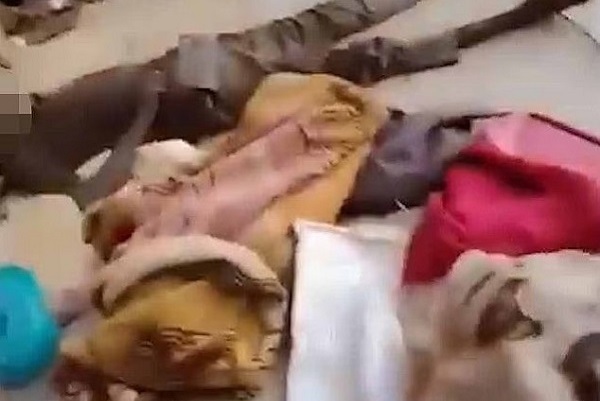
Video clips verified by journalists and humanitarian monitors show scenes of devastation inside the hospital: bodies scattered across bloodstained floors, shattered medical equipment, and terrified survivors searching for cover. “I was performing surgery when the shelling started,” said Dr. Suhiba, a gynecologist quoted by the UN’s reproductive health agency, UNFPA. “A mortar hit the hospital. I was terrified the woman on the table was open, bleeding, and everyone was running.”
The slaughter followed weeks of heavy bombardment around El-Fasher, the capital of North Darfur and the Sudanese army’s last major foothold in the vast western region. After an 18-month siege, RSF fighters descended from the Janjaweed militias accused of genocide two decades ago, overran much of the city, reigniting fears of a return to the ethnically targeted atrocities that scarred Darfur in the early 2000s.
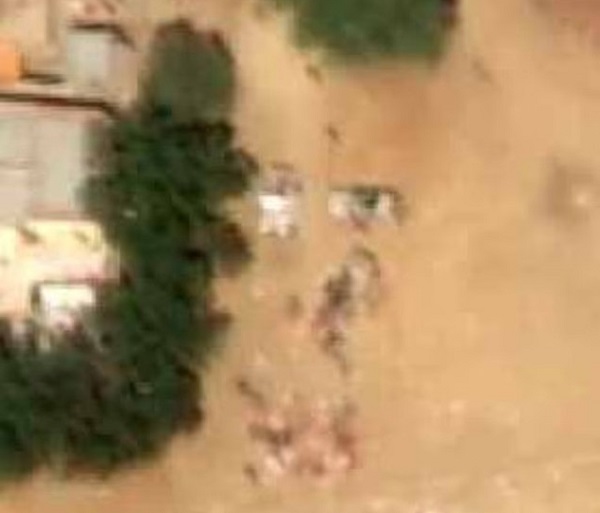
Satellite images analyzed by Yale University’s Humanitarian Research Lab revealed disturbing evidence consistent with mass executions: clusters of body-sized objects around vehicles, reddish soil discolorations, and fresh earthworks believed to be makeshift graves. Local sources reported that civilians attempting to flee were shot at point-blank range.
Graphic videos circulated online show RSF combatants executing groups of unarmed civilians, including women and children. In one clip authenticated by AFP, a fighter known for summary executions is seen shooting captives sitting on the ground. Another video purportedly depicts a child soldier killing a man as others cheer. Human rights groups say the evidence may point to war crimes, crimes against humanity, and possibly genocide.
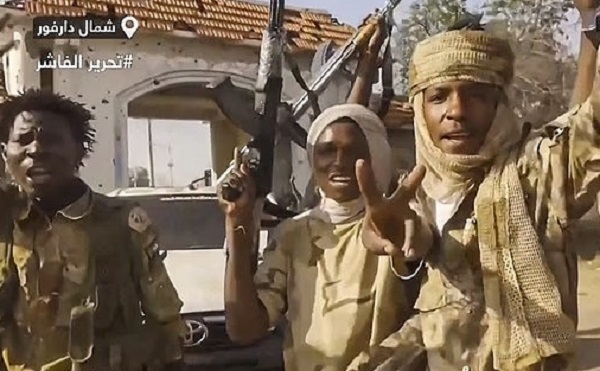
The RSF’s leader, Mohammad Hamdan Daglo known as “Hemedti”, claimed in a speech that his forces did not target civilians, expressing “sorrow” for the tragedy in El-Fasher. Yet his troops now control nearly all of western Sudan, establishing parallel administrations in captured cities while the Sudanese Armed Forces (SAF), led by General Abdel Fattah al-Burhan, hold the north and east. Analysts warn that the country is effectively partitioned, with rival authorities ruling from separate capitals.

United Nations Secretary-General António Guterres said he was “gravely concerned” by the escalation and called for an immediate end to the siege and hostilities. “The violence in Darfur is once again taking on a terrifying ethnic dimension,” he warned.
The human toll continues to mount. More than 33,000 residents have fled El-Fasher since the weekend, seeking safety in Tawila, 40 miles west, a town already overwhelmed by over 650,000 displaced people. AFP photographs from the area show exhausted families arriving on foot, carrying bundles of belongings, some with bandaged wounds. Around 177,000 civilians remain trapped in El-Fasher, cut off from aid and communications except for networks controlled by the RSF.
Sudan’s war, now in its third year, has killed tens of thousands and displaced millions. The conflict erupted in April 2023 after months of tension between the regular army and the RSF over plans to integrate the paramilitaries into the national forces. What began as a struggle for power between generals has since spiraled into one of the world’s worst humanitarian crises.
Amnesty International has documented widespread atrocities by both sides, including summary executions, torture, and systematic sexual violence. In RSF-controlled areas, witnesses have described gang rapes and abductions of women and girls acts seemingly aimed at terrorizing non-Arab communities.
Despite international mediation attempts led by the so-called Quad group the United States, Egypt, Saudi Arabia, and the United Arab Emirates peace talks have stalled. Diplomats blame both sides for obstructing negotiations, while regional powers are accused of supplying weapons or political backing to their preferred factions.
Meanwhile, the humanitarian situation deteriorates by the day. Food supplies are scarce, millions face famine, and entire neighborhoods lie in ruins. With the fall of El-Fasher, the RSF now controls roughly one-third of Sudan, and fighting is intensifying in central Kordofan. Aid organizations have lost contact with local staff; the Red Cross confirmed that five Sudanese volunteers were killed last week, with three still missing.
For the people of Darfur, the new massacres evoke haunting memories of the past and raise fears that history is repeating itself. As one exhausted doctor in El-Fasher told a local journalist before communications were cut: “We are not just losing patients. We are watching the death of our humanity.”
