

Ahmed Kamel – Egypt Daily News
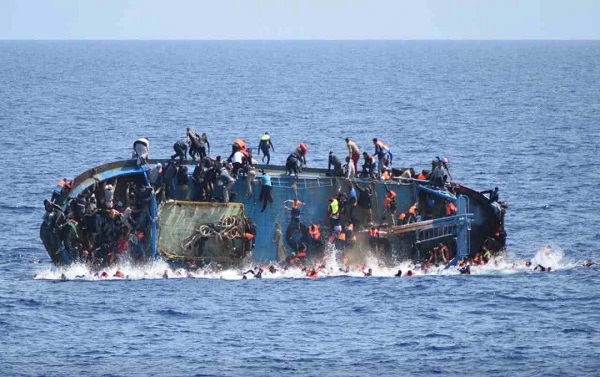
A migrant boat bound for Greece has capsized in the eastern Mediterranean, killing 21 Egyptians, in the latest tragedy to underscore the enduring dangers of irregular migration routes to Europe.
Egypt’s Foreign Ministry confirmed that the vessel, which was carrying around 50 migrants, sank on February 22 after departing from a neighboring country en route to Greek shores. Among those on board were Egyptian nationals. Greek authorities later reported that the wreck occurred south of the island of Crete.
According to Egyptian officials, nine Egyptian nationals survived the disaster. The Egyptian embassy in Athens identified the survivors and said it was working closely with Greek authorities to follow developments, coordinate search-and-rescue efforts and expedite procedures to repatriate the bodies of those confirmed dead.
Foreign Minister Badr Abdelatty instructed the embassy in Athens to intensify contacts with all relevant Greek agencies and to provide support to victims’ families. The ministry said consular teams have begun receiving relatives of the deceased and missing to assist with documentation and the return of remains to Egypt.
In a statement, the ministry renewed its warning to citizens against falling prey to human smuggling networks and attempting irregular migration routes. It urged Egyptians to avoid illegal travel “regardless of the motives,” stressing the life-threatening risks posed by such journeys.
The Mediterranean as a migration corridor
The sinking is part of a broader pattern that has made the Mediterranean one of the world’s deadliest migration corridors. Smuggling networks routinely operate overcrowded and unseaworthy boats, often launching from North African or eastern Mediterranean coasts toward Greece or Italy. Migrants, many of them young men facing economic hardship, are charged large sums for passage aboard vessels that lack even basic safety equipment.
Although Egypt has reported significant success in preventing migrant boats from departing directly from its own northern coastline since 2016, crediting tighter coastal surveillance and anti-smuggling legislation, authorities acknowledge that some Egyptians continue to travel to neighboring countries in attempts to reach Europe from there.
Greek search-and-rescue operations have intensified in recent years as migration flows fluctuate with regional instability. The waters south of Crete have become an increasingly used route, particularly as enforcement pressure shifts in other parts of the Mediterranean.
The International Organization for Migration has repeatedly warned that smuggling routes adapt quickly to enforcement measures, pushing migrants toward longer and more hazardous crossings. Human rights groups have called for expanded legal migration pathways and improved coordination between European and origin countries to prevent further loss of life.
Families caught in limbo
For families in Egypt, the immediate ordeal is one of uncertainty. With 18 nationals still missing, hopes of survival diminish with each passing day at sea. The Egyptian embassy in Athens said it is maintaining continuous contact with Greek authorities and updating relatives as information becomes available.
Beyond consular assistance, the tragedy has reignited domestic debate in Egypt about the socioeconomic drivers behind irregular migration. Despite official campaigns warning against so-called “death boats,” economic pressures, limited job opportunities and the lure of perceived stability in Europe continue to push some toward dangerous alternatives.
A wider climate of risk
The Mediterranean disaster unfolded against a backdrop of broader global concerns about human vulnerability in conflict and crisis settings. On the same day the migration tragedy dominated headlines, the New York–based Committee to Protect Journalists released a report documenting a record number of journalists killed worldwide in 2025, many in conflict zones. While unrelated to the shipwreck, the report underscored the wider instability and violence driving displacement and migration across regions including the Middle East and Africa.
As recovery efforts continue off Crete’s southern coast, Egyptian officials say their immediate priority is supporting affected families and ensuring the dignified return of the deceased. Yet the broader challenge remains unresolved: how to stem the cycle that sends vulnerable migrants onto fragile boats in search of opportunity and too often, into peril.
