

Ahmed Kamel – Egypt Daily News
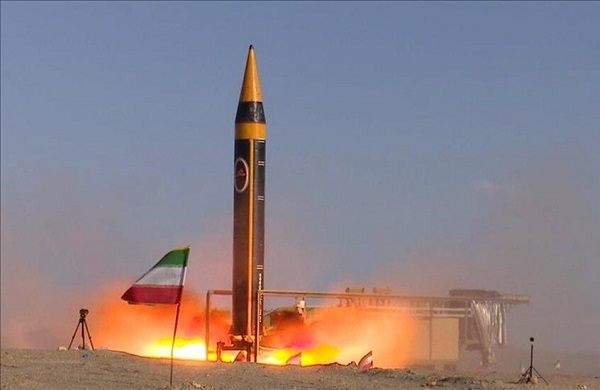
Islamic Revolutionary Guard Corps has announced details of a new phase in its ongoing military campaign, describing what it called the third stage of the 90th wave of “True Promise 4,” amid heightened tensions with the United States and Israel.
In a statement released Thursday evening, the IRGC claimed that US and Israeli naval forces have refrained from approaching within 1,000 kilometers of the Strait of Hormuz, asserting that they no longer have the capability or willingness to carry out previously stated military threats.
The statement also accused Washington and Tel Aviv of resorting to targeted killings in response to setbacks on the battlefield, alleging that attacks had extended beyond officials to include civilian targets. It warned that any continuation of such actions would trigger retaliation beyond traditional military targets.
In a notable escalation, the IRGC threatened to target major American technology and intelligence-linked companies, particularly those involved in artificial intelligence and data analysis, which it claimed play a role in surveillance and operational planning.
According to the statement, Iranian forces have already carried out what they described as a first “practical warning,” alleging strikes against multiple US and Israeli air bases, as well as a cyber or infrastructure-related operation targeting a regional cloud computing facility linked to Amazon in Bahrain. The claims could not be independently verified.
The IRGC further stated that responsibility for any escalation rests with Donald Trump, warning that additional measures would be taken if what it described as “assassination operations” continue.
Separately, Iran’s military reported that its air defense systems had intercepted and downed an “Orbiter” drone in the country’s northwest, attributing it to US-Israeli operations. Officials said the incident brings the total number of drones reportedly destroyed by Iran’s integrated air defense network to 155.
The latest statements underscore a widening scope of confrontation, extending beyond conventional military engagements to include cyber infrastructure and commercial technology entities. Analysts warn that such developments risk further destabilizing an already volatile regional environment, with potential implications for global security and economic stability.
