

Ahmed Kamel – Egypt Daily News
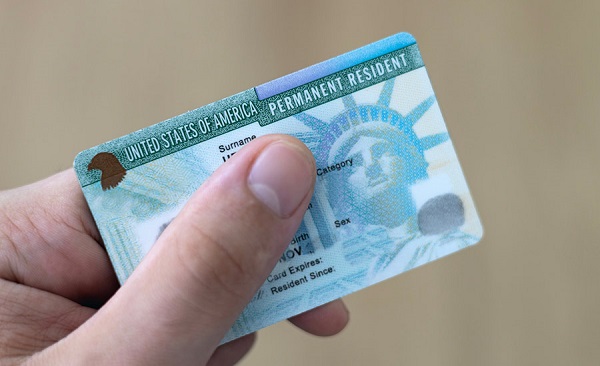
The Trump administration has introduced a major shift in U.S. immigration practice, requiring most non-immigrant visa holders seeking green cards to leave the country and complete the process from abroad, a move that could reshape how hundreds of thousands of people pursue permanent residency each year.
Under the new guidance announced Friday, individuals in the United States on temporary visas including students, tourists, and temporary workers, will generally no longer be allowed to adjust their status while remaining inside the country. Instead, they must return to their home countries and apply through consular processing, except in what officials described as “extraordinary circumstances.”
U.S. Citizenship and Immigration Services spokesperson Zach Kahler said the change is intended to align the process with the temporary nature of non-immigrant visas. He said these visas are designed for short stays tied to specific purposes, not as an initial pathway to permanent residency.
The administration argues that requiring applicants to complete the process abroad will reduce system abuse and ease pressure on domestic immigration agencies. Officials also said it would allow the agency to focus resources on other categories, including humanitarian cases, crime victims, trafficking survivors, and naturalization applications.
But the scale of the change is significant. In a typical year, around one million people apply for green cards in the United States, with roughly half doing so from within the country by adjusting their status while living there, according to former U.S. Citizenship and Immigration Services officials. That pathway has long been a central feature of the American immigration system.
Critics say the new policy effectively forces many legal immigrants into a more uncertain and restrictive process abroad. Doug Rand, a former USCIS official, said the move amounts to a form of exclusion, warning that applicants from countries already facing travel restrictions could find the requirement especially difficult to navigate.
He pointed to earlier travel bans affecting more than 100 countries, arguing that forcing applicants to leave the U.S. could effectively cut off their ability to complete the process at all.
Immigrant advocacy groups have also raised alarm. World Relief, a Christian humanitarian organization, described the policy as “cruel” and “anti-family,” saying it would disrupt families already living legally in the United States while they complete immigration procedures.
The organization said the change ends a long-standing practice that allowed eligible individuals to complete green card applications without leaving the country, a process widely used by spouses, workers, and students transitioning to permanent residency.
Its leadership warned that the new rules could separate families during processing, including spouses and children, and create unnecessary hardship for applicants who are already meeting legal requirements under U.S. immigration law.
Myal Greene, president and CEO of World Relief, said the policy would have immediate human consequences and urged lawmakers, courts, or the administration itself to reconsider the decision.
The move is the latest in a series of immigration restrictions under the Trump administration, reflecting a broader push to tighten both legal and illegal immigration channels. It is also likely to face legal and political challenges as advocacy groups and immigration lawyers assess its implementation.
For now, uncertainty remains over how broadly the rule will be enforced and how many pending applicants may be affected, but the policy signals a sharp tightening of one of the most commonly used routes to permanent residency in the United States.
